2026 Top Trends in Paint Booth Exhaust Filter Roll Technology?
The Paint Booth Exhaust Filter Roll technology is evolving rapidly. In the face of increasing environmental regulations, businesses must adapt their practices. Efficient filtration systems are crucial for maintaining air quality and ensuring compliance. As we approach 2026, new trends are emerging in this sector.
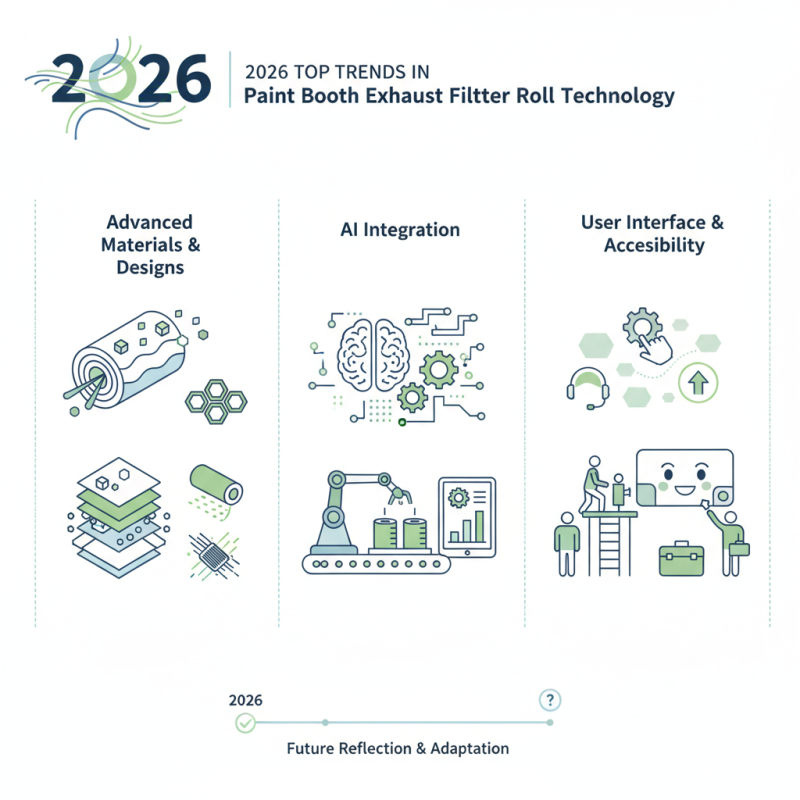
Advanced materials and innovative designs are reshaping the way Paint Booth Exhaust Filter Rolls function. These developments promise enhanced filtration capabilities and longer service life. However, some manufacturers struggle to keep pace with these advancements. The challenge lies in balancing cost-effectiveness and innovation.
As AI technology becomes more integrated into manufacturing, it will transform filter roll production. Smart systems can optimize filtration processes. Yet, there's an opportunity for improvement in user interface and accessibility. Companies must reflect on how to better equip their teams for these changes. The future of Paint Booth Exhaust Filter Rolls will depend on this reflection and adaptation.
Overview of Paint Booth Exhaust Filter Roll Technology
Paint booth exhaust filter roll technology plays a critical role in maintaining air quality in industrial settings. These filters capture airborne particles, ensuring that harmful substances are minimized during the painting process. The design of exhaust filter rolls is evolving rapidly. Innovations focus on materials that enhance filtration efficiency while being cost-effective.
Recent trends highlight a shift towards more sustainable materials. Some manufacturers are exploring biodegradable options that reduce environmental impact. These new materials may not perform as expected in every scenario. The balance between sustainability and effectiveness requires careful consideration. Real-world testing is essential to validate performance.
Integration with monitoring technology is also gaining traction. Sensors can track filter performance in real-time. This can lead to more informed maintenance decisions. However, data management remains a challenge. Not all facilities are equipped for advanced monitoring systems. As this technology progresses, some firms may struggle to keep up. Finding the right balance between technology and practicality is vital.
Current Innovations in Paint Booth Filter Materials
The paint booth industry is evolving rapidly. New innovations in filter materials are key to this evolution. These materials help capture harmful particles and improve air quality. Lightweight composites are gaining popularity. They offer a balance of strength and flexibility.
Some newer filters use nanofiber technology. These filters are more efficient. Their small fibers catch particles that traditional filters might miss. However, the cost of these advanced materials raises questions. Are they worth the investment? Some businesses may hesitate to upgrade.
Durability is another concern. While many new filters promise enhanced performance, their longevity in practice remains uncertain. Frequent replacements can add to operational costs. It's vital to assess the long-term benefits before making a decision. The paint booth environment is complex, and not every innovation suits every operation. Balancing cost, efficiency, and longevity is crucial for success in this field.
2026 Top Trends in Paint Booth Exhaust Filter Roll Technology
| Trend |
Description |
Benefits |
Material Used |
Expected Impact |
| Advanced Filter Media |
Introduction of synthetic fiber filters for improved particle capture. |
Higher efficiency and longer lifespan. |
Non-woven synthetic fibers |
Reduction in maintenance costs. |
| Eco-Friendly Filters |
Filters made from recycled materials. |
Sustainable production, lower environmental impact. |
Recycled synthetic fibers |
Improved corporate sustainability image. |
| Smart Filters |
Integration of IoT technology for real-time monitoring. |
Predictive maintenance and enhanced performance tracking. |
Smart materials with sensors |
Increased operational efficiency. |
| Low Energy Filters |
Filters designed to require less airflow for optimal performance. |
Lower energy costs and reduced carbon footprint. |
High-efficiency particulate air (HEPA) materials |
Significant energy savings for facilities. |
| Modular Filter Systems |
Flexible systems that can be easily reconfigured and expanded. |
Versatility and scalability for different operations. |
Interchangeable filter components |
Adaptability to changing production needs. |
Key Trends Influencing Filter Roll Efficiency in 2026
The efficiency of paint booth exhaust filter rolls will be crucial in 2026. Several key trends will shape this aspect. One major factor is the shift towards eco-friendly materials. Reports indicate that sustainable filters can reduce waste by up to 40%. Many companies are eager to adopt these materials, but affordability remains a barrier.
Another important trend is the integration of smart technology. Filters equipped with sensors can monitor performance in real-time. This allows for timely replacements and reduces downtime. The industry expects that up to 30% of new filters will have these technologies by 2026. However, the learning curve for implementation can dissuade manufacturers.
Lastly, enhanced filtration efficiency is a growing concern. Current standards indicate that filters should capture at least 99% of particles. Many manufacturers are striving for this goal. Yet, achieving such high efficiency without sacrificing airflow proves challenging. As the industry advances, these trends will need ongoing evaluation to ensure effectiveness and sustainability.
Environmental Regulations Impacting Filter Technology
Environmental regulations are increasingly shaping the paint booth exhaust filter technology landscape. As industries strive for compliance, they must adapt to stricter air quality standards. New filters are being developed to capture finer particulate matter. These improved designs promise better efficiency but often struggle with longevity. Finding the right balance between effectiveness and cost remains a challenge for manufacturers.
In response to evolving regulations, companies are innovating their filter materials. Some options are synthetic, aimed at high-performance needs. Others focus on bio-based materials, promoting sustainability. However, gaps still exist in the production processes. Many filters may initially perform well but degrade quickly under continuous use. This inconsistency can lead to increased waste and higher costs.
Moreover, the reliance on technology presents its own set of dilemmas. While automated monitoring helps ensure compliance, technical failures can occur. Maintenance schedules often get overlooked, affecting filter lifespan. As regulations continue to tighten, it’s crucial to address these operational flaws. Industry stakeholders must reflect on their practices to make continuous improvements.
Future Directions and Challenges in Exhaust Filter Development
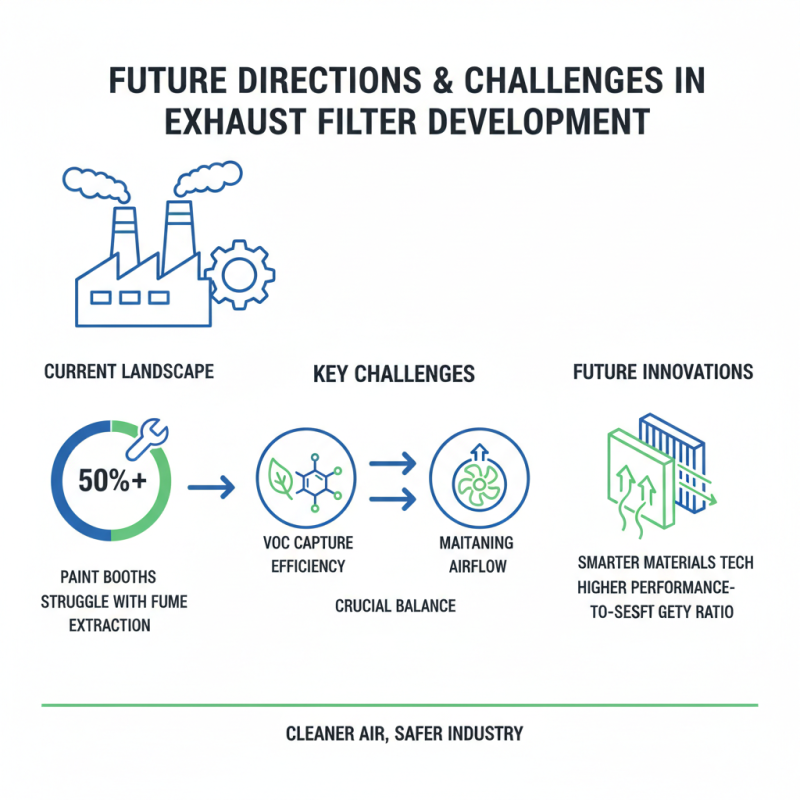
As the demand for cleaner air in industrial settings grows, exhaust filter technology must adapt. Current data indicates that over 50% of paint booths struggle with efficient fume extraction. While innovations are on the rise, challenges persist. Filters that capture volatile organic compounds (VOCs) must become more efficient while maintaining airflow. This balance is crucial for both safety and performance.
Looking ahead, the development of smart filters shows promise. Incorporating sensors can monitor filter performance in real-time. This technology could lead to reductions in maintenance costs. However, integration is complex and requires significant investment. Many companies may hesitate, especially in uncertain times.
Sustainability is also a critical factor. The industry must consider eco-friendly materials in filter production. Current solutions often utilize non-biodegradable components. Moving toward recyclable materials poses a challenge but is essential for long-term viability. The path forward is not without its roadblocks. Finding cost-effective methods to produce these materials remains an ongoing concern.