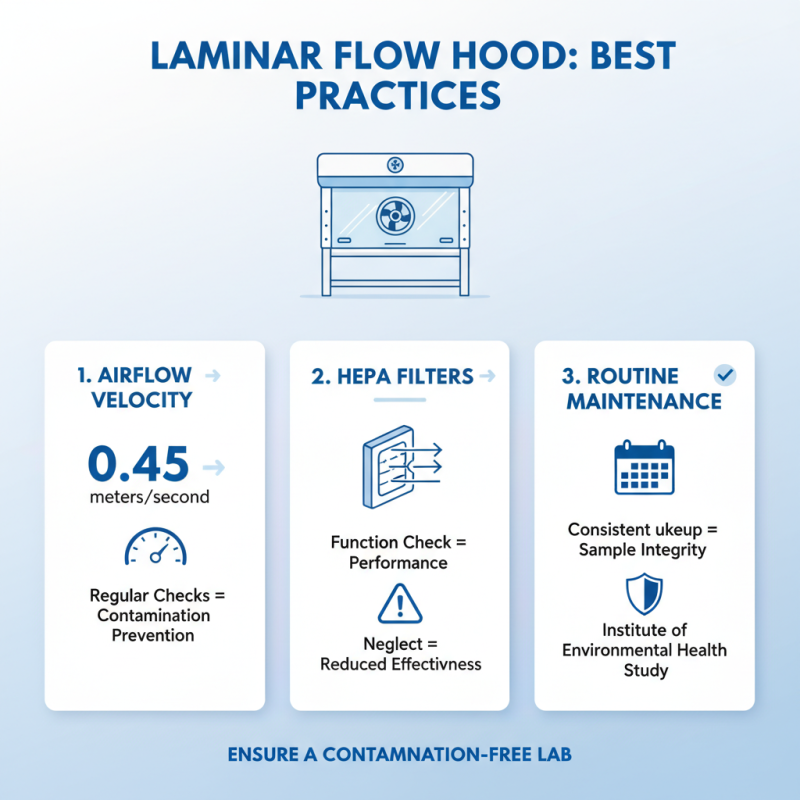
Top Benefits of Using a Laminar Flow Hood Filter for Your Laboratory?
In the realm of laboratory safety and efficiency, the significance of a Laminar Flow Hood Filter cannot be overstated. Dr. Emily Hargrove, a noted expert in laboratory design, once stated, "A well-implemented Laminar Flow Hood Filter is crucial for maintaining sample integrity." This insight emphasizes the pivotal role that these filtration systems play in research environments.
Laminar Flow Hood Filters create a sterile workspace. They ensure that contaminants are kept at bay, allowing scientists to handle sensitive materials securely. The filters operate by directing clean air in a unidirectional flow, which minimizes exposure to environmental pollutants. This design is essential for experiments that require high levels of cleanliness. Laboratories around the world rely on these systems to uphold stringent safety standards.
However, while Laminar Flow Hood Filters are vital, they come with challenges. Regular maintenance is necessary to keep filters efficient. Users must be vigilant about replacing filters at the right intervals. Neglect can lead to compromised results. Understanding these filters’ intricacies can guide laboratories toward safer and more reliable practices in scientific research.

Benefits of Laminar Flow Hoods in Maintaining Clean Environments
Laminar flow hoods play a crucial role in maintaining clean environments in laboratories. They create a sterile workspace by directing filtered air in a unidirectional flow. This process helps to minimize contamination risks during sensitive experiments. Scientists rely on this airflow to protect samples and equipment from airborne particulates. It’s a vital tool for laboratories focused on microbiology, biotechnology, and pharmaceuticals.
Using a laminar flow hood also enhances productivity. By maintaining a clean environment, researchers can focus on their work without the constant worry of contamination. However, these hoods require regular maintenance and filter changes. Neglecting these tasks can lead to decreased airflow efficiency, ultimately affecting the integrity of the experiments. Proper training on their use is essential too, ensuring that all personnel understand the importance of maintaining cleanliness.
While laminar flow hoods are effective, they are not foolproof. There are still challenges when it comes to human error. Operators may unintentionally disrupt airflow by making quick movements. This can compromise the sterile environment. Continuous education and awareness of best practices are vital for maximizing the benefits of laminar flow hoods in the lab.
Top Benefits of Using a Laminar Flow Hood Filter for Your Laboratory
This chart illustrates the key benefits of using laminar flow hoods in laboratory environments, highlighting their importance in maintaining clean and sterile conditions.
Understanding the Science Behind Laminar Flow Technology
Laminar flow technology plays a critical role in laboratory operations. This system creates a uniform airflow to reduce contamination. According to the CDC, 80% of lab failures are due to microbial contamination. Laminar flow hoods filter air through HEPA filters, ensuring cleaner workspace conditions. These filters capture 99.97% of particles, enhancing the integrity of sensitive experiments.
In practical applications, laminar flow hoods provide consistent airflow patterns that keep contaminants away from samples. Studies show that using these hoods can lower risk by up to 95%. However, it is vital to maintain and replace filters regularly. Neglecting this can compromise safety. Proper use requires understanding airflow dynamics to maximize efficiency.
Despite their benefits, laminar flow hoods are not foolproof. They require proper operational methods for optimal performance. Operators must remain aware of factors like user movement and equipment placement. These can disrupt airflow. Continuous training and vigilance are essential for reliability in any lab setting.
Key Applications of Laminar Flow Hoods in Various Laboratories
Laminar flow hoods play a vital role in laboratory environments. They provide a sterile work area by maintaining a constant, unidirectional airflow. This feature is crucial in various laboratories, including biological, pharmaceutical, and chemical research facilities.
According to a report by the International Laboratory Equipment Association, 78% of laboratories utilize laminar flow hoods to prevent contamination during sensitive procedures.
In biological labs, laminar flow hoods are essential for procedures involving cell cultures and genetic experiments. The clean air helps protect samples from airborne contaminants, ensuring reliable results.
In pharmaceutical labs, these hoods safeguard drug formulations, where even microscopic impurities can compromise product integrity. A study highlighted that 65% of pharmaceutical failures are linked to contamination risks that laminar flow hoods effectively mitigate.
However, the efficiency of laminar flow hoods relies on regular maintenance and filter changes. A neglected filter can become a source of contamination rather than a barrier. This aspect underlines the need for proper training and adherence to safety protocols, which are often overlooked.
Continuous staff education about the limitations and proper use of these hoods is also necessary.
Comparative Analysis: Laminar Flow Hoods vs. Other Ventilation Systems
Laminar flow hoods are essential in many laboratories. They create a sterile environment by using filtered air. This is crucial for procedures that require meticulous attention to contamination. In comparison to other ventilation systems, their design offers unique advantages.
When comparing laminar flow hoods to traditional fume hoods, the differences become clear. Fume hoods exhaust air outside, which can expose lab personnel to hazardous substances. Laminar flow hoods, however, target clean air flow directly over the work surface. This reduces the likelihood of exposure and contamination during experiments.
Other systems may not provide the same level of protection. HEPA filters in laminar flow hoods trap particles effectively. However, they need regular replacement to maintain efficacy. This is a point for reflection. Can your lab afford the upkeep? The decision often hinges on balancing safety, efficiency, and cost. Ultimately, choosing the right ventilation system demands careful consideration of the specific laboratory needs.
Top Benefits of Using a Laminar Flow Hood Filter for Your Laboratory
| Feature |
Laminar Flow Hood |
Other Ventilation Systems |
| Airflow Direction |
Unidirectional |
Multidirectional |
| Contamination Control |
High level of protection |
Variable protection |
| User Comfort |
Comfortable for prolonged use |
Can be uncomfortable due to drafts |
| Maintenance |
Low maintenance required |
Higher maintenance required |
| Cost |
Moderate initial investment |
Varies widely based on system |
| Application |
Ideal for sterile production |
General ventilation uses |