What is the Best Filter for Spray Booths?
In modern industrial settings, the use of spray booths is crucial for various applications. A key aspect of maintaining these environments is selecting the right filter for spray booth operations. Research indicates that nearly 70% of air quality issues in spray booths can be traced back to inadequate filtration. This highlights the importance of a reliable filter for spray booth systems.
Efficient filtration not only protects workers but also enhances product quality. Studies have shown that poor filtration can lead to a 10% increase in defects due to airborne contaminants. Choosing the correct filter for spray booth applications requires understanding specific needs and operational parameters. Different filters serve various purposes, and misjudgment can result in higher operational costs and safety risks.
While many may overlook the significance of filters, their impact is substantial. A thoughtful selection can improve workflow and reduce downtime. In contrast, underestimating filter requirements could compromise both performance and safety. This creates a pressing need for reflection on best practices in spray booth filtration.
Understanding the Importance of Filters in Spray Booths
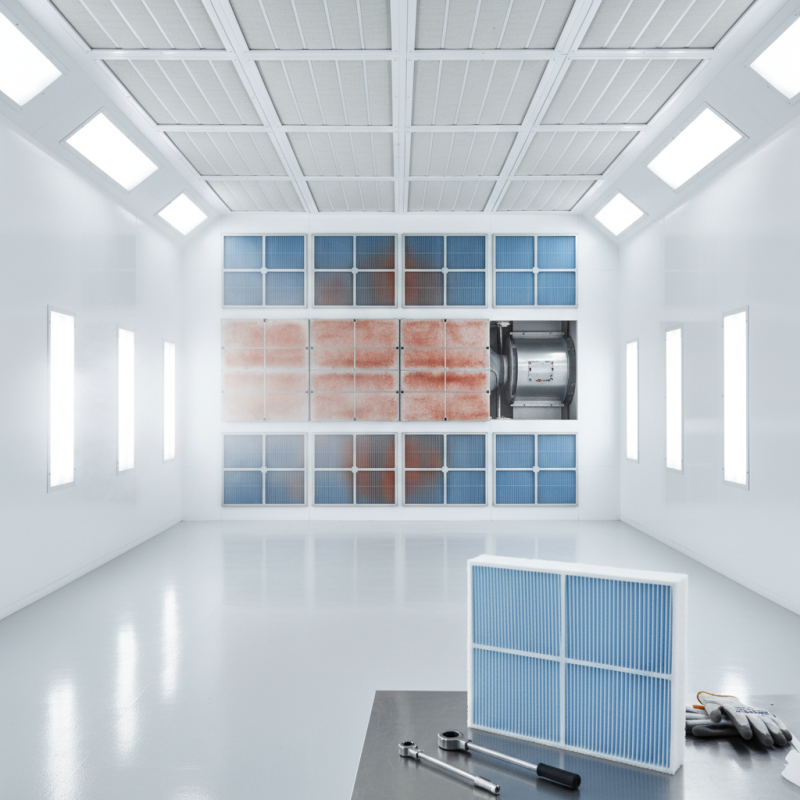
In spray booths, filters play a critical role in maintaining air quality.
They capture harmful particles and fumes released during the painting process.
Proper filtration ensures a safer work environment. Without effective filters, hazardous substances can linger in the air, posing health risks to workers.
When selecting filters, consider their efficiency ratings.
Higher ratings mean better particle capture. Look for filters that can handle both overspray and fine particulates.
Effective filters not only protect workers but also improve the quality of the paint finish.
A clean booth results in fewer defects and rework.
Tips: Regular maintenance of filters is crucial.
Change them according to your booth usage. Neglected filters can lead to decreased airflow and increased energy costs.
Monitor pressure gauges to assess filter performance. If the reading is high, it might be time for a change.
Air quality matters; don’t overlook it.
Types of Filters Used in Spray Booths and Their Applications
In the world of spray booths, choosing the right filter is crucial.
Filters are essential for maintaining air quality and ensuring safety. There are various types of filters used in these environments.
Each type serves a specific purpose, catering to different needs.
One common filter type is the particulate filter. It captures larger particles like dust and overspray.
These filters can be effective, but they may not catch smaller contaminants.
Another option is the chemical filter. This type targets harmful vapors and gases.
However, the challenge lies in selecting the right combination of filters to address all airborne pollutants.
A third type is the HEPA filter. It excels in trapping tiny particles, providing cleaner air.
While these filters offer high efficiency, they can become clogged quickly. Regular maintenance is essential.
Operators must monitor filter conditions closely to ensure optimal performance. In practice, balancing efficiency and cost is a constant challenge in spray booth management.
Every choice impacts overall operations.
Factors to Consider When Choosing a Filter for Spray Booths
Choosing the right filter for spray booths is crucial for maintaining air quality. It involves several factors. Efficiency is key. High-efficiency filters can capture up to 99% of particles, according to a study by the National Air Filtration Association. Look for filters that meet or exceed HEPA standards. They reduce airborne contaminants significantly, which is vital in spray painting environments.
Airflow is another important consideration. Filters should allow sufficient air circulation without compromising filtration capabilities. If a filter restricts airflow too much, it can lead to improper ventilation, affecting the paint finish. Balance is necessary. Some filters may have a high filtration efficiency but may result in excessive pressure drop.
Maintenance and cost also matter. Higher efficiency often means higher costs, both initially and over time. Filters usually require regular replacement to maintain performance. Industry data suggests that filters should be checked every two weeks. Neglecting this can lead to subpar air quality and costly downtimes. Reflect on these factors when selecting a spray booth filter. It’s more than just picking a product; it's about optimizing overall performance and safety.
Comparative Analysis of Filter Materials for Spray Booth Efficiency
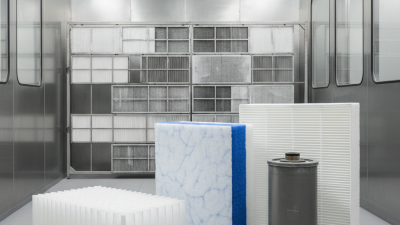
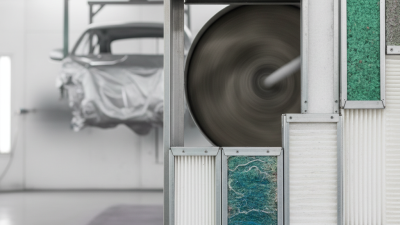
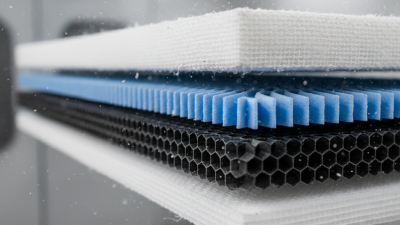
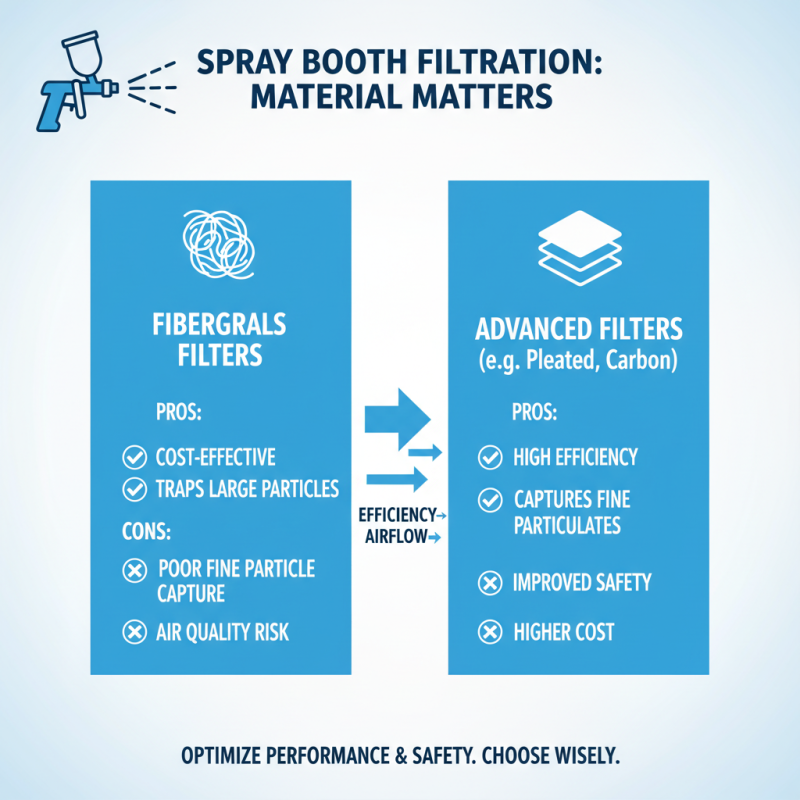
Choosing the right filter material for spray booths is crucial for optimizing efficiency. Various materials offer different levels of filtration and airflow, impacting both performance and safety. Fiberglass filters, for example, trap large particles and are cost-effective. However, they may not capture fine particulates effectively, leading to air quality concerns.
Polyester filters are another common choice. They boast a higher filtration efficiency and can capture smaller particles. Their durability makes them appealing, but they often come at a higher cost. The trade-off might be worth it for professional settings, where air quality is paramount. However, users must consider their specific needs and budget limitations.
Another option involves electrostatic filters. These can attract and hold particles more effectively. This feature appeals to many, but installation and maintenance can be complex. Users may find the initial investment daunting. Hence, a thoughtful approach is essential when selecting the ideal filter material for a spray booth. Balancing cost, efficiency, and practicality paves the way for better outcomes.
Maintenance Practices to Extend the Life of Spray Booth Filters
Proper maintenance of spray booth filters is crucial for operational efficiency. Regularly changing filters can reduce the risk of overspray buildup. According to industry studies, clogged filters can increase energy consumption by up to 30%. This leads to inconsistent airflow, impacting finish quality and productivity.
Monitoring filter pressure drop is essential. Signs of pressure drop indicate that filters might be reaching their limits. Regular checks should be part of routine maintenance. Additionally, using pre-filters can extend the life of main filters. These pre-filters capture larger particles, reducing the load on primary filtration systems.
Cleaning filters can also prolong their lifespan. Mild cleaning methods, like compressed air, can remove excess dust. Yet, this must be done carefully to avoid damaging the filter’s structure. It's important to balance efficiency with the need for clean air. Taking shortcuts in maintenance can lead to higher costs in the long run, compromising air quality and safety.
What is the Best Filter for Spray Booths? - Maintenance Practices to Extend the Life of Spray Booth Filters
| Filter Type |
Average Lifespan (Months) |
Efficiency Rating (%) |
Maintenance Frequency (Weeks) |
Cost ($) |
| Standard Pleated Filter |
6 |
85 |
4 |
50 |
| High-Efficiency Particulate Air (HEPA) Filter |
12 |
99.97 |
8 |
150 |
| Activated Carbon Filter |
9 |
90 |
6 |
100 |
| Oil Mist Filter |
8 |
95 |
5 |
75 |
| Spray Booth Paint Filter |
3 |
80 |
2 |
30 |