How to Choose the Right Paint Booth Filter Wall for Your Workshop?
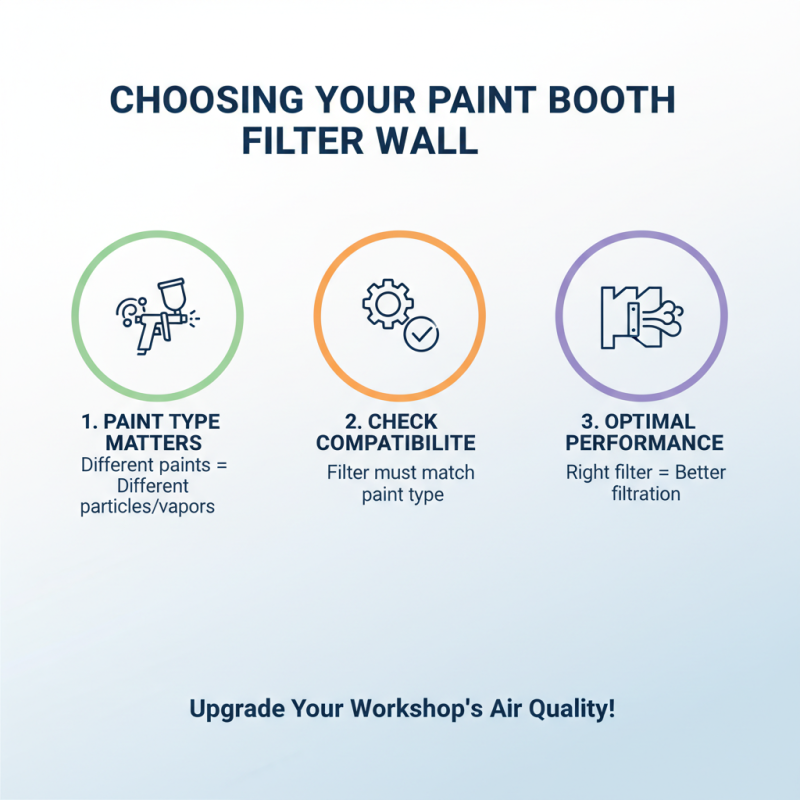
Choosing the right Paint Booth Filter Wall is vital for any workshop. It impacts air quality and workspace safety. A well-chosen filter wall helps reduce contaminants and enhances paint application.
Different workshops have varied needs. Some may require high filtration efficiency, while others focus on cost-effectiveness. Consider the size of your paint booth, airflow requirements, and the type of materials you use. These aspects influence your choice significantly.
Mistakes can happen. Picking the wrong type of filter can lead to poor air quality. Sometimes, workshops overlook maintenance needs. This can result in decreased performance over time. Reflecting on past choices can guide you to a more informed decision. Ultimately, the right Paint Booth Filter Wall ensures a safer and cleaner operation.
Understanding the Importance of Filters in Paint Booths
Filters play a crucial role in maintaining air quality within paint booths. They capture overspray particles and harmful vapors, protecting both the environment and workers. A study by the National Association of Manufacturers indicates that nearly 70% of paint booth issues arise from inadequate filtration. This highlights the importance of selecting the right filter wall for your workshop.
High-efficiency particulate air filters (HEPA) have become essential in many facilities. They can trap 99.97% of particles sized 0.3 microns or larger. However, not all workshops require this standard. Factors such as the type of paint and volume of work should guide your choice. A report from the Environmental Protection Agency illustrates that improper filtration can increase volatile organic compounds (VOCs), leading to serious health risks.
Regular maintenance and monitoring are necessary. Filters can clog quickly, reducing airflow and efficiency. Some workshops neglect this, resulting in costly downtimes. The industry standard suggests changing filters every three months, but many underestimate this need. Checking filters periodically is essential for optimal operation and worker safety.
How to Choose the Right Paint Booth Filter Wall for Your Workshop? - Understanding the Importance of Filters in Paint Booths
| Filter Type |
Efficiency (%) |
Recommended Applications |
Maintenance Frequency (Months) |
| Fiberglass Filter |
60 - 80 |
General Spray Painting |
1 - 3 |
| Polyester Filter |
80 - 90 |
Automotive Paints |
2 - 4 |
| HEPA Filter |
99.97 |
Fine Particulate Control |
6 - 12 |
| Activated Carbon Filter |
Varies |
Odor Control |
3 - 6 |
Types of Paint Booth Filter Walls and Their Applications
When choosing a paint booth filter wall, it's essential to understand the types available. Some filter walls are designed for waterborne coatings, while others are suitable for solvent-based paints. Knowing your materials will help you make the right choice.
Bag filters are common for paint booths. They capture particulate matter effectively. However, their performance can degrade over time. Regular maintenance is crucial to ensure they function well. Replace them as needed to avoid reduced airflow.
Another option is pleated filters. They have a larger surface area and can trap finer particles. Yet, they may require more frequent changes due to clogging. Be aware of your booth’s specific needs. Using the wrong type can lead to inefficient filtration, affecting paint quality.
Tip: Consider the airflow in your workshop. Proper ventilation is key for optimal filter performance. Also, think about the type of work you do. Some filters perform better in high-humidity environments. Ensure you choose accordingly.
Evaluating Filter Performance and Making Adjustments
Choosing the right paint booth filter wall for your workshop requires careful evaluation. Filter performance is crucial for air quality and the efficiency of the booth. According to the Occupational Safety and Health Administration (OSHA), effective filtration can reduce harmful particulates by up to 98%. Regular monitoring of filter performance is necessary for maintaining compliance and ensuring health standards.
Tips: Check your filters regularly. They should be replaced if the pressure drop exceeds 0.5 inches of water gauge.
While performance data is essential, understanding the installation and adjustments is just as vital. Dust and paint particles can clog filters quickly. Neglecting them can lead to poor airflow and reduced efficiency. Aim for a balance between optimal performance and cost-effectiveness.
Tips: Utilize a pre-filter to extend the life of your main filter. This can save you time, effort, and money.
Remember to track changes over time. Evaluate how filter adjustments impact air quality. Analyzing this can highlight areas that need further attention. Always keep an open mind about improvements and updates to your setup.