How to Choose the Right Spray Booth Filter Material for Optimal Performance?
Choosing the right spray booth filter material is crucial for achieving optimal performance. Industry reports indicate that improper filtration can lead to significant production losses. A study by the Paint and Coatings Industry Association (PCIA) highlights that incorrect filter choices can result in a 15% increase in paint usage and waste. The quality of spray booth filter materials directly impacts air quality and operability.
When selecting spray booth filter material, consider the specific requirements of your operation. Filters come in various fabrics and compositions, each with unique strengths. For instance, synthetic filters are known for their durability and efficiency, while fiberglass filters excel at capturing finer particulates. Yet, some filters may require frequent replacement, leading to unnecessary costs.
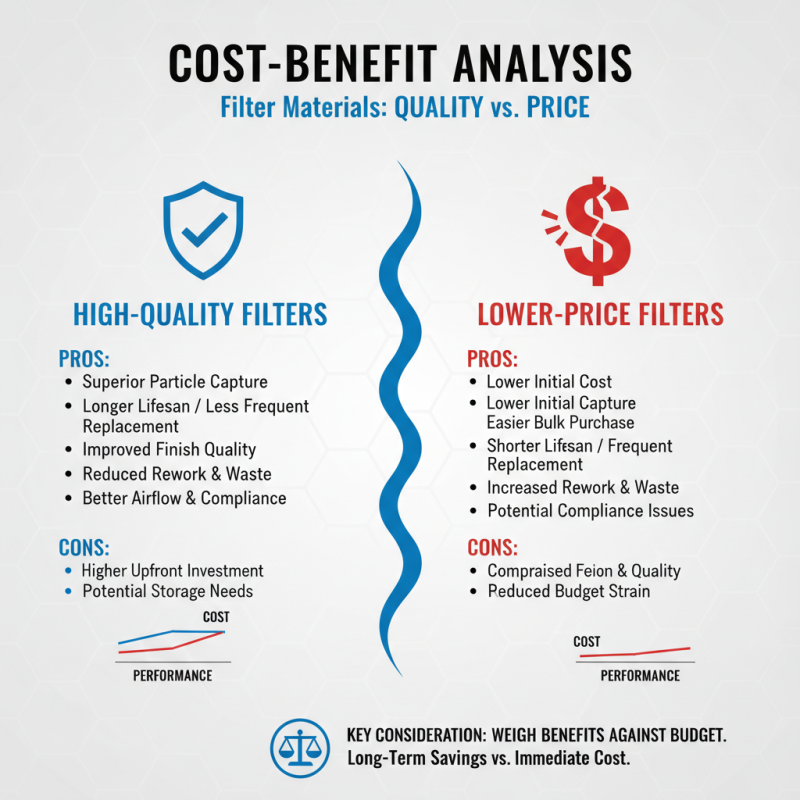
Understanding the balance between efficiency and cost is vital. While a premium spray booth filter material may seem like an unnecessary expense, it can save money in the long run. Inadequate filtration can increase the need for maintenance and negatively affect product quality. Regular assessment of filter performance can indicate whether a change in material is necessary. Choosing wisely can optimize the entire spray booth operation.
Understanding the Different Types of Spray Booth Filter Materials
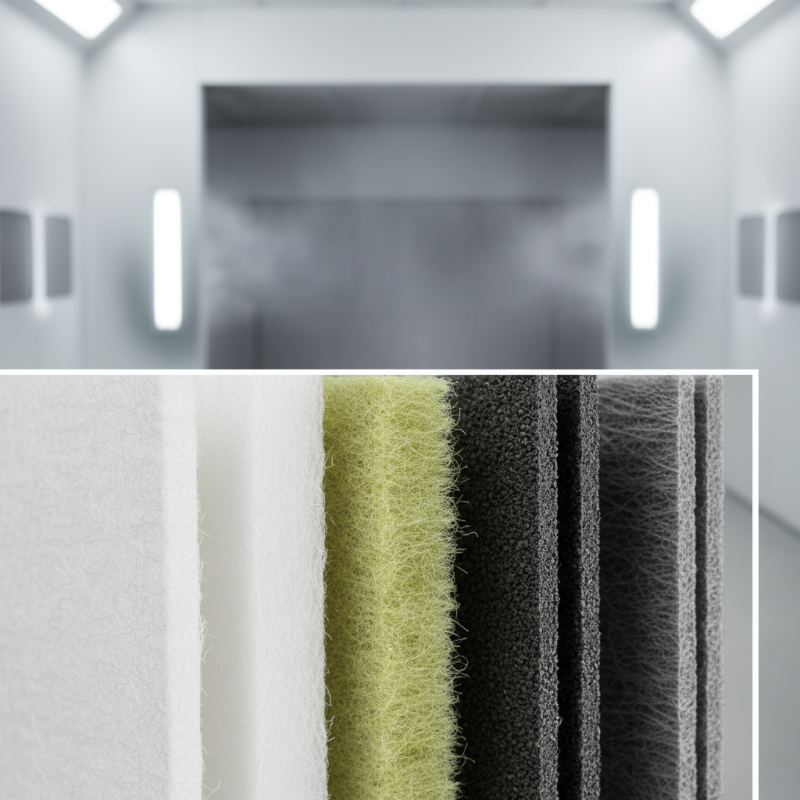
When selecting spray booth filter materials, understanding the different types available is crucial. Each filter type serves a specific purpose. Fiberglass filters are popular for their affordability and broad applications. They capture larger particles effectively but may not filter fine dust as well as others. For high-efficiency needs, HEPA filters excel. These capture 99.97% of particles larger than 0.3 microns. Their performance comes at a higher cost and may require more frequent replacement.
Another option is polyester filters, known for their durability and higher dust-holding capacity. They can handle heavier loads compared to fiberglass. However, they might not trap every tiny particle. Choosing a filter also depends on the type of spray application. Water-based paints may need different filtration than solvent-based ones. A mismatch can reduce the filter’s effectiveness and your operation's overall performance.
Reflecting on the right choice is essential. A filter that works in one setup may not work in another. Consider factors like airflow and the specific substances being filtered. This process is about finding balance. Each type has pros and cons that require careful evaluation. Choosing wisely can enhance efficiency and maintain air quality in your workspace.
How to Choose the Right Spray Booth Filter Material for Optimal Performance?
| Filter Material Type |
Description |
Application |
Efficiency Rating |
Cost (per sq ft) |
| Fiberglass |
Commonly used filter that captures dust and paint overspray. |
General purpose spray booths. |
85-95% |
$1.50 |
| Polyester |
Durable and resistant to moisture; good for high humidity environments. |
High humidity spray booths. |
90-98% |
$1.80 |
| Activated Carbon |
Adsorbs odors and solvents; ideal for VOC control. |
VOC-sensitive environments. |
85-90% |
$2.50 |
| Paper |
Inexpensive option with good dust capture but lower durability. |
Light-duty applications. |
80-85% |
$0.80 |
| Synthetic |
Man-made fibers that provide high dirt holding capacity. |
Heavy-duty applications. |
95-99% |
$2.00 |
Evaluating Performance Criteria for Spray Booth Filters
Selecting the right spray booth filter material is essential for ensuring optimal performance. When assessing filter materials, it's important to consider various performance criteria. These include particle retention efficiency, airflow resistance, and chemical resistance. High-efficiency filters can capture smaller particles, improving air quality significantly. However, filters that are too dense may restrict airflow, affecting overall performance.
Evaluating these criteria requires a deep understanding of specific applications. For instance, different spray applications generate varying types of overspray and particulate matter. Not all filters handle these equally well. Some materials may excel in one area but fail in others. This inconsistency can lead to unexpected downtime or maintenance issues. Testing different materials in real-world conditions often reveals critical insights that theoretical evaluations cannot provide.
Economics also play a role in filter selection. While cheaper options may seem attractive, they often lack the durability needed for long-term use. Choosing a higher-quality filter may result in lower replacement frequency, offsetting initial costs. Be mindful of balancing performance with budget constraints. Ultimately, a thorough examination of filter options will ensure that both efficiency and safety are maintained.
Performance Comparison of Spray Booth Filter Materials
Factors Influencing Filter Selection for Specific Applications
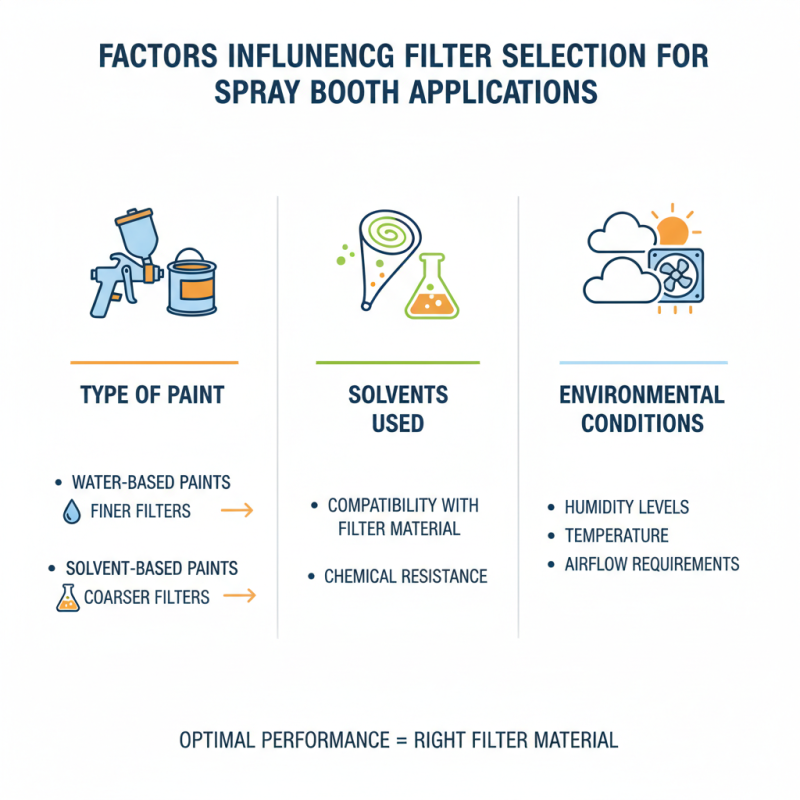
Choosing the right spray booth filter material is crucial for optimal performance. The specific application largely influences filter selection. Factors such as the type of paint, solvents used, and environmental conditions play a significant role. For example, water-based paints often require finer filters compared to solvent-based ones.
One important consideration is airflow. Insufficient airflow can lead to poor filtration and increased contamination. Ensure the filter material allows for adequate air passage while trapping particles effectively. Remember, a balance between filtration efficiency and airflow is key.
**Tip:** Always test the filter in real-world conditions to identify its suitability.
Another factor is the lifespan of the filter material. Some filters last longer but may not offer the best efficiency. Reflect on your specific needs. Frequent changes may mean investing in higher-quality filters.
**Tip:** Monitor filter performance regularly. Identify any changes in air quality or overspray.
Lastly, consider the ease of replacement. Complex systems can lead to downtime and increased operational costs. Choose materials that are user-friendly and fit your spray booth design. Striking this balance ensures a functional and efficient setup.
Maintenance and Replacement Considerations for Spray Booth Filters
Maintaining spray booth filters is essential for optimal performance and air quality. Filters can become clogged with particles and contaminants, reducing airflow and efficiency. According to industry reports, filter efficiency can drop by up to 40% when they are saturated. Regular inspections help identify when replacement is necessary. When filters are not replaced timely, the booth's operational costs rise significantly due to increased energy use.
Replacement frequency varies based on usage and environmental conditions. For example, shops operating in dusty environments may need to replace filters every one to two weeks. In contrast, moderate-use facilities might manage with monthly replacements. It’s important to track usage and filter condition closely. Neglecting this can lead to compromised air quality and increased worker exposure to harmful substances.
Choosing the right filter material also impacts maintenance cycles. Fiberglass filters, for instance, might require more frequent changes than synthetic options, which are typically more durable. Using low-quality filters can seem cost-effective initially, but over time, they may lead to higher maintenance. A balance can be achieved through careful consideration of filter characteristics, including efficiency ratings and compatibility with booth systems.