How to Choose the Right Ffu Filter Unit for Your Cleanroom Needs?
Choosing the right FFU filter unit is crucial for maintaining a cleanroom's integrity. Cleanrooms serve various industries, necessitating specific airflow and filtration capabilities. Selecting an FFU filter unit that meets these requirements involves understanding your cleanroom's unique needs.
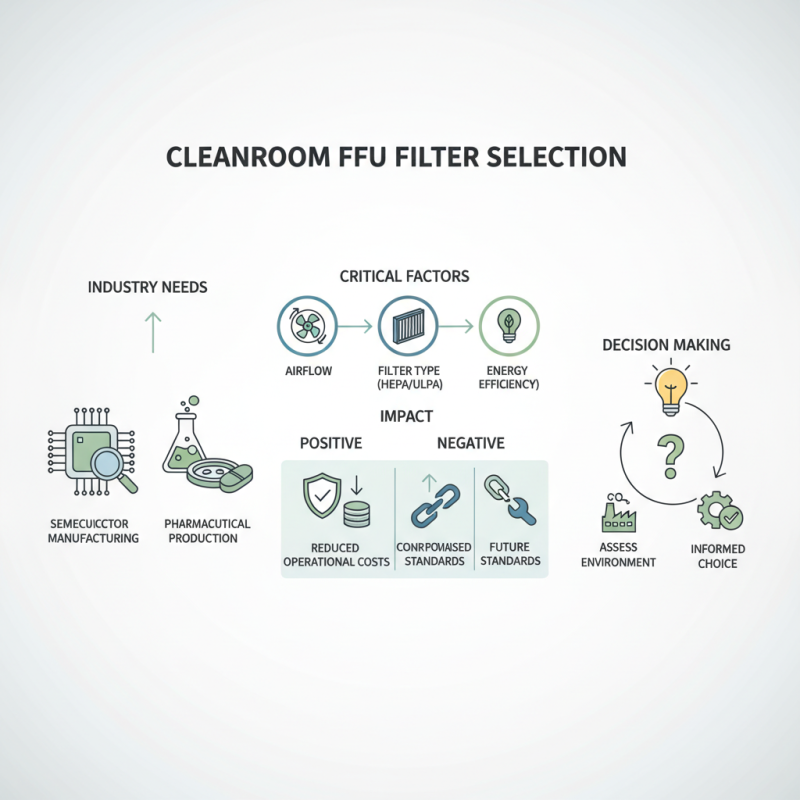
Different applications demand varying levels of cleanliness. For instance, semiconductor manufacturing requires tighter specifications than pharmaceutical production. An effective FFU filter unit must match these specifications closely. The right choice can enhance efficiency and safety, while a poor selection might compromise cleanroom standards.
It’s essential to consider factors like airflow, filter type, and energy efficiency. A well-chosen FFU filter unit improves compliance and reduces operational costs. However, many overlook the importance of these elements. Failure to assess your cleanroom's needs thoroughly can lead to issues down the line. Reflect on your specific environment to make an informed decision.
Understanding the Role of FFU Filters in Cleanroom Environments
FFU filters play a crucial role in maintaining cleanroom environments. They ensure that air quality meets stringent standards. According to a recent industry report, 80% of cleanroom contamination is airborne. This emphasizes the importance of selecting the right Fan Filter Unit (FFU). Proper filtration reduces the risk of contamination that could compromise sensitive processes.
Understanding FFU filters involves recognizing their efficiency ratings. HEPA filters, often used in cleanrooms, must capture at least 99.97% of particles over 0.3 microns. This is vital for operations in pharmaceuticals and biotech sectors. However, not all applications require this level of filtration. It’s essential to assess specific cleanroom needs. Too often, companies overspend on filtration systems that exceed what's necessary.
Another factor to consider is the airflow rate of a FFU. Achieving the correct balance is critical. A higher airflow might seem beneficial, but it can lead to turbulence. This can disturb settled particles. According to studies, the ideal change rate of air in a cleanroom is typically between 15 to 30 air changes per hour. This ensures efficiency while minimizing disturbances. Evaluating these parameters carefully enables facilities to make informed choices.
How to Choose the Right Ffu Filter Unit for Your Cleanroom Needs? - Understanding the Role of FFU Filters in Cleanroom Environments
| Filter Type |
Efficiency Rating |
Application |
Airflow Rate (CFM) |
Pressure Drop (inches of water) |
Estimated Lifespan (Months) |
| HEPA Filter |
99.97% |
Pharmaceuticals |
400 |
0.3 |
24 |
| ULPA Filter |
99.999% |
Microelectronics |
600 |
0.4 |
18 |
| Pre-filter |
80% |
General Cleanrooms |
500 |
0.2 |
12 |
| Carbon Filter |
N/A |
Odor Removal |
300 |
0.5 |
6 |
Key Factors to Consider When Selecting FFU Filter Units
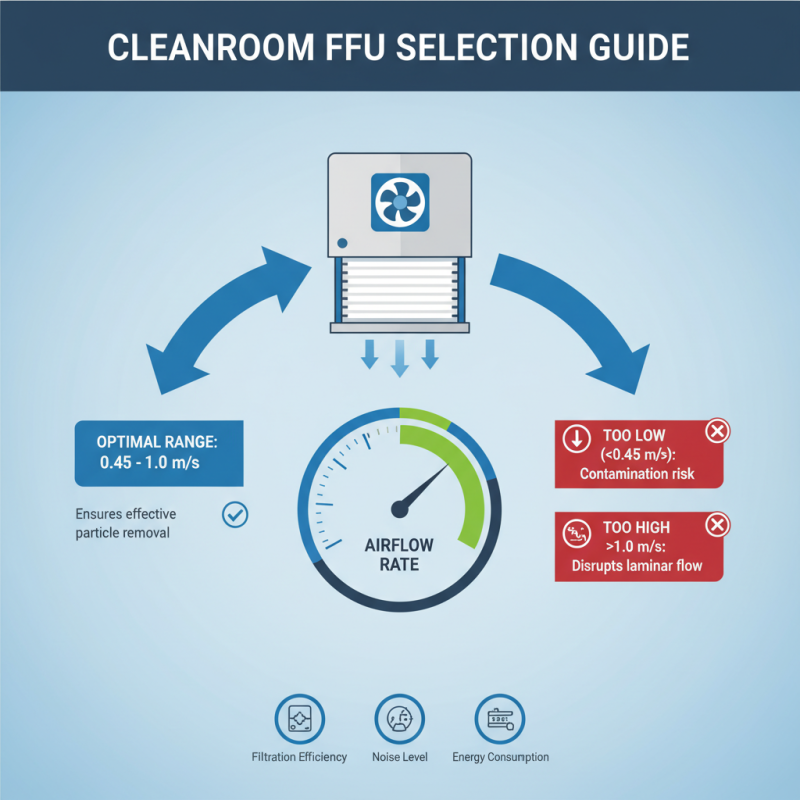
When selecting an FFU (Fan Filter Unit) for cleanroom applications, various factors come into play that can significantly impact performance. Airflow rate is crucial. According to the Institute of Environmental Sciences and Technology, proper airflow should be maintained between 0.45 to 1.0 m/s to ensure effective particle removal. Too low may lead to contamination, while too high can disturb the laminar flow.
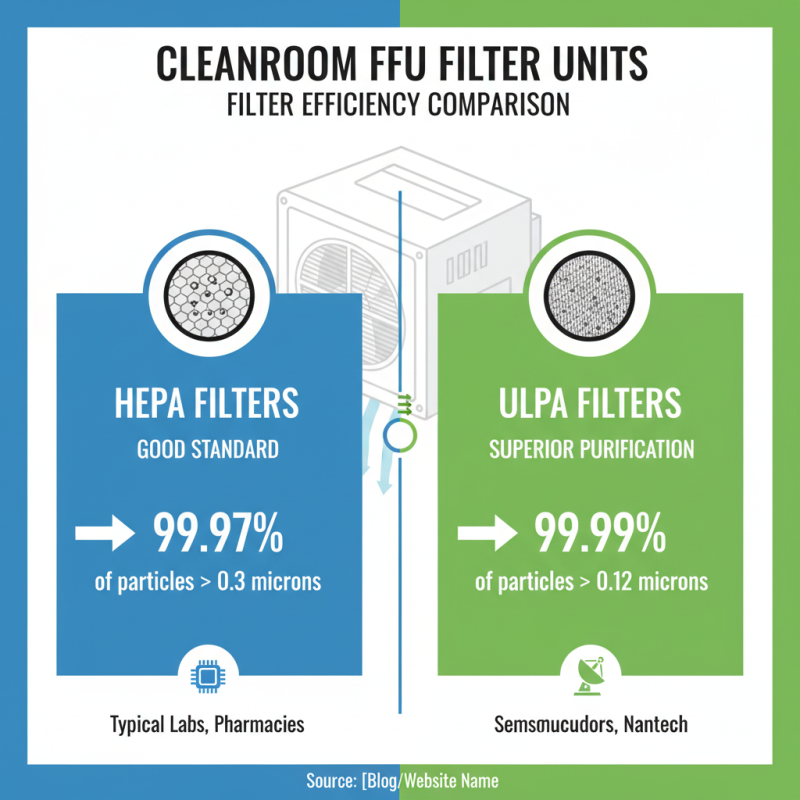
Considering the filter type is essential. HEPA filters are widely used, capturing 99.97% of particles down to 0.3 microns. However, not all applications require HEPA. Some may benefit from ULPA filters, which provide deeper filtration but come with increased costs. A balance between cost-effectiveness and air quality is often necessary.
Noise levels generated by FFUs can also be a concern. Industry reports suggest that some units operate at noise levels above 60 dB, which may be disruptive in sensitive environments. Additionally, the ease of maintenance should not be overlooked. Regular filter replacements are critical for sustained performance, yet inconvenient designs can lead to neglect. Choosing an FFU is not just a technical decision; it involves assessing environmental impact and operational practicality. It’s essential to weigh all these factors carefully to find a suitable solution.
Types of FFU Filters: HEPA vs. ULPA and Their Applications
When choosing an FFU filter unit for a cleanroom, understanding filter types is crucial. Two main types are often considered: HEPA and ULPA filters. HEPA filters trap 99.97% of particles that are 0.3 microns or larger. This makes them suitable for many applications. However, ULPA filters are more efficient. They can capture 99.999% of particles down to 0.12 microns. This higher level of purification is essential in sensitive environments.
Tips: Assess your needs carefully. If your cleanroom handles less critical tasks, HEPA may suffice. But for pharmaceutical or biotech facilities, ULPA filters are advisable. Choose based on particle size and application.
Another consideration is airflow. HEPA filters generally allow for higher airflow. This can be beneficial in environments requiring quick air changes. However, ULPA filters can restrict airflow, impacting temperature and humidity. Maintenance is also a factor. HEPA filters need regular checks, but ULPA filters can require more frequent replacements.
Tips: Regularly monitor filter performance. This ensures a consistent cleanroom environment. Check for any signs of wear or impact on airflow.
Evaluating Airflow and Energy Efficiency in FFU Filters
When selecting an FFU (Fan Filter Unit) for your cleanroom, airflow and energy efficiency are critical. Airflow should match cleanroom requirements. A well-designed FFU will provide uniform air distribution. It helps maintain cleanliness in controlled environments. However, achieving the perfect balance can be challenging. Some units may provide adequate airflow but consume excessive energy. This can lead to higher operational costs.
Energy efficiency is a decisive factor. Not all FFU filters are created equal. Some designs incorporate energy-saving technologies. It’s essential to consider the filter's life cycle. Replacing filters too frequently can increase waste. Look for units that offer both performance and efficiency. Aiming for lower energy use is a good goal. Yet, this sometimes compromises airflow quality.
Testing different configurations in real-world conditions is wise. You might find that theoretical data does not match actual performance. Continuous monitoring is vital for optimizing systems. With evolving standards, you may need to reassess your choices. Evaluate how changes in business needs influence your cleanroom specifications. Finding the right FFU filter is a process that requires thought. Sometimes, solutions may appear perfect until issues arise. Adjustments are often necessary as cleanroom demands evolve.
Maintenance and Replacement Guidelines for FFU Filter Units
Maintaining FFU filter units is crucial for cleanroom efficiency. Regular checks should be part of your routine. Look for visible dust on filters; it can hinder airflow. A clean filter helps maintain a sterile environment. Schedule inspections every few months to avoid unexpected downtime.
Replacement guidelines are just as important. Typically, filters should be replaced every 6 to 12 months. This can vary based on usage and the surrounding environment. Use a pressure gauge to monitor filter performance. If you notice a significant pressure drop, it’s time for a change. Sometimes, people overlook this detail. They wait too long, resulting in compromised air quality.
When replacing filters, ensure you choose the right type. Not all filters fit every unit. Check specifications carefully. Installation should be precise; improper fitting can lead to leakage. It's worth reflecting on past experiences. Learning from mistakes can prevent future issues with FFU units. Regular attention to both maintenance and replacement will ensure better performance.