Top 10 Flow Hood Laminar Systems for Precision Airflow Control?
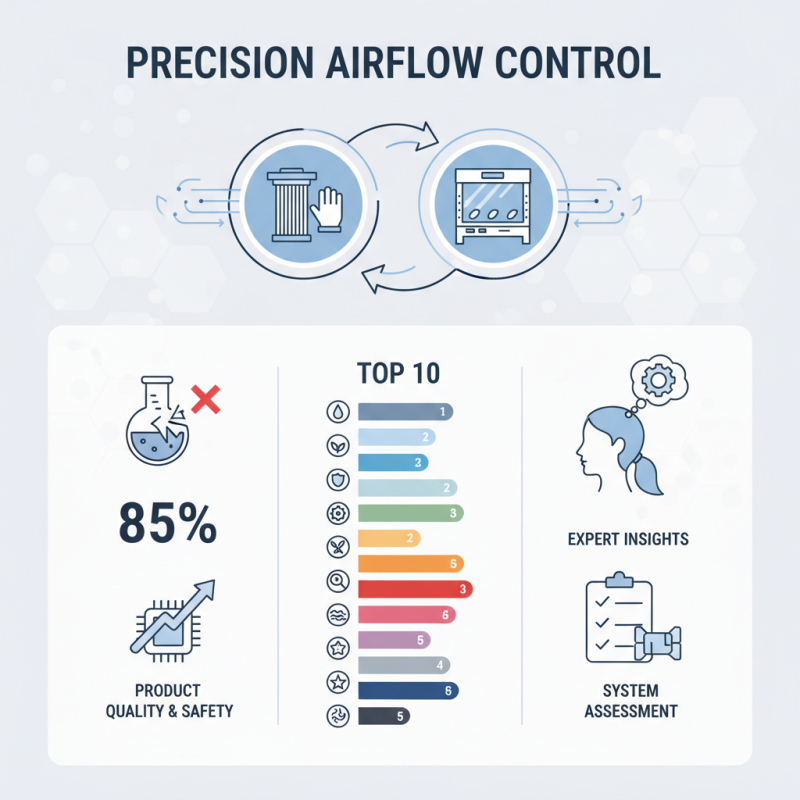
In the realm of clean environments, the importance of Flow Hood Laminar systems cannot be overstated. These systems are crucial for laboratories and manufacturing facilities that require precise airflow control. According to a recent report by the Cleanroom Institute, 85% of contamination incidents stem from inadequate airflow management. This highlights a critical need for reliable solutions.
Dr. Emily Tran, a leading expert in cleanroom technology, emphasizes, "The accuracy of airflow control is directly linked to product quality and safety." Her insights reflect the industry's growing recognition of the significance of high-performance Flow Hood Laminar systems. They ensure sterile environments essential for sensitive applications like pharmaceuticals and biotechnology.
However, not all systems meet the rigorous standards necessary for optimal performance. Some may fall short, leading to compromised air quality. Understanding the specifications and capabilities of the top models can mitigate these risks. It is vital for professionals to assess their real needs before investing in a system. Reliable data and expert opinions are key in making informed choices in this vital sector.
Top 10 Flow Hood Laminar Systems: An Overview of Precision Airflow Control
Precision airflow control is crucial in various environments, especially in laboratories and cleanrooms. Flow hood laminar systems provide a controlled environment, ensuring clean air reaches sensitive tasks. These systems work by moving air through high-efficiency filters, creating a sterile workspace. Users must understand their unique needs to select the right system.
While laminar flow hoods are effective, they are not without challenges. Regular maintenance is essential to sustain efficiency. Filters can clog, impacting air quality and work safety. Users often overlook this aspect. Reliability can waver if airflow patterns aren't closely monitored. Understanding these limitations helps users select and utilize these systems effectively.
Decision-making is needed for optimal results. Some may prioritize cost over performance. This can lead to inadequate airflow, ultimately affecting experiments or processes. So, thorough evaluation and research on features are vital. Exploring options beyond initial impressions aids in recognizing the best solutions for specific applications.
Key Features of Flow Hood Laminar Systems for Optimal Air Quality
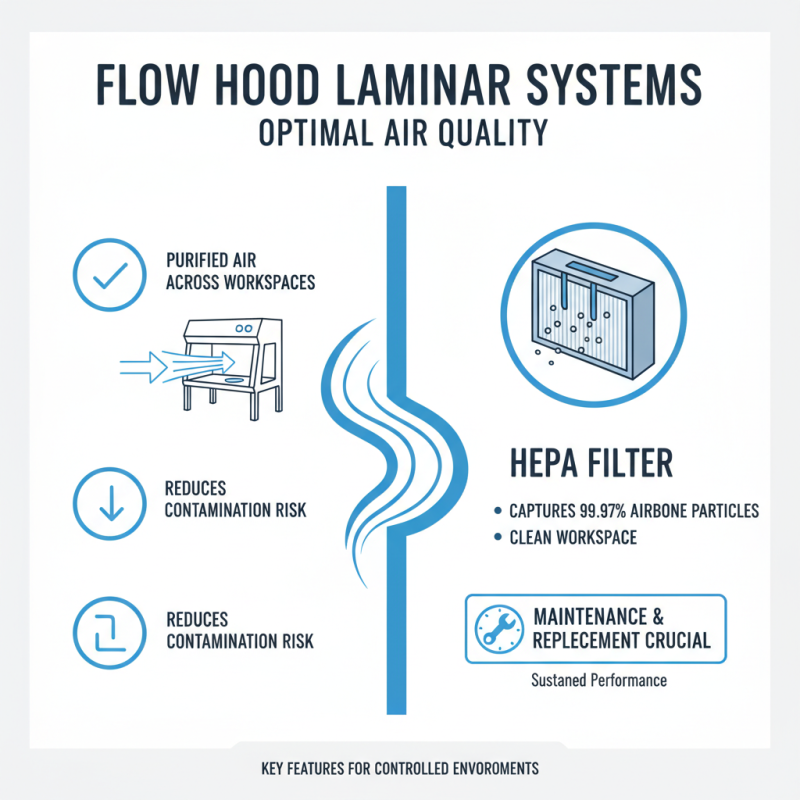
Flow hood laminar systems are essential for maintaining optimal air quality in controlled environments. These systems effectively push purified air across work surfaces, reducing the risk of contamination. A key feature is the HEPA filter, which captures 99.97% of airborne particles, providing a clean workspace. However, the effectiveness of these filters diminishes over time, with regular maintenance and replacement crucial for sustained performance.
Another significant element is airflow uniformity. A well-designed laminar flow hood ensures a consistent air speed across its face. This stability minimizes turbulence, which can cause particles to settle back into the workspace. Users may find airflow measurements less than ideal due to improper setup or environmental factors like nearby equipment. Thus, understanding and adjusting these variables is critical for achieving desired air quality.
Monitoring systems are increasingly being integrated into flow hoods. These systems can provide real-time data on filter status and airflow velocity. However, not all users take advantage of these features. Without proper education on their usage, some may overlook vital alerts, impacting the system's functionality. Awareness and training can greatly enhance the overall reliability of airflow control.
Comparative Analysis of Flow Rates in Leading Laminar Airflow Systems
When analyzing laminar airflow systems, flow rate is a critical factor. Different models offer a range of performance metrics, influencing their suitability for various applications. High flow rates can enhance efficiency but may also lead to turbulence. It’s essential to find a balance for optimal performance.
One tip is to regularly check the air quality in your workspace. Constant monitoring can help detect fluctuations caused by less efficient systems. Consider investing in sensors that provide real-time feedback. This enables timely adjustments, ensuring the environment remains sterile.
For those selecting a system, pay attention to the materials used. Often, the reliability of the components directly affects the airflow. Look for systems with HEPA filters for enhanced filtration. Remember, not every system fits every operation. Evaluate your unique needs before making a decision to ensure long-term satisfaction.
Top 10 Flow Hood Laminar Systems for Precision Airflow Control
The Role of HEPA Filters in Ensuring Cleanroom Standards in Laminar Systems
In cleanroom environments, HEPA filters play a crucial role in maintaining air purity. The performance of these filters directly impacts the overall cleanliness of the laminar system. According to the Institute of Environmental Sciences and Technology, HEPA filters can trap at least 99.97% of particles measuring 0.3 microns. This efficiency is vital for industries like pharmaceuticals and biotechnology.
However, it is essential to regularly monitor and replace HEPA filters to ensure effective filtration. A study by the National Institute of Standards and Technology highlights that filter degradation can occur over time, leading to potential contamination risks. Data indicates that filters should be tested and replaced at least once a year for optimal performance. There are instances where maintenance is overlooked, jeopardizing cleanroom standards.
The challenge lies in balancing cost and performance. While HEPA filters are effective, their initial investment can be high. Many facilities struggle with budget constraints, leading to delayed filter replacements. This may result in a higher particle concentration in the air, contradicting the cleanroom's purpose. Therefore, ongoing education about filtration systems is necessary for cleanroom managers to make informed decisions.
Top 10 Flow Hood Laminar Systems for Precision Airflow Control
| Model |
Airflow Speed (m/s) |
Filter Type |
HEPA Filter Efficiency (%) |
Noise Level (dB) |
Price ($) |
| Model A |
0.45 |
HEPA |
99.97 |
55 |
2500 |
| Model B |
0.60 |
HEPA |
99.99 |
50 |
3200 |
| Model C |
0.70 |
HEPA |
99.97 |
60 |
2800 |
| Model D |
0.50 |
HEPA |
99.95 |
54 |
2300 |
| Model E |
0.65 |
HEPA |
99.99 |
53 |
3000 |
| Model F |
0.55 |
HEPA |
99.97 |
62 |
2600 |
| Model G |
0.75 |
HEPA |
99.95 |
58 |
3400 |
| Model H |
0.40 |
HEPA |
99.98 |
52 |
2100 |
| Model I |
0.68 |
HEPA |
99.96 |
61 |
3300 |
| Model J |
0.58 |
HEPA |
99.94 |
59 |
2900 |
Industry Applications and Case Studies of Flow Hood Laminar Systems in Use
In various industries, flow hood laminar systems play a critical role in maintaining air quality and protecting sensitive processes. For instance, the pharmaceutical sector utilizes these systems to control particulate contamination during drug manufacturing. A report from the International Journal of Pharmaceutical Sciences indicated that 95% of contamination incidents are linked to inadequate airflow management. Such statistics highlight the importance of precision in airflow control.
In laboratory environments, laminar flow hoods are essential for experiments that require sterile conditions. A study showed that 80% of laboratories utilize these systems for biological research. They not only mitigate contamination risk but also enhance the reliability of experimental results. However, improper maintenance can lead to airflow fluctuations, diminishing effectiveness.
Tips: Regularly check filters and ensure they are replaced as needed. A compromised filter can obstruct airflow, posing risks to sensitive processes. Additionally, training staff on the proper use of these systems can greatly enhance their efficacy. Understanding the limitations of airflow systems is crucial; even minor obstructions can lead to significant contamination incidents.