2026 Top Paint Spray Booth Filters You Need to Know?
In the ever-evolving world of automotive refinishing, understanding the right Paint Spray Booth Filters is essential. Experts in the field agree on their critical role in maintaining air quality and ensuring finished products are flawless. John Thompson, a leading authority on spray booth regulations, states, "Choosing the correct filters can significantly impact the quality of your paint jobs."
Paint Spray Booth Filters are not all created equal. Various types cater to specific needs, such as particulate removal and odor control. The choice of filters can lead to enhanced paint adhesion and reduced imperfections. Many professionals overlook this area, which can result in costly revisions.
In 2026, the advancements in filter technology will be more accessible and effective. Yet, some companies still hesitate to upgrade their systems. This reluctance might stem from cost concerns or a lack of awareness of the latest innovations. Understanding these filters is not just about compliance; it's about producing superior work. A thorough examination may reveal outdated practices or forgotten pieces of equipment hindering progress.

Understanding the Importance of Paint Spray Booth Filters in 2026
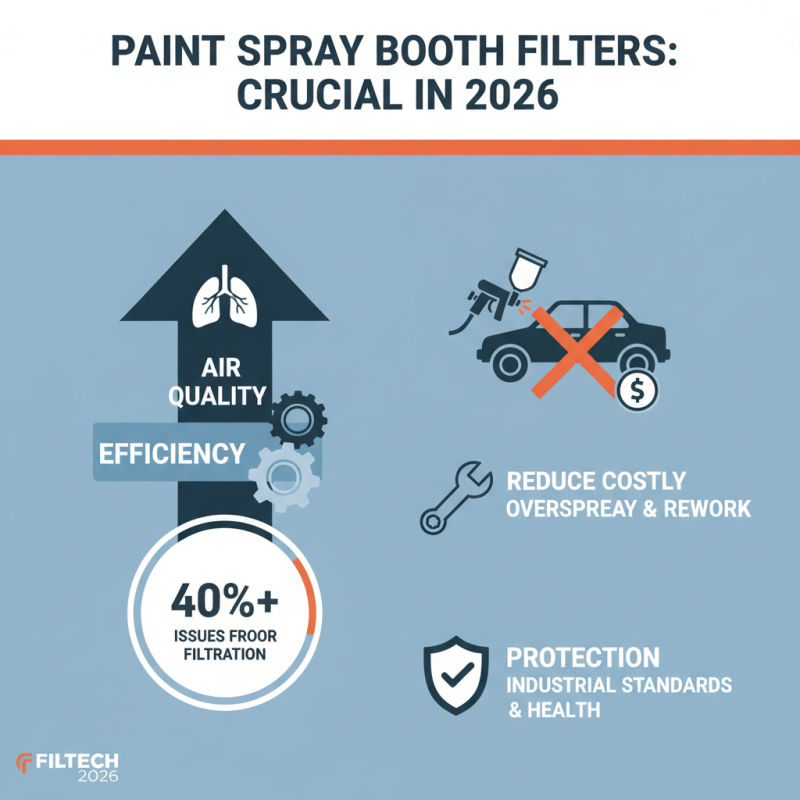
In 2026, understanding the importance of paint spray booth filters is crucial for industrial applications. These filters play a vital role in maintaining air quality. According to recent reports, over 40% of paint booth issues relate to inadequate filtration. Poor filter performance leads to overspray, requiring costly rework. Many facilities still underestimate this factor.
Filters trap particulate matter and volatile organic compounds (VOCs). Effective filters can reduce VOC emissions by up to 90%. This is not just an environmental concern; it can impact workplace safety. Workers exposed to high VOC levels face health risks, yet many still lack awareness. Regular filter changes can mitigate these issues significantly.
However, not all filters are created equal. It's essential to evaluate filter efficiency and lifespan. Filters may lose their efficiency faster in high-demand environments. Facilities often overlook this, resulting in increased operational costs. Regular assessments can help identify the most effective solutions for unique needs, ensuring compliance with safety standards. Such a proactive approach benefits both employees and the bottom line.
Types of Paint Spray Booth Filters Available on the Market
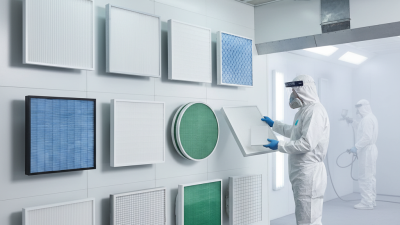
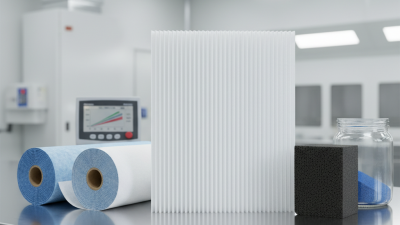
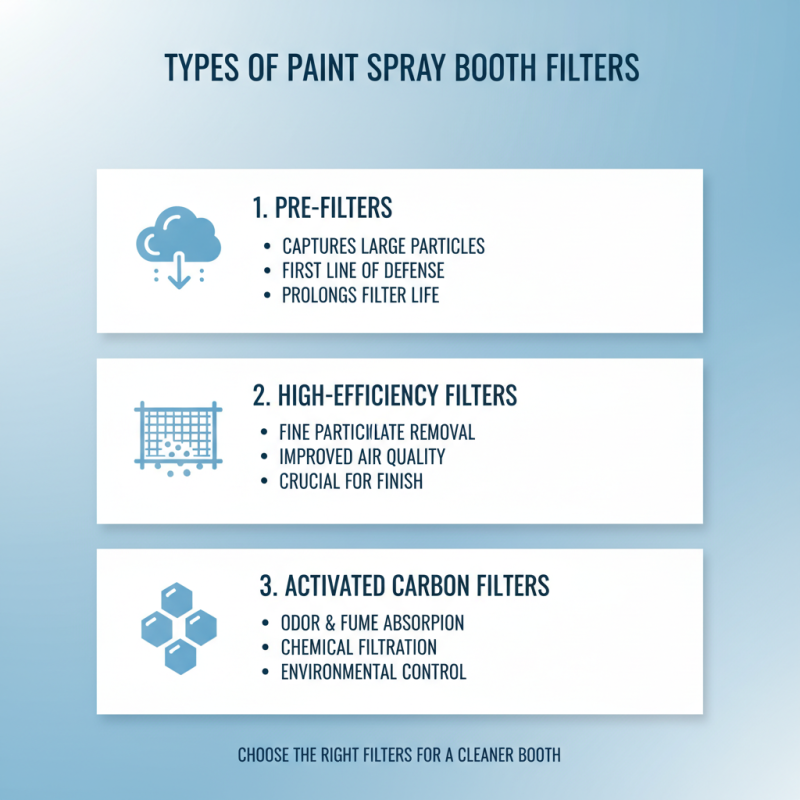
When considering paint spray booth filters, it's essential to know the types available on the market. There are primarily three categories: pre-filters, high-efficiency filters, and activated carbon filters. Pre-filters are typically used to capture larger particles. These are often the first line of defense against dust and debris. They can significantly extend the life of downstream filters by capturing the bulk of contaminants.
High-efficiency filters, on the other hand, are designed for more demanding environments. According to a report by the Industrial Filter Association, these filters can capture up to 99.97% of particles ranging from 0.3 microns and above. This level of filtration is crucial for maintaining air quality in paint booths. However, they can become restrictive if not replaced regularly, leading to decreased airflow and increased operational costs.
Activated carbon filters provide another layer of filtration. They are particularly effective at removing volatile organic compounds (VOCs) from the air. A study from the Environmental Protection Agency notes that these compounds can have detrimental health effects. Using activated carbon filters in conjunction with other types can enhance overall effectiveness. However, the balance between filter life and efficiency should always be considered.
Key Features to Look for in Paint Spray Booth Filters
When selecting paint spray booth filters, understanding key features is vital. Choosing the right filter can significantly impact air quality and overall efficiency. High-efficiency particulate air (HEPA) filters capture at least 99.97% of particles as small as 0.3 microns. This is essential for safety in any spray booth environment. Reports indicate that inadequate filtration can allow hazardous compounds into the air, risking health.
Capturing volatile organic compounds (VOCs) is another crucial factor. A report from the Environmental Protection Agency highlights that VOCs can cause various health issues. Filters that specifically target VOCs ensure a safer workspace. The filter's lifespan is also important. Quality filters generally last longer, saving on both cost and downtime for replacements.
Some filters may struggle with airflow resistance. High resistance affects the booth's performance. It is sometimes overlooked in favor of initial cost savings. Regular maintenance is vital to ensure filters perform at their best. Professionals often face challenges in balancing cost versus efficiency. Filters need to be chosen carefully and not just based on price. The right choice promotes a safe and productive environment.
Maintenance Tips for Maximizing the Lifespan of Filters
Maintaining paint spray booth filters is essential for optimal performance and longevity. According to recent industry reports, poorly maintained filters can reduce airflow efficiency by up to 30%. This inefficient airflow can lead to increased energy costs and compromised paint quality. Regular maintenance is crucial to avoid these issues.
One effective tip is to schedule routine inspections every two weeks. Check for signs of clogging or excessive dirt buildup. If filters appear dirty, they should be cleaned or replaced immediately. This simple action extends their lifespan and maintains your booth's operational efficiency.
Another important aspect is understanding the types of filters used in your spray booth. High-efficiency filters can capture smaller particles, yet some may become saturated quickly. In some instances, a lower-efficiency filter may be more suitable for specific applications. Assessing your needs helps ensure you select the right filter for your environment.
Lastly, consider the environmental conditions of your facility. High humidity or temperature fluctuations can affect filter performance. Implementing a controlled environment can enhance filter effectiveness and reduce the need for frequent replacements. These insights help you make informed decisions about your spray booth’s filtration system.
2026 Top Paint Spray Booth Filters Performance
Environmental Regulations and Standards Affecting Spray Booth Filters
In the realm of spray booth operations, environmental regulations shape the choice of filters. Compliance with standards is crucial for both safety and efficiency. Filters must trap harmful particles while allowing clean airflow. This balance prevents pollution and promotes a healthier workspace. Understanding these requirements is not just about legality; it's about responsibility.
Selecting the right filter can be daunting. Many users overlook the intricacies of how filters function. A common misconception is equating high efficiency with higher cost. However, a budget-friendly option may suffice, provided it's appropriately matched to your spray booth needs. Always check for certifications and performance data. Be wary of claims that sound too good to be true.
Tip: Regularly assess your filters’ condition. Even high-quality filters can degrade over time. Monitor airflow rates and listen for changes in booth performance. Fine-tuning your filter selection can achieve better results. Remember that the right choice means not just immediate savings but long-term sustainability for your operations.