How to Use a Laminar Flow Hood for Safe Laboratory Work?
In laboratory settings, the importance of using a Laminar Flow Hood cannot be overstated. This specialized equipment ensures protection from airborne contaminants, offering a controlled environment for sensitive procedures. According to a report by the International Society for Cleanroom Technology, using a Laminar Flow Hood can reduce microbial contamination by up to 99.9%. Expert Dr. Jane Smith, a leading authority in laboratory safety, emphasizes, "The Laminar Flow Hood is essential for maintaining sample integrity."
Many researchers rely on this vital tool, especially during tissue culture work and drug formulation. However, not all users understand its limitations. For instance, airflow can be disrupted if the hood is not appropriately maintained. Regular checks and proper training are essential to maximize its effectiveness.
While a Laminar Flow Hood offers significant safety benefits, it cannot eliminate all risk. Users must remain vigilant about potential cross-contamination and comply with all safety protocols. Observing these practices can enhance the overall reliability of lab results.

Understanding the Functionality of a Laminar Flow Hood in Laboratories
A laminar flow hood is critical for maintaining a sterile environment in laboratories. This equipment works by blowing filtered air across the work surface. The airflow creates a barrier that helps prevent contamination of samples. In many labs, researchers depend on this tool for safe handling of sensitive materials.
The hood operates by moving air in a unidirectional flow, which limits particles in the workspace. This means that when you open a container, the air flow pushes contaminants away. However, improper techniques can compromise this safety. For instance, placing materials too close to the front edge can disrupt the airflow pattern. It's essential to keep items within a specific zone to maximize effectiveness.
While using the hood, frequent cleaning and maintenance are vital. Dust and debris can accumulate and impede air flow. Regular monitoring of the filter is necessary, as a clogged filter can allow hazardous particles to enter. Maintaining this equipment is not just a best practice; it's a requirement for ensuring research integrity. Every lab user needs to reflect on their procedures and recognize how mistakes can lead to contamination.
Types of Laminar Flow Hoods and Their Specific Applications
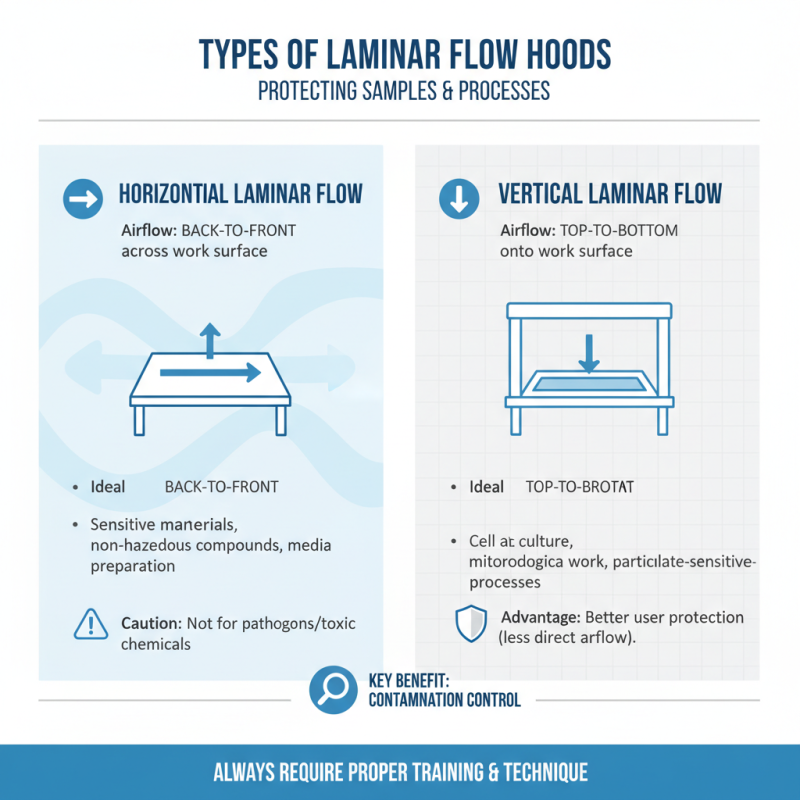
Laminar flow hoods are essential in various laboratory settings. They provide a controlled environment, protecting samples from contamination. There are primarily two types: horizontal and vertical flow hoods. Horizontal flow hoods direct airflow across the work surface. This design is often used for handling sensitive materials. Reports indicate that improper use can compromise results, highlighting the need for proper training.
Vertical flow hoods work differently. They pull air from above and push it downwards. These units are ideal for working with hazardous materials. Data from industry standards reveal that using a vertical flow hood reduces particle contamination by up to 99%. However, users must remember to follow protocols closely. A lapse can lead to serious contamination risks.
In practice, many users struggle with airflow issues. Some do not regularly maintain the filters, leading to inefficient airflow. This can diminish the hood's protective capabilities. Periodic checks are essential. Ultimately, understanding the right type of laminar flow hood and applying best practices is key for laboratory safety.
Essential Safety Protocols When Operating a Laminar Flow Hood
When operating a laminar flow hood, safety protocols are crucial. These hoods protect samples from contamination while providing a clean workspace for lab personnel. According to the CDC, about 5% of lab accidents result from improper equipment use. Understanding the necessary safety measures is key to reducing these risks.
Before beginning work, ensure the hood is functioning correctly. Check the airflow indicator and confirm it meets industry standards. The National Institute for Occupational Safety and Health (NIOSH) emphasizes maintaining a minimum airflow velocity of 0.45 m/s in the work area. Regular inspection and maintenance can identify potential hazards early.
Proper attire is equally important. Lab coats, gloves, and masks should be worn at all times. Studies show that nearly 30% of contamination events occur due to lapses in personal protective equipment (PPE). Even a small breach, like an unsealed glove, can lead to significant contamination. Review procedures regularly to remind team members of their roles in maintaining a sterile environment. Additionally, every team should evaluate their practices. Continuous improvement is necessary to uphold safety standards.
Maintenance and Calibration of Laminar Flow Hoods for Optimal Performance
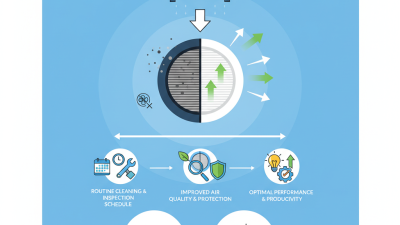
Maintaining a laminar flow hood is essential for ensuring optimal performance in laboratory environments. Regular maintenance can significantly extend the lifespan of the equipment. Industry reports indicate that nearly 30% of airflow issues stem from inadequate maintenance. Dust and particle accumulation can hinder optimal airflow and increase contamination risks. It's crucial to establish a regular cleaning schedule.
Tips: Clean the hood's interior surfaces weekly. Use approved cleaning agents. Check the pre-filters and HEPA filters every month. Replace them when needed. Regular monitoring of airflow velocity is vital. Flow rates below the manufacturer's specifications can indicate filter saturation.
Calibration is another critical aspect. It ensures that the airflow remains within the required parameters. Experts recommend calibrating the hood every six months. Non-compliance can lead to compromised work conditions and safety concerns. Neglecting calibration may lead to false security.
Tips: Use an anemometer to measure airflow rates. Document all calibration activities for future reference. Ensure staff is trained for visual inspections as well. Address any irregularities promptly to avoid potential issues. A proactive approach can make a significant difference in maintaining a safe laboratory environment.
How to Use a Laminar Flow Hood for Safe Laboratory Work?
| Parameter |
Optimal Value |
Frequency of Maintenance |
Calibration Procedures |
| Airflow Velocity |
0.45 m/s |
Quarterly |
Use an anemometer to check airflow |
| Filter Replacement |
As needed |
Annually |
Follow manufacturer guidelines |
| UV Light Functionality |
Operational |
Monthly |
Test with a UV meter |
| Surface Cleaning |
Non-contaminated |
Weekly |
Use disinfectant wipes |
| Electrical Safety Check |
Compliant |
Annually |
Inspect wiring and plugs |
Common Misconceptions About Laminar Flow Hoods and Their Use in Labs
Many people misunderstand laminar flow hoods. They think these devices provide complete protection from all contaminants. In reality, they are designed for specific types of work. Laminar flow hoods create a sterile environment, but they only filter air that passes through them. They do not sterilize surfaces outside the hood. Users might unknowingly introduce contaminants when placing items in and out of the hood.
Tip: Always disinfect surfaces before using the hood. Remember, cleanliness starts outside it.
Another misconception is that laminar flow hoods can replace other forms of personal protective equipment (PPE). While hoods provide some protection, they do not eliminate the need for gloves, gowns, or masks. A hood offers a controlled airflow but does not shield a user from potential hazards. It’s crucial to maintain a comprehensive safety approach.
Tip: Always wear appropriate PPE, even when using a laminar flow hood.
Users also mistakenly believe that laminar flow hoods require little maintenance. In reality, regular checks of the filters and airflow are essential. Neglecting this can lead to decreased effectiveness. Continual awareness of these factors ensures the hood operates as intended.