


Aiming for Grade-A Environmental Compliance? It's Time to Focus on Dry Paint Overspray Separation!
Recently, the General Office of the Ministry of Ecology and Environment released a draft notice on accelerating solutions to current prominent issues in VOC management. The document pinpointed several chronic problems in VOC treatment, such as **"poorly designed treatment facilities that mismatch production systems"** and the **"widespread use of inefficient technologies like photocatalysis, photo-oxidation, and low-temperature plasma, resulting in poor treatment efficacy."** To fundamentally address the issue of non-compliant emissions, the ministry explicitly recommends that enterprises adopt mature, professional combined treatment processes.
Technologically speaking, end-of-pipe gas purification methods (like TAR, RTO, adsorption concentration) are quite mature. However, practice shows that the 'Achilles' heel' of the entire treatment system often lies not at the final stage, but upstream—specifically, in efficiently collecting and removing solid impurities (especially paint overspray) from the exhaust stream.*Industry consensus indicates that to achieve stable, ultra-low emissions, companies often need to dedicate 80% of their effort to solving the front-end interception of these impurities. Numerous case studies confirm that fluctuating or emissions can frequently be traced back to failed overspray capture at the source. This allows impurities to penetrate deeper, contaminating and clogging the core, often expensive, exhaust treatment equipment, eventually causing the entire system to falter.
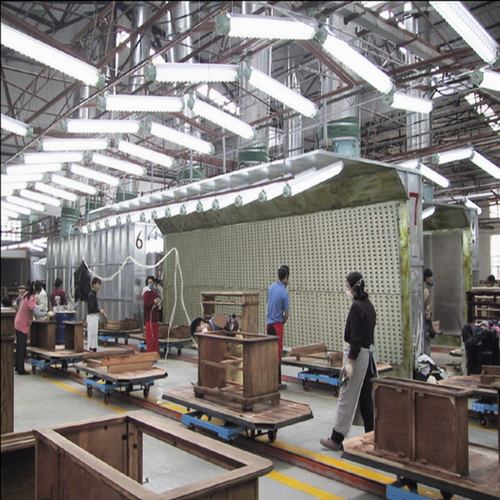
In painting operations, overspray collection primarily falls into two technical routes: wet and dry. Traditional wet methods (like water curtain cabinets, hydrospin systems) use water curtains to capture overspray, carrying away large particles and water-soluble components. While somewhat effective, this method has inherent and significant drawbacks: the exhaust gas after water washing has very high humidity and carries a substantial amount of moisture into subsequent systems.
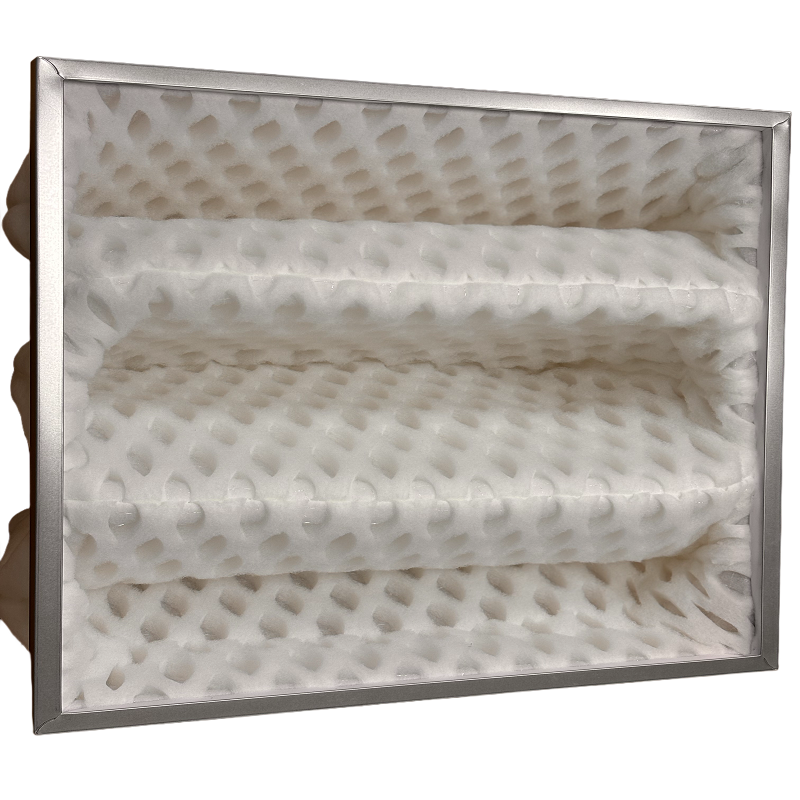
This introduces a critical complication: moisture. Standard air filter media offer very limited ability to intercept liquid water. In a continuously high-humidity environment, Filter Bags not only quickly become saturated and ineffective, but their efficiency in capturing paint particles also plummets, potentially forming sticky sludge. The result is that **this mixture of water and paint overspray ultimately 'plasters' downstream heat exchangers, zeolite rotors, or combustion chambers, causing equipment blockage, corrosion, catalyst poisoning, and soaring maintenance costs—making stable, compliant emissions impossible.**
In contrast, the advantages of **Dry Paint Overspray Separation Technology** become overwhelmingly clear. It can achieve removal efficiencies exceeding 99.8%, but its core value lies in **"using dryness to overcome wetness," eradicating the problems associated with "water."** This is precisely why the MEE's guidance document explicitly steers coating enterprises towards prioritizing dry overspray filtration systems, treating it as a prerequisite for qualifying as Grade-A or Grade-B environmental performance benchmarks.
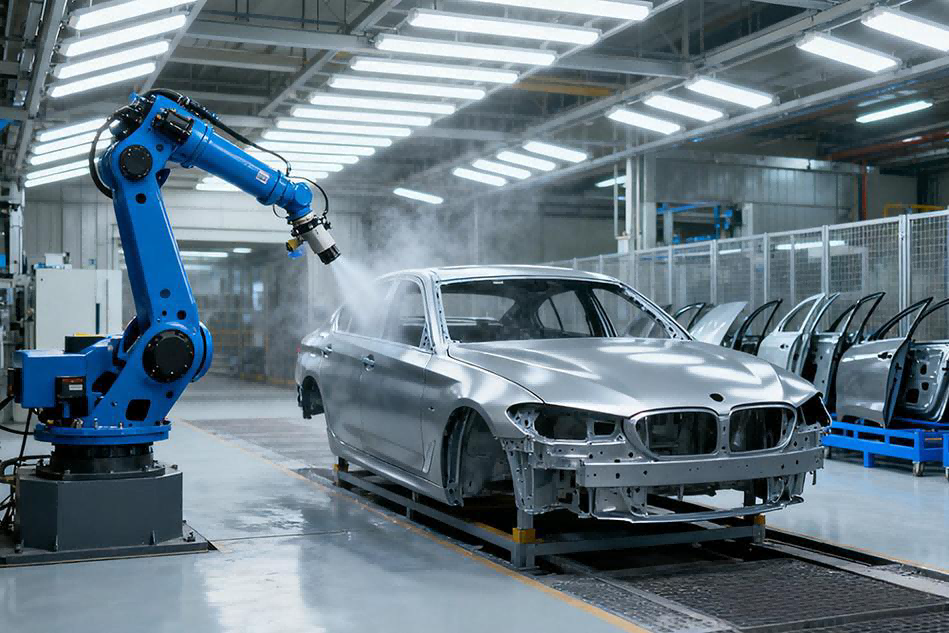
It is crucial to recognize that although collectively called "paint overspray," the type of paint used (solvent-based, water-based, powder, etc.) and its physical characteristics vary immensely across different industries and production lines. This means **a universal, 'one-size-fits-all' solution does not exist.** Our years of accumulated field data and case analysis consistently reinforce this point: successful overspray management solutions in diverse sectors like automotive manufacturing, heavy machinery, and general industry must be deeply customized.
Typically, we outline two clear upgrade paths for enterprises:
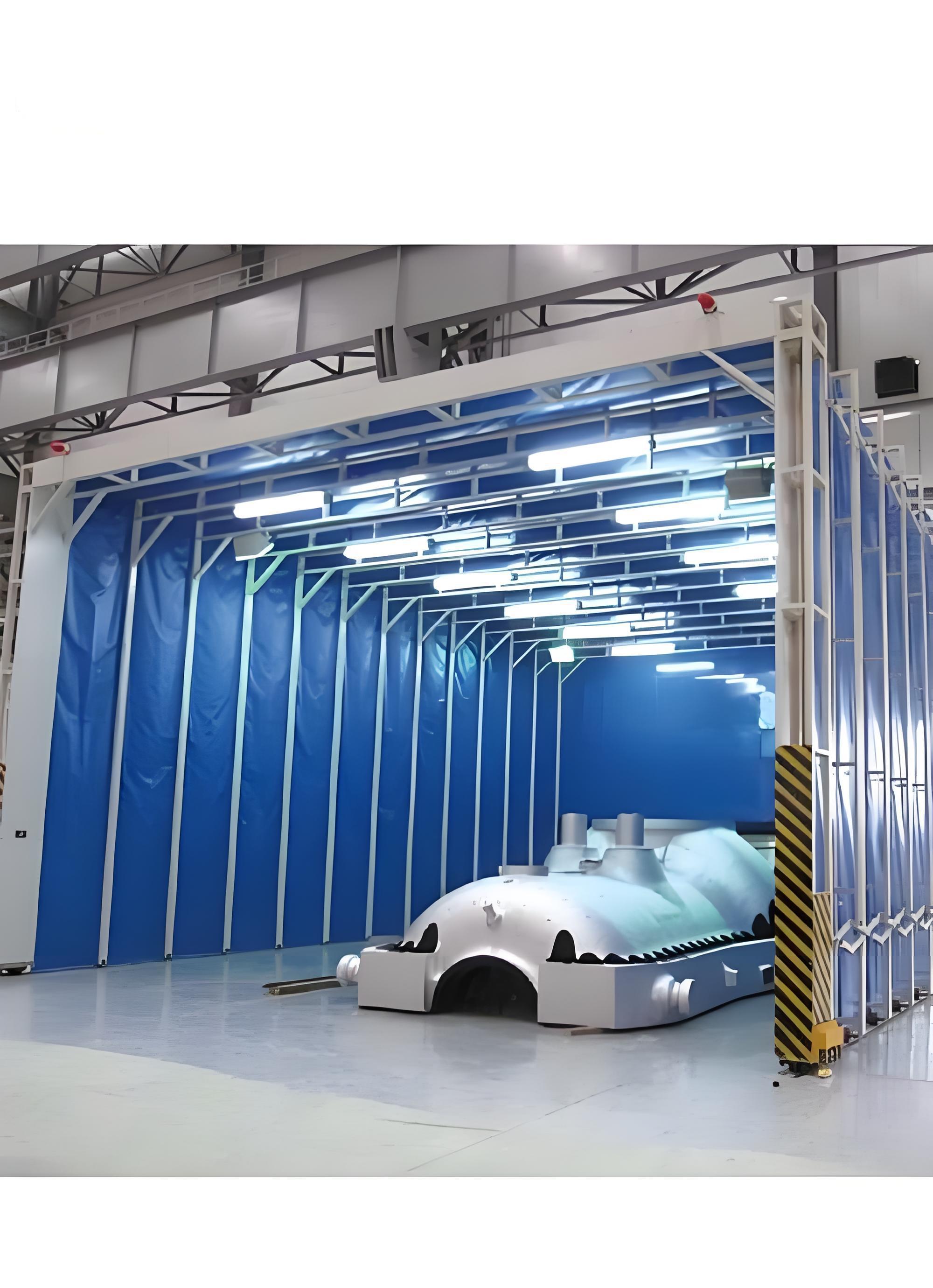
Path 1: Source Transformation. When planning a new exhaust treatment system, directly construct or convert to a **fully dry paint booth**, achieving clean production at the source.
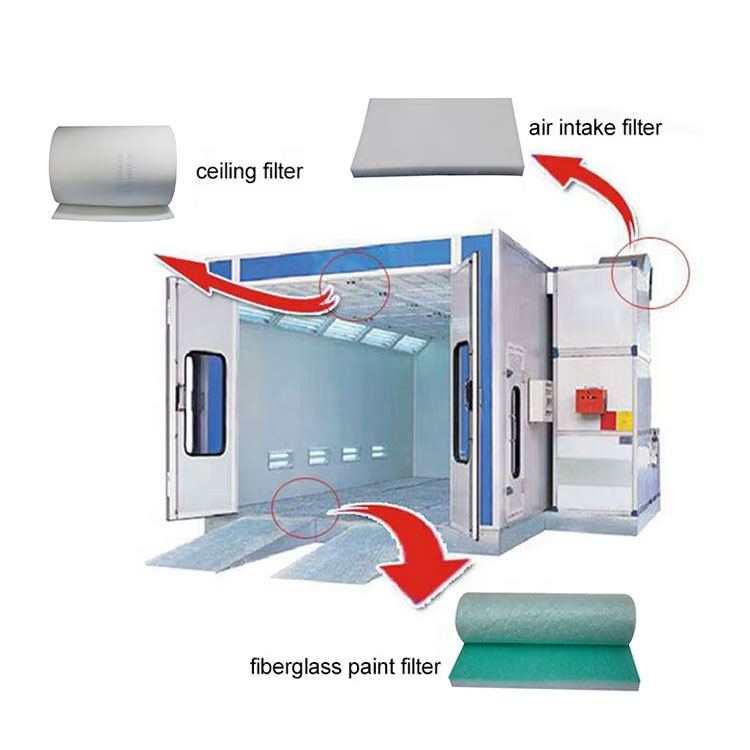
Path 2: End-of-Line Reinforcement. For existing wet paint booths, **add a high-efficiency dry overspray filtration unit** at the backend, acting as a deep cleaning and protective barrier to ensure the gas entering the final VOC treatment unit is dry and clean.
Deciding which path to choose, or determining the specific filtration configuration (e.g., labyrinth-style paper boxes, honeycomb filters, or multi-stage tower filters), requires our technical engineers to conduct an on-site visit. They need to thoroughly examine production processes, analyze paint characteristics, and assess spatial layout to tailor a dry CE Certification Spray Booth Filter overspray separation solution that truly fits your production needs.