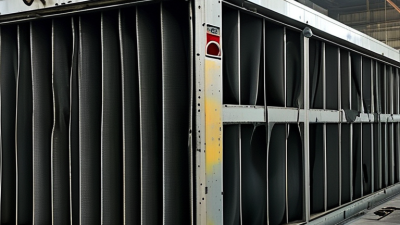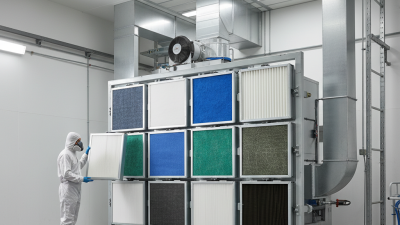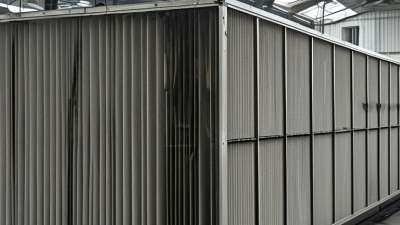
Choosing the right Spray Booth Exhaust Filters is a practical decision, not a simple catalog exercise. Filter design affects overspray capture, airflow stability, maintenance frequency, worker exposure, and booth performance. A filter that looks efficient on paper may load quickly when exposed to heavy primer, metallic paint, or solvent-rich coatings. Small details matter. Filter depth matters. So does sealing.
Dr. John D. Spengler, an environmental health researcher, emphasized a principle that remains relevant: “Ventilation is not a substitute for source control.” That warning deserves attention. Even the best Spray Booth Exhaust Filters cannot correct poor booth balance, damaged filter frames, blocked exhaust paths, or careless maintenance. This guide examines seven industrial filter options through practical criteria, including capture efficiency, pressure drop, service life, installation fit, and disposal considerations. It also considers the realities of a working booth: a gray filter face, rising gauge pressure, and production schedules that rarely leave room for surprises.
Some recommendations may appear obvious. They are not always. A high-efficiency filter can create excessive resistance if the fan lacks capacity. A cheaper pad can become expensive when replacement intervals shrink. The right choice depends on coating type, airflow volume, booth geometry, and inspection habits. Those variables are easy to underestimate. This overview therefore avoids one-size-fits-all claims and highlights where manufacturers’ data should be verified before purchase. Mistakes happen. Good selection reduces them.
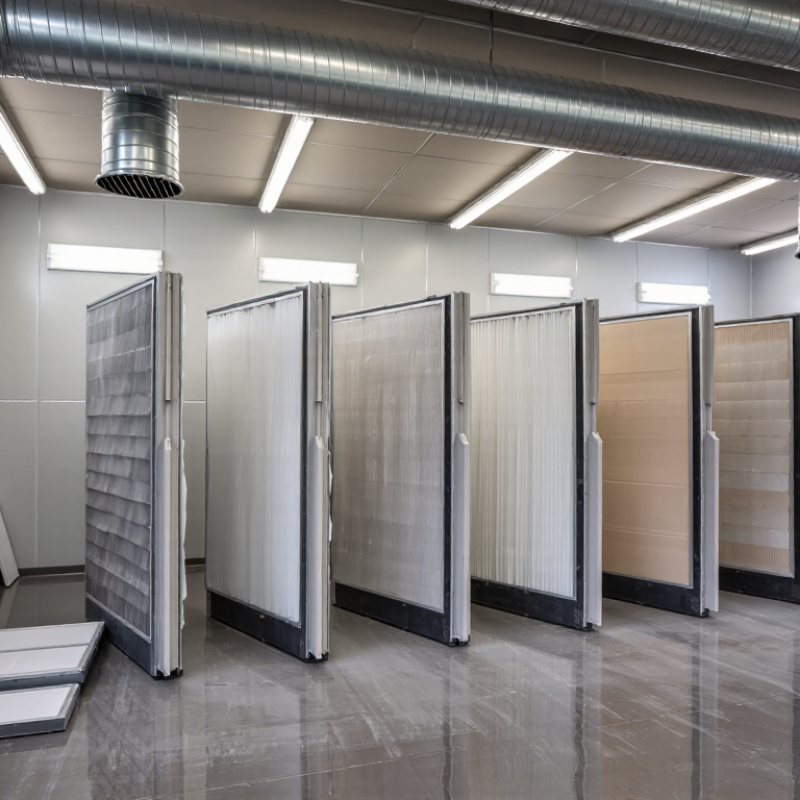
Choosing the best spray booth exhaust filter starts with airflow, not price.
A filter must support steady exhaust volume without creating excessive pressure drop. In practice, I check the manometer before each production shift.
Capture velocity matters at the operator’s breathing zone and around the spray area. If airflow feels weak, overspray may settle on walls, lighting, and duct surfaces. If airflow is too strong, material waste can increase and coating quality may suffer. These small changes are easy to miss.
NFPA 33 provides important requirements for ventilation, exhaust systems, filter arrangements, and fire protection. However, the correct design depends on booth type, coating process, filter loading, and local authority approval. Always compare the installation with the current adopted edition and site-specific rules.
A practical filter review includes pressure-drop readings, visible loading, frame condition, and airflow balance. Replace damaged or saturated media promptly. Do not rely on appearance alone. A clean-looking filter can still restrict airflow.
I have found that maintenance records reveal more than a single inspection. Record filter changes, airflow readings, and unusual overspray patterns. The process may expose weak points in duct design or operator technique. Some assumptions will be wrong. That is useful, because safer filtration begins with honest measurements and careful correction.
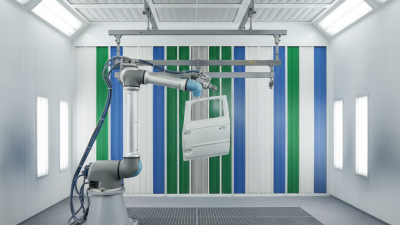
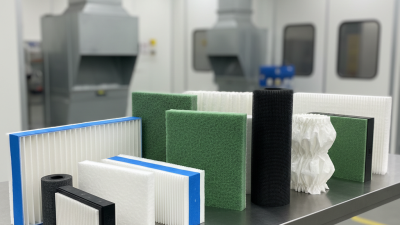
Industrial spray booth exhaust filters must balance capture efficiency, pressure drop, and service life. Seven common options show clear trade-offs. Fiberglass paint-arrestor media is inexpensive and handles heavy overspray, but often loads quickly. Polyester pads usually provide stronger tear resistance and longer service. Pleated synthetic filters offer more surface area, although their pressure drop can rise sharply when paint accumulates. Pocket filters extend service intervals, but they need careful sealing around the frame.
High-efficiency particulate air filters can exceed 99.97% removal at the most penetrating particle size under standardized testing, according to the U.S. Department of Energy’s HEPA guidance. They are powerful. However, high resistance makes them unsuitable as a first-stage overspray filter. Activated-carbon panels target vapors, not paint particles, and their service life depends on contaminant concentration, humidity, and carbon weight. Reusable metal mesh filters withstand heat and washing, but their particle efficiency is usually lower.
ASHRAE Standard 52.2 evaluates filter efficiency through MERV testing, while ISO 16890 reports performance by particle-size ranges. Neither result predicts booth life perfectly. Real service intervals often change with coating solids, airflow, and operator technique. EPA AP-42 surface-coating data also shows that coating transfer efficiency strongly affects overspray loading. That detail is easy to miss. A practical arrangement is staged filtration: coarse fiberglass or polyester, followed by pleated or pocket media, with carbon or HEPA only when the hazard assessment requires it. Measure pressure drop with a gauge. Replace filters before airflow visibly weakens.
My caution: published efficiency numbers can look precise, yet booth conditions remain messy.
Choosing exhaust media starts with the paint, not the filter catalog. Fiberglass media is economical for heavy overspray and quick replacement. Its layered structure catches wet particles before they reach the exhaust duct. Polyester media offers better dimensional strength and can tolerate repeated handling. It suits higher-volume operations with consistent coating schedules. Pleated filters provide more surface area in a smaller frame. That can extend service life, but only when the folds do not become saturated.
The U.S. Occupational Safety and Health Administration requires many spray-booth configurations to maintain airflow near 100 feet per minute. A loaded arrestor filter can reduce that performance quickly. I check airflow with a calibrated instrument, then compare the reading with pressure-drop data. Visual inspection alone is unreliable. The U.S. EPA AP-42 guidance also shows that particulate emissions vary with coating type and application method.
There is no universal replacement interval.
In practice, I record pressure drop, coating hours, and visible loading after each shift.
Fiberglass often handles rough, high-solids work well. Polyester is more forgiving during frequent changeovers. Pleated media may reduce waste, though its higher initial cost needs verification.
One mistake remains common: selecting the finest filter without checking fan capacity. That choice can restrict airflow and create uneven spray patterns.
Test it under real production conditions. Small details matter.
Choosing the seven best spray booth exhaust filters requires more than comparing prices or labels. HEPA filtration remains a strong final-stage option for industrial booths. A properly tested HEPA filter can capture 99.97% of particles measuring 0.3 microns. This rating applies under controlled test conditions. Real performance depends on sealing, airflow, loading, and maintenance.
The number alone misleads. In practical booth inspections, I look for a staged system rather than one filter alone. A prefilter can capture larger paint particles and protect the HEPA layer from rapid clogging. Deeper pocket filters may improve dust-holding capacity. High-temperature or chemical-resistant media can suit demanding exhaust conditions. However, HEPA filters target particles, not every vapor or solvent gas. Additional treatment may be necessary when gaseous contaminants are present.
A reliable selection should include documented efficiency testing, compatible dimensions, pressure-drop data, and a secure housing seal. Monitor airflow with a gauge, because rising resistance can reduce booth capture performance. Replace filters according to pressure readings and inspection results, not a convenient calendar date. Workers may notice overspray buildup before instruments show a serious problem. That observation matters. I would still verify it with measurements. A certified 0.3-micron claim is valuable, but careless installation can undermine it. Even the best filter cannot compensate for poor booth balance, damaged gaskets, or neglected prefiltration.
7 Best Spray Booth Exhaust Filters for Industrial Use?
VOC Control with Activated Carbon Under OSHA 1910.94 Requirements
Industrial spray booths need more than a dust-catching pad. The seven practical filter groups include paper arrestors, fiberglass rolls, polyester panels, pocket filters, cartridge filters, HEPA filters, and activated carbon beds. Each captures a different contaminant. Overspray filters protect downstream equipment, while carbon media adsorbs many solvent vapors. It does not remove every VOC.
OSHA 1910.94 emphasizes adequate exhaust ventilation, safe air movement, fire prevention, and controlled spray-finishing conditions. It does not require one universal carbon filter for every booth. A qualified industrial hygienist should match the filter to the coating, solvent, airflow, temperature, and exposure results. Check the safety data sheet before selecting carbon media. Measure pressure drop across the filter daily. A rising reading often signals loading.
Activated carbon needs careful management. Carbon dust, moisture, and heavy paint overspray can reduce adsorption performance quickly. Use a suitable prefilter. Replace carbon before breakthrough, not after workers notice an odor. Odor is a poor warning system. In field inspections, I have seen filters changed on schedule while VOC readings still increased. That mistake deserves attention. Exhaust discharge, make-up air, and fan capacity also affect performance. Record filter changes, airflow readings, maintenance dates, and exposure monitoring results. These records support reliable decisions, although they cannot replace competent engineering review.
| No. | Filter Configuration | Typical Construction | Typical Airflow Range per Module | Typical Initial Pressure Drop | Most Suitable Use | Replacement and Monitoring | OSHA 1910.94 Relevance |
|---|---|---|---|---|---|---|---|
| 1 | Deep-Bed Granular Activated Carbon Filter | Loose granular carbon contained in a steel or coated enclosure, usually installed downstream of particulate filtration. | Approximately 1,000–10,000 CFM, depending on bed area and carbon depth. | Approximately 1.0–3.0 in. w.g. when clean; verify the pressure rating for the selected bed. | High or continuous VOC loading from solvent-based coating, cleaning, and finishing operations. | Use differential-pressure measurement, VOC breakthrough testing, and scheduled carbon replacement based on contaminant loading. | Can support vapor control, but does not replace required booth exhaust, make-up air, hazardous-location controls, or ventilation verification. |
| 2 | Carbon Honeycomb or Carbon-Cell Filter | Rigid honeycomb or corrugated media impregnated or filled with activated carbon in a replaceable cell format. | Approximately 500–2,500 CFM per cell or module. | Approximately 0.3–1.0 in. w.g. when clean. | Moderate VOC concentrations where compact installation and relatively low airflow resistance are important. | Install a particulate prefilter; monitor pressure drop and outlet VOC concentration because carbon capacity varies by chemical. | Useful as an exhaust-treatment stage when the ventilation system still maintains the airflow and capture performance required for the booth. |
| 3 | V-Bank Activated Carbon Filter | Multiple angled carbon panels arranged in a V-shaped housing to provide greater media area in a compact footprint. | Approximately 1,000–4,000 CFM per module. | Approximately 0.5–1.2 in. w.g. when clean. | Medium-to-high airflow systems with limited filter-room depth and a need for increased carbon surface area. | Replace the upstream particulate filter regularly; track fan operating point and carbon breakthrough. | May help reduce VOC discharge, but OSHA compliance depends on the complete spray-finishing ventilation system, not the filter alone. |
| 4 | Pleated Carbon Panel with Particulate Prefilter | Pleated synthetic or cellulose support media combined with a carbon layer, normally preceded by a coarse or fine particulate filter. | Approximately 500–2,000 CFM per panel or module. | Approximately 0.2–0.8 in. w.g. when clean. | Light-to-moderate VOC loads, intermittent coating work, and applications requiring a simple retrofit filter bank. | Replace when pressure drop rises, odor or VOC breakthrough occurs, or the rated service interval is reached. | Supports good exhaust housekeeping when properly maintained; it is not a substitute for source capture or compliant booth airflow. |
| 5 | Two-Stage Particulate and Activated Carbon System | Dedicated overspray or fine-particle filter followed by a granular, panel, or cartridge-style carbon stage. | Approximately 1,000–8,000 CFM, based on the combined filter-bank area. | Approximately 0.7–2.0 in. w.g. across both stages when clean. | Spray processes producing both paint particulate and solvent vapor, where carbon fouling must be minimized. | Monitor each stage separately; replace the particulate stage before it restricts airflow or allows carbon fouling. | Provides a practical control sequence, but the booth must still meet applicable exhaust, airflow, ignition-source, and maintenance requirements. |
| 6 | Carbon Cartridge Filter Bank | Multiple cylindrical or rectangular cartridges filled with granular or pelletized activated carbon. | Approximately 500–3,000 CFM per cartridge bank, depending on cartridge size and residence time. | Approximately 0.5–1.5 in. w.g. when clean. | Modular systems where operators need staged replacement, flexible capacity, or a relatively small equipment footprint. | Use a prefilter, inspect seals and bypass paths, and test for breakthrough rather than relying only on pressure drop. | Can be integrated into an industrial exhaust system, but filter selection and maintenance must not compromise required ventilation performance. |
| 7 | Carbon Filter with Polishing Stage | Primary particulate and carbon treatment followed by a secondary carbon or specialty sorbent stage for residual vapor reduction. | Approximately 500–5,000 CFM, depending on the primary and polishing stages. | Approximately 1.0–2.5 in. w.g. across the complete system when clean. | Strict odor or VOC discharge objectives, variable solvent mixtures, and processes requiring additional protection against breakthrough. | Use contaminant-specific breakthrough monitoring, airflow checks, and documented change-out procedures for each stage. | May improve emission control, but OSHA 1910.94 compliance requires evaluation of the complete spray-finishing operation and ventilation design. |