How to Choose the Best Paint Spray Booth Filters for Your Needs?
Choosing the right Paint Spray Booth Filters can greatly impact your spray painting efficiency. Filters are essential for maintaining air quality and protecting your workspace. Selecting the best type for your specific needs is crucial.
When considering Paint Spray Booth Filters, think about the size of your booth and the type of materials used. Different filters serve various purposes. For instance, some are designed for waterborne paints, while others work better with solvent-based products. It's important to match the filter to your paint type.
Many users often overlook maintenance for their filters. Regularly checking and replacing them can prevent poor air quality. Neglecting this aspect can lead to costly problems later. Understanding your filter options will ensure you make an informed choice. Knowledge about specific filter features can greatly benefit your spray painting projects.
Understanding the Importance of Paint Spray Booth Filters
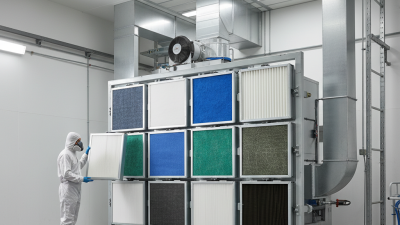
Paint spray booth filters play a crucial role in ensuring a safe and efficient working environment. These filters trap harmful particles and vapors released during painting. Without them, the air quality deteriorates, affecting both health and product quality. Ensuring the right filter choice can significantly impact performance.
Choosing the appropriate filter involves understanding your specific needs. Different filters serve various functions, from capturing overspray to removing volatile organic compounds (VOCs). Some may excel at particulate removal, while others focus on chemical absorption. Filtering efficiency is essential to breathe clean air and protect the equipment.
It’s vital to regularly monitor and maintain your filters. Neglecting this can lead to accumulation of unwanted particles. Over time, a clogged filter can reduce airflow, causing pressure drops. This creates a less efficient working environment. Awareness of your filters' condition ensures longevity and safety in your paint spray booth.
Types of Paint Spray Booth Filters and Their Functions
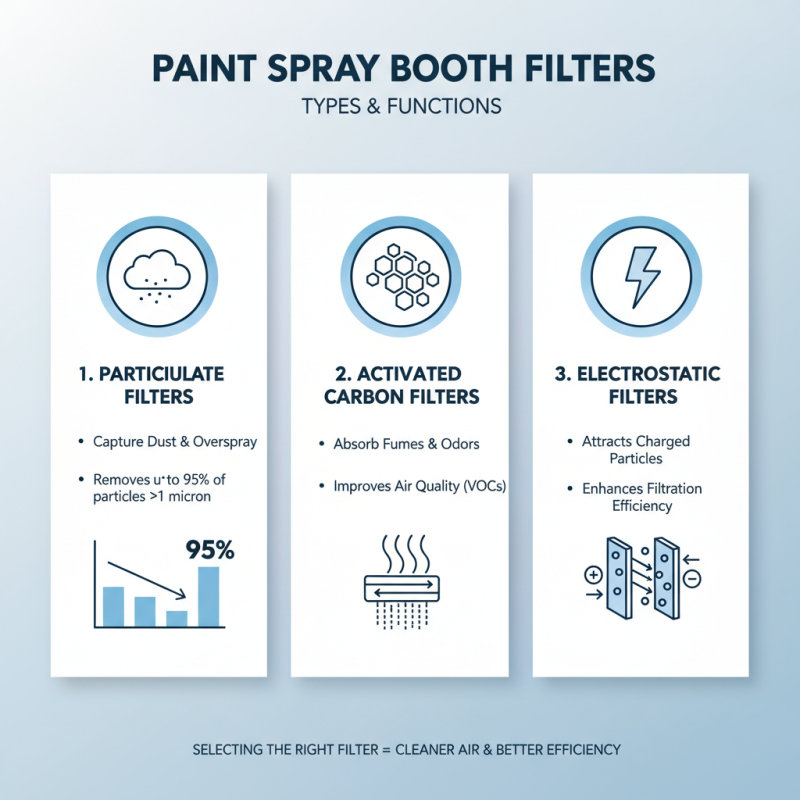
When selecting paint spray booth filters, understanding the various types is essential. Each filter type serves a specific function, directly impacting air quality and operational efficiency. There are primarily three categories: particulate filters, activated carbon filters, and electrostatic filters. Particulate filters capture dust and overspray particles. They significantly help in maintaining clean air, particularly in environments with heavy paint spraying. Reports indicate that these filters can remove up to 95% of airborne particles larger than 1 micron.
Activated carbon filters excel in odor elimination. They work by adsorbing volatile organic compounds (VOCs), which can be harmful. Studies show that proper usage can reduce VOC levels by over 80%. This is crucial in ensuring compliance with safety regulations and protecting worker health. However, it's important to replace these filters regularly to maintain effectiveness.
Electrostatic filters use charged particles to attract contaminants, providing efficient filtration. They can trap smaller particles than standard filters. Nonetheless, they require proper maintenance to work effectively. A lack of maintenance can lead to increased resistance in airflow. This might affect the overall performance of the spray booth. Regular checks and timely replacements are vital for optimal operation. Understanding these functions helps in choosing the right filters that align with specific needs.
Key Factors to Consider When Selecting Filters
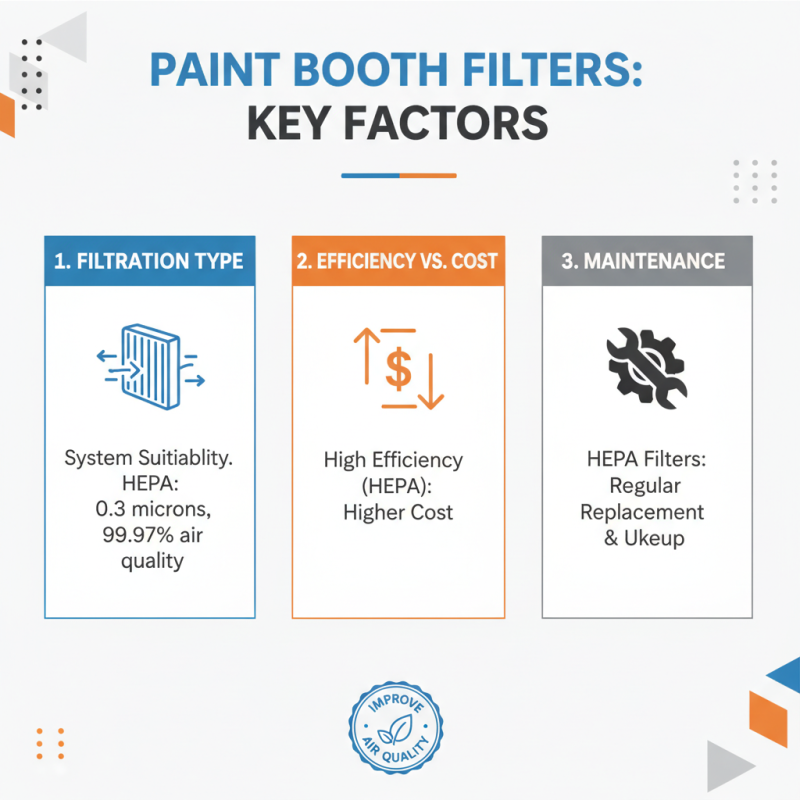
When selecting paint spray booth filters, several key factors are essential. Consider the type of filtration system most suitable for your needs. High-efficiency filters, such as HEPA filters, can capture particles as small as 0.3 microns. According to a recent industry report, using HEPA filters can improve air quality by up to 99.97%. However, they can also be more expensive and require regular maintenance.
Filter material is another critical factor. Synthetic media often offers better performance and durability compared to fiberglass options. It's important to balance cost and effectiveness. Some high-performance filters may have a higher upfront cost but lead to lower long-term costs due to reduced clogging and extended use.
**Tip:** Regularly check filters for signs of wear. A damaged filter can compromise air quality and safety.
Also, consider the filter's air flow rate. A filter that restricts air flow can reduce your booth's efficiency. A study noted that maintaining an optimal air flow rate contributes to consistent paint quality.
**Tip:** Conduct airflow tests periodically to ensure efficiency.
Selecting the right paint spray booth filter involves careful consideration. Understanding the specific requirements of your operation can lead to better choices in filters, minimizing failures and ensuring effective air filtration.
How to Assess Filter Efficiency and Performance
Assessing filter efficiency and performance is crucial when selecting paint spray booth filters. Start by understanding the filter's MERV rating. A higher MERV means better particle capture. However, it's essential to find a balance. Filters with very high ratings can restrict airflow, impacting your booth’s performance.
Consider the types of contaminants in your environment. If you handle various paints and solvents, more specialized filters may be necessary. Pay attention to flow resistance, as too much resistance can increase energy costs. A practical approach is to test different filters to see which performs best in your specific setting.
Tips for assessment include regularly checking filters for signs of saturation. A dirty filter can lead to poor air quality. Also, keep a log of filter performance over time. This will help identify trends and the best types of filters for your operations. Remember, ongoing evaluation is key. Don't hesitate to revisit your choices if your spray booth's needs change. Adapting to new challenges is an essential part of maintaining efficiency.
How to Choose the Best Paint Spray Booth Filters for Your Needs?
| Filter Type |
Efficiency (%) |
Particle Size (μm) |
Lifespan (Hours) |
Applications |
| Polyester Filter |
90 |
0.3 - 10 |
500 |
General Spray Painting |
| HEPA Filter |
99.97 |
0.3 |
1000 |
Fine Particle Capture, Hospital Use |
| Carbon Activated Filter |
85 |
1 - 10 |
400 |
Odor Removal |
| Electrostatic Filter |
95 |
0.3 - 5 |
600 |
Dust & Fumes Capture |
Maintenance Tips for Prolonging Filter Lifespan
Maintaining paint spray booth filters is crucial for optimal performance. Regular inspection is essential. Look for signs of wear or damage. Any visible tears can compromise filtering efficiency. Replace filters as needed to maintain air quality.
Cleaning filters can extend their lifespan. Using compressed air for light dusting can be effective. Be cautious, as excessive force can damage them. Some filters are washable, while others are not. Verify compatibility before opting for cleaning. Proper handling is key, ensuring you avoid introducing contaminants.
Remember the importance of a clean environment. Keeping the spray booth tidy reduces the strain on filters. Ensure good ventilation to prevent dust accumulation. Sometimes, despite all efforts, filters may still degrade faster than expected. Noticing this early allows for timely adjustments in maintenance practices. Reassess your setup regularly to improve overall effectiveness.