Why Choose the Right Spray Booth Filter Material for Quality?
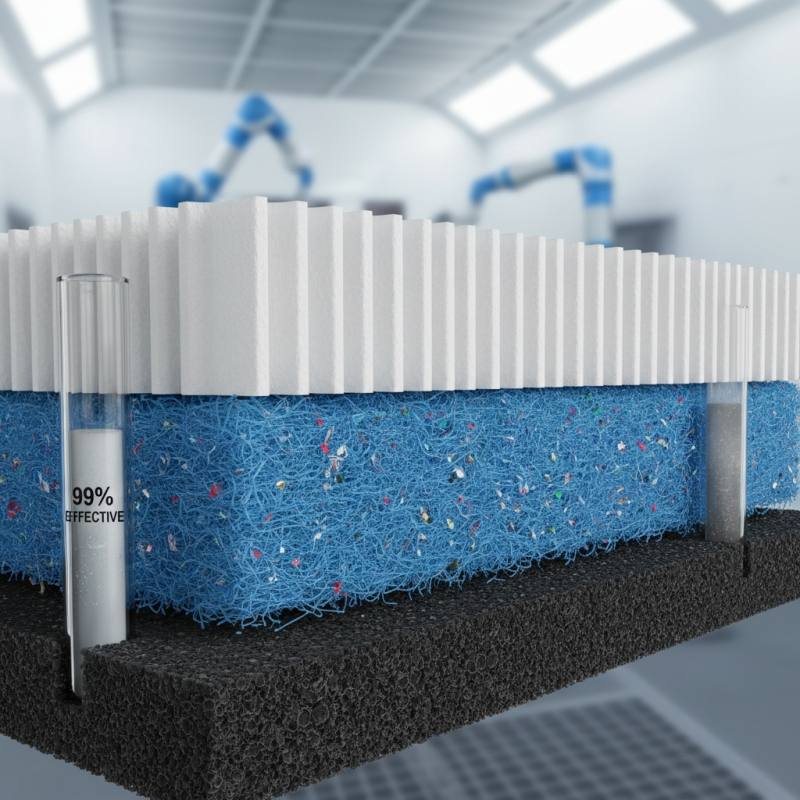
In the competitive realm of industrial coating, the choice of Spray Booth Filter Material is critical. Industries report that effective filtration can capture up to 99% of airborne particles. This position is echoed by Dr. Emily Carter, a leading expert in air quality management. She states, "The right filter material not only enhances air quality but also contributes to the efficiency of the painting process."
Yet, many manufacturers overlook the specifics of filter material. A common mistake is selecting filters based solely on cost. This short-sighted approach can lead to increased downtime and higher operational costs. Statistics show that inadequate filtration results in 30% more paint waste, which can severely impact profitability.
Choosing the right Spray Booth Filter Material isn't just about meeting regulations; it's about striving for excellence. Poor filters may compromise product quality and worker safety, prompting reflection on practices within the industry. Quality should never be sacrificed for savings. It is essential to consider both the functionality and long-term benefits of high-quality materials.
Understanding the Importance of Spray Booth Filter Selection
In the world of spray booths, the filter material choice significantly impacts the quality of outputs. Studies show that using high-efficiency particulate air (HEPA) filters can capture up to 99.97% of particles. This capability is crucial in maintaining a clean environment and ensuring excellent finishes. However, not all HEPA filters function the same. Variability in design and material can lead to differences in airflow and pressure drop. These factors might affect operational efficiency.
A report from the National Institute for Occupational Safety and Health highlights that improper filter selection can lead to increased particulate matter in the air. This situation may create health risks for workers and compromise product quality. Some facilities still use outdated filter designs, which drastically reduce capture efficiency. It's essential to regularly assess the effectiveness of the filters in use. Continuous monitoring ensures compliance with industry standards.
Moreover, many businesses underestimate the long-term cost benefits of investing in better filters. While higher-quality materials may have a higher upfront cost, they can reduce maintenance and operational costs significantly. Filters that perform poorly often require more frequent replacements, leading to waste and operational downtime. The need for a suitable spray booth filter solution is evident. Its importance cannot be overlooked. Choice matters greatly in determining both environmental and product quality outcomes.
Types of Filter Materials for Spray Booth Applications
Choosing the right spray booth filter material is crucial for achieving high-quality finishes. Different filter types serve unique purposes.
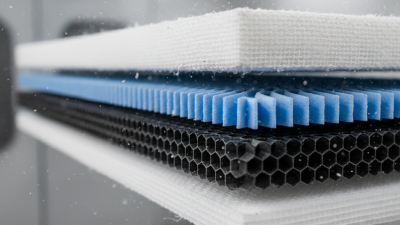
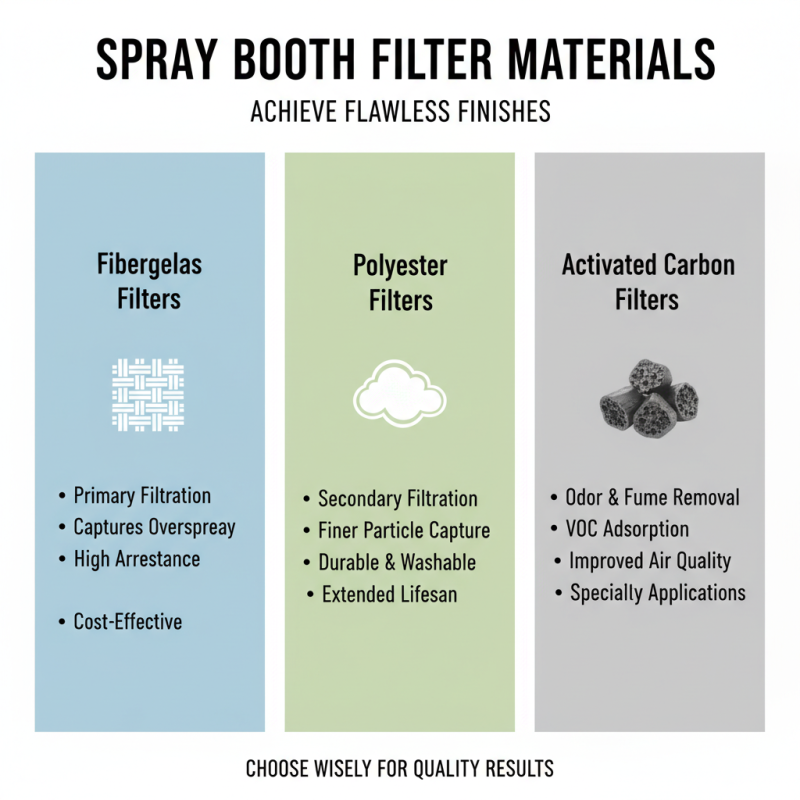
One common choice is synthetic fiber filters. They trap particles effectively and have a longer lifespan. However, they may not capture all volatile organic compounds (VOCs). Another option, pleated filters, increase surface area. This design enhances airflow but can become clogged quickly, requiring regular replacement.
Tips: Always check the manufacturer's specifications for the filter. This ensures maximum efficiency in your operations. Also, consider the environment. Certain materials perform better in varying humidity levels.
Additionally, activated carbon filters are excellent for odor control. They absorb fumes and reduce air pollutants. Yet, they require more maintenance compared to other options. Regular inspection is essential to keep the booth running smoothly. This detail is often overlooked, leading to reduced air quality.
Evaluating Filter Efficiency and Performance Metrics
When selecting spray booth filter materials, efficiency is crucial.
Filter efficiency directly impacts paint application quality. According to industry studies, high-quality filters can capture up to 99% of particulates. This significantly reduces defects in finish. A reliable filter material should balance performance and airflow. High-efficiency filters may restrict airflow, which can affect spray application.
Understanding performance metrics can help in making informed choices. The Minimum Efficiency Reporting Value (MERV) rating is essential. Filters with a MERV rating of 8 or higher are recommended for spray booths. This rating assesses particle removal efficiency, ensuring that even the smallest particles are trapped. Yet, not every filter performs the same under varied conditions. Some may clog faster, requiring frequent replacement, which increases costs.
Tips: Regular maintenance checks on filter performance can lead to longer filter life. Over time, changes in paint types require adjustments in filter selections. Consider monitoring airflow rates to ensure optimal performance. Avoid heavy-duty paints with low-efficiency filters, as they may not capture all harmful emissions effectively.
Impact of Filter Material on Environmental Safety Standards
The choice of spray booth filter material plays a crucial role in maintaining environmental safety standards. Effective filters trap harmful particles and prevent them from entering the atmosphere. This is especially important in industrial settings, where the risk of air pollutants is high. High-quality filters can significantly reduce volatile organic compounds (VOCs), ensuring compliance with environmental regulations.
However, not all filter materials provide the same level of protection. Some materials may be efficient at capturing certain particles but ineffective against others. This inconsistency can lead to significant gaps in air quality control. Moreover, using low-grade filter materials contributes to higher emissions, which can harm both workers and nearby communities.
Considering environmental safety, it's essential to invest in appropriate filter materials. Regularly assessing the filter's performance is equally important. Filters that are not maintained can become clogged and lose efficiency. Beyond cost, the choice of filter material impacts overall environmental safety and workplace health. Poor decisions in filter selection can have long-term consequences.
Why Choose the Right Spray Booth Filter Material for Quality? - Impact of Filter Material on Environmental Safety Standards
| Filter Material |
Efficiency (%) |
Dust Holding Capacity (g/m²) |
Airflow Resistance (Pa) |
Environmental Impact |
| Synthetic Fiber |
95 |
300 |
60 |
Low |
| Activated Carbon |
90 |
150 |
70 |
Moderate |
| Polyester |
92 |
250 |
65 |
Low |
| Glass Fiber |
85 |
400 |
80 |
High |
| HEPA |
99.97 |
200 |
90 |
Very Low |
Cost-Effectiveness and Longevity of Different Filter Materials
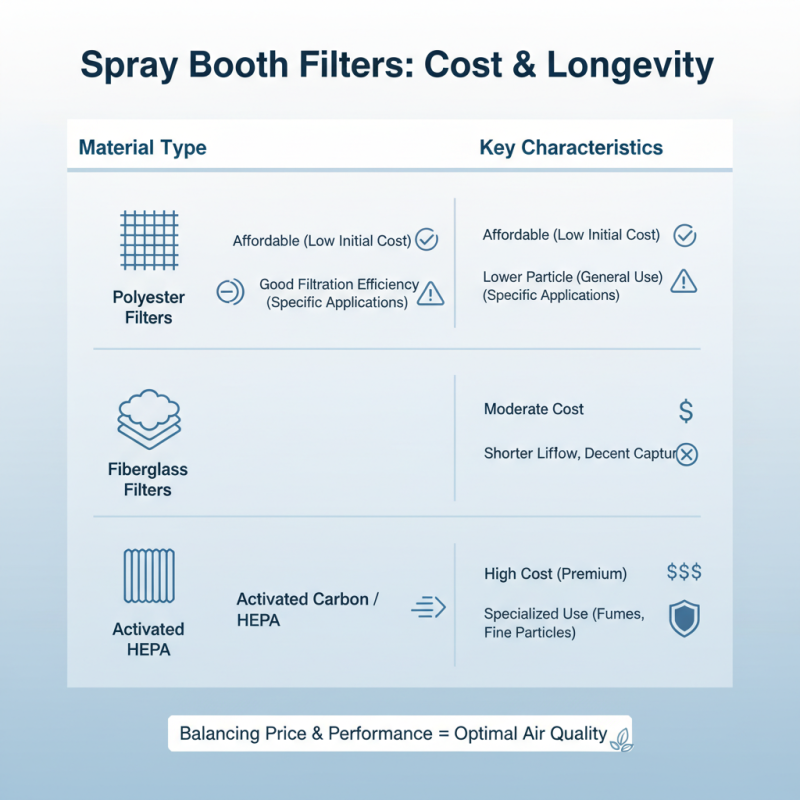
Choosing the right spray booth filter material is crucial for maintaining air quality and prolonging equipment life. Different materials vary in cost-effectiveness and durability. For instance, polyester filters are affordable and last longer than others. However, they may not provide as high a filtration efficiency. Balancing price and performance can be challenging.
Tips for selecting filter materials: Consider the type of particles you need to capture. High-efficiency filters may cost more initially, but they can save on replacements over time. Always check the material’s specifications for longevity.
Some users might overlook the importance of regular maintenance. Filters can quickly become clogged, leading to inefficiencies. A user reported reduced airflow after waiting too long to change filters. Investing time in routine checks pays off. Regular assessments can enhance performance, ensuring quality air output and increased equipment protection.