Top 10 Commercial Hepa Filters for Global Buyers in 2026?
As the world becomes increasingly aware of air quality, the demand for Commercial Hepa Filters is rising. Dr. Emma Carter, a leading expert in indoor air quality, states, “Investing in quality HEPA filters is no longer optional; it’s essential for health.” Her insight highlights the critical role Commercial Hepa Filters play in various industries.
In 2026, buyers will need to navigate a complex market filled with options. The effectiveness of HEPA filters in capturing pollutants makes them invaluable. However, not all filters are created equal. Understanding specifications and applications is crucial for making informed decisions.
With so many choices, it can feel overwhelming. Buyers should prioritize filters with proven track records and certifications. This thoughtful approach ensures that investments lead to cleaner, safer environments. Evaluating which filter meets specific needs is a challenge, but it is essential for optimal performance.

Overview of HEPA Filters and Their Importance in Commercial Use
HEPA filters play a crucial role in maintaining air quality in commercial spaces. These filters capture over 99% of particles, including dust, pollen, and even some bacteria. Businesses seek efficient air cleaning solutions. The presence of clean air can enhance employee health and improve productivity.
In industries such as healthcare and food service, air quality is paramount. Contaminants can lead to severe health issues or product spoilage. Adopting high-quality HEPA filters can mitigate these risks, ensuring a safer environment. However, many companies overlook the importance of regular filter replacement. Neglecting this maintenance can reduce efficiency and allow contaminants to enter the air.
The choice of HEPA filter is overwhelming. Selecting the right filter involves understanding specific needs. Factors like filter lifespan, airflow resistance, and size must be considered. Some brands promise high performance but may not deliver in real-world conditions. Constant reflection on filter performance is essential for continuous improvement in air quality management.
Top 10 Commercial Hepa Filters for Global Buyers in 2026
| Filter Type |
Efficiency (%) |
Application Area |
Max Airflow (CFM) |
Filter Life (Months) |
| HEPA H13 |
99.95 |
Hospitals, Laboratories |
500 |
24 |
| HEPA H14 |
99.995 |
Clean Rooms, Pharmaceuticals |
600 |
24 |
| ULPA |
99.9995 |
Microelectronics |
400 |
36 |
| Pocket Filter |
95 |
Commercial Buildings |
800 |
12 |
| F7 Filters |
90 |
Offices, Retail |
700 |
18 |
| HEPA Filters for HVAC |
99.97 |
Air Conditioning Systems |
1000 |
30 |
| V-Bank Filters |
90 |
Industrial Applications |
1200 |
15 |
| Pre-Filters |
80 |
General Use |
1500 |
6 |
| Activated Carbon Filter |
N/A |
Odor Control |
600 |
12 |
| High-Efficiency Filter |
99.95 |
Data Centers |
800 |
24 |
Criteria for Selecting the Best Commercial HEPA Filters
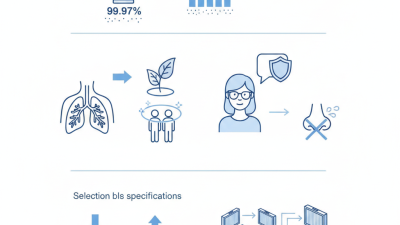
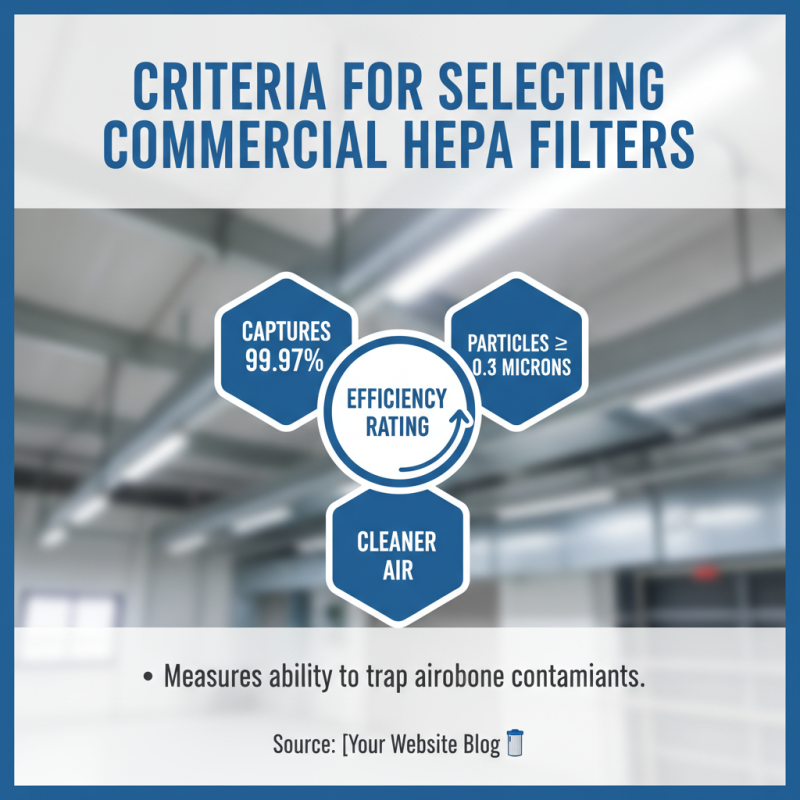
When selecting the best commercial HEPA filters, several criteria emerge as vital. Efficiency ratings are paramount. A HEPA filter must capture at least 99.97% of particles as small as 0.3 microns. This metric effectively measures the filter's capability to trap airborne contaminants, promoting cleaner air.
Another critical aspect to consider is the filter's lifespan. Data indicate that filters should be replaced every 6 to 12 months for optimal performance. Regular replacement is essential for maintaining air quality, yet businesses often neglect this, leading to reduced efficiency. A filter with a longer lifespan may initially seem appealing, but long-term effectiveness remains a priority.
Moreover, airflow resistance is often overlooked. Filters with high resistance can strain HVAC systems, resulting in increased energy costs. Balancing airflow and filtering efficiency is essential. Comprehensive testing, including industry standard measurements, aids in making informed choices. By focusing on these criteria, buyers can ensure the selection of a reliable HEPA filter for their commercial needs.
Top 10 Commercial HEPA Filters for 2026: Features and Specifications
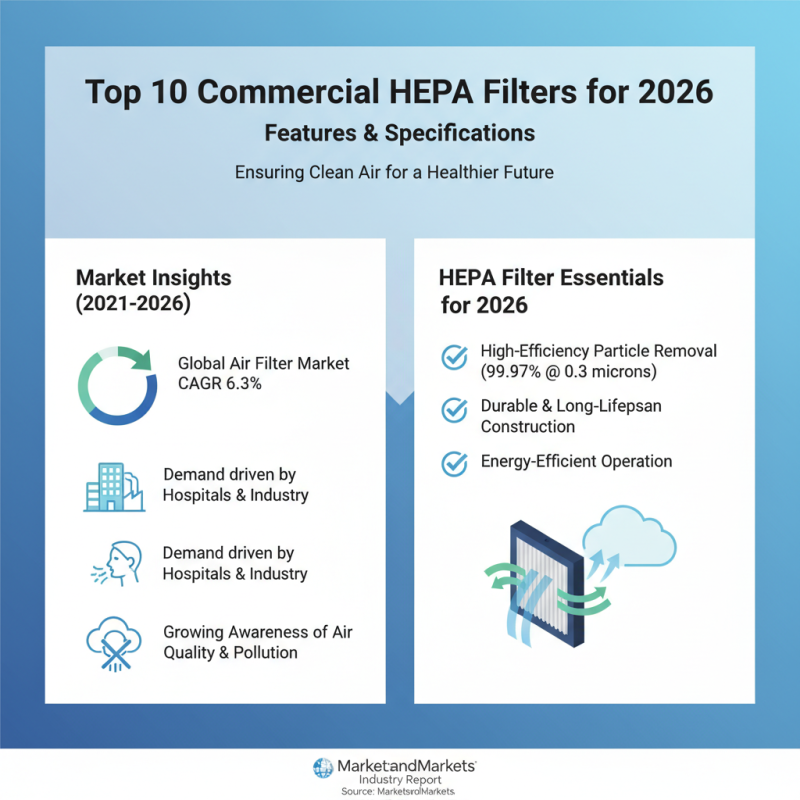
The demand for high-quality commercial HEPA filters is set to rise in 2026. HEPA filters play a crucial role in ensuring air quality in various settings, from hospitals to offices. According to a recent industry report by MarketsandMarkets, the global air filter market is projected to grow at a CAGR of 6.3% from 2021 to 2026, reflecting a growing awareness of air pollution and indoor air quality.
Several features define top-notch HEPA filters. Efficiency is paramount—look for filters with a minimum efficiency of 99.97% at 0.3 microns. The filter's lifespan also matters; some can last up to three years, depending on usage and maintenance. Additionally, filters should be lightweight for easy replacement. Noise levels during operation can be an overlooked aspect; quieter models greatly improve user experience in commercial environments.
Infrared sensor technology is emerging as a vital feature in HEPA filters. This allows for real-time monitoring of air quality. However, many commercial buyers may overlook initial costs and maintenance challenges. The trade-off for advanced technology might not always justify the expense. Small businesses, in particular, may struggle to balance budget and air quality needs. As the market evolves, understanding these dynamics will be crucial for buyers to make informed decisions.
Comparative Analysis of Leading Brands in the 2026 HEPA Filter Market
The 2026 HEPA filter market is witnessing impressive growth. Data from industry reports indicate a projected CAGR of 8.5% over the next five years. This growth reflects the rising demand for air purification solutions across various sectors. Key players are enhancing their R&D efforts to improve filter efficiency and lifespan.
A comparative analysis of leading brands reveals significant differences in filter efficiency ratings. Some filters boast an impressive 99.97% efficiency for particles as small as 0.3 microns. This is crucial for industries like healthcare, where air quality is paramount. However, many filters struggle with maintaining performance over time. Users must consider factors such as filter lifespan and operational cost when choosing a product.
Tips: When selecting HEPA filters, look for those tested to meet specific standards. Efficiency should be a priority. Regular maintenance can extend the lifespan of your filters significantly. Always refer to the latest industry reports for updated performance metrics before making a purchase.
Future Trends and Innovations in HEPA Filter Technology for Buyers
The future of HEPA filter technology is evolving rapidly. As global buyers seek improved air quality, innovations are pushing the boundaries of filtration efficiency. Advanced materials, like nanofibers, are becoming common. These materials trap smaller particles more efficiently. Enhanced durability is also a focus, making filters last longer in commercial applications.
Energy efficiency is another emerging trend. Many manufacturers aim to produce filters that minimize energy use. This will significantly reduce operational costs over time. Some innovations are looking at smart technology integration. Filters that monitor air quality and usage patterns are in development. However, challenges remain. The balance between cost and effectiveness needs careful consideration.
The regulatory landscape continues to change, impacting HEPA filter standards. Buyers must stay informed about these updates. Continuous research and development are vital for future innovations. Collaboration among experts will drive improvement. While trends are promising, reflection on past practices is crucial. Understanding the evolving needs of different industries helps shape better solutions.