Top 10 Industrial Hepa Filter Options for Clean Air Solutions?
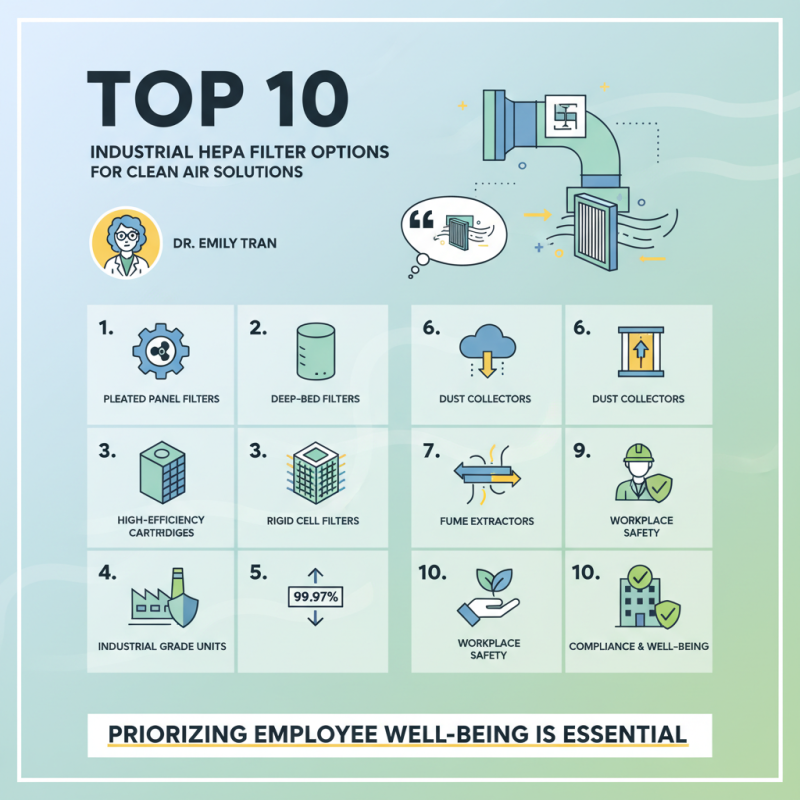
In today's industrial landscape, clean air solutions are essential. Industrial Hepa Filters play a pivotal role in maintaining air quality. Dr. Emily Tran, a leading expert in air filtration technology, emphasizes, “The right filter can elevate workplace safety and comfort.”
With an increasing focus on health and safety, industries are looking for effective filtration options. Industrial Hepa Filters are designed to capture harmful particles, making environments safer. These filters can remove 99.97% of airborne particles, enhancing overall air purity.
However, not all options are created equal. It’s crucial to select a filter that meets specific industrial needs. Misunderstandings about filter efficiency can lead to poor air quality. It's a challenge that businesses must address with informed choices. Ensuring reliable air filtration is more than compliance; it’s about prioritizing employee well-being.
Top 10 Industrial HEPA Filters and Their Efficiency Ratings in Clean Air
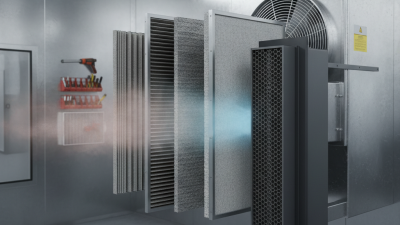
Industrial HEPA filters play a crucial role in maintaining air quality across various sectors, including manufacturing, pharmaceuticals, and healthcare. These filters are designed to capture a minimum of 99.97% of airborne particles that are 0.3 micrometers in diameter. According to recent industry reports, the efficiency rating of these filters is a key consideration when selecting the right system for clean air solutions. For instance, filters with MERV ratings between 14 and 16 are often recommended for industrial settings due to their balance of airflow and particle capture efficiency.
Different types of HEPA filters exist, with variations in thickness and media materials affecting their performance. A thinner filter may offer less resistance but might not capture particles as effectively. Research indicates that filters with pleated designs generally provide higher surface area, leading to improved efficiency ratings. However, they may require more frequent changes. Some reports suggest that operational conditions can significantly impact filter life and performance, calling for a thoughtful approach when selecting filters.
Inconsistent maintenance practices can lead to suboptimal performance. For example, clogged filters may release pollutants back into the air. This demonstrates the importance of regular checks and replacements. A clear understanding of a facility’s specific needs and the efficiency ratings of various filters enhances air quality management. Understanding these factors contributes significantly to better indoor environments and compliance with health regulations.
Comparison of HEPA Filter Types: H13 vs. H14 Efficiency Standards
When considering HEPA filters, understanding the difference between H13 and H14 standards is essential. Both types are highly efficient, but H14 filters offer a greater level of particle capture, making them suitable for more demanding environments. H13 filters capture 99.95% of particles that are 0.3 microns in size. In contrast, H14 filters capture 99.995% of the same particles, providing an extra layer of filtration.
The choice between H13 and H14 should depend on your specific air quality needs. For general industrial applications, H13 may suffice. However, if your work involves sensitive processes or environments, investing in H14 may be wise. It’s important to evaluate the air quality requirements of your space diligently.
Tips: Regularly replace your HEPA filters to maintain optimal performance. Keep in mind that even high-efficiency filters can become less effective over time. Always check manufacturer guidelines for replacement schedules. Additionally, consider conducting air quality assessments to determine if your current filtration meets the necessary standards.
Key Applications of Industrial HEPA Filters in Various Industries
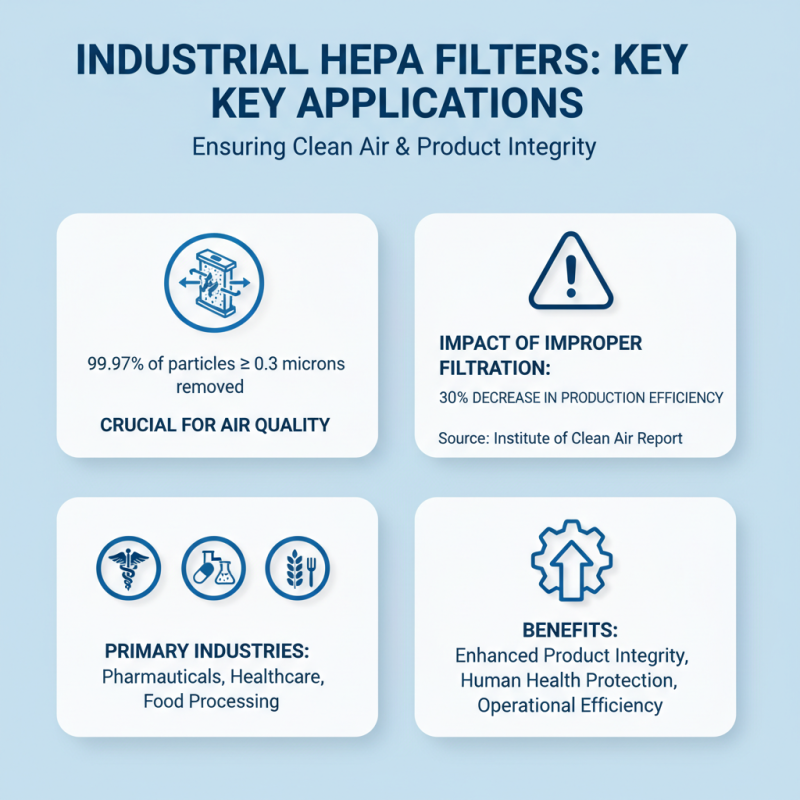
Industrial HEPA filters play a crucial role in maintaining air quality across a variety of industries. They are designed to remove 99.97% of particles that are 0.3 microns or larger. This level of filtration is essential in settings like pharmaceuticals, healthcare, and food processing, where airborne contaminants can jeopardize product integrity and human health. According to a recent report from the Institute of Clean Air, improper air filtration can result in a 30% decrease in production efficiency in sensitive environments.
The pharmaceutical industry relies heavily on HEPA filters. Controlled air environments are critical during drug manufacturing. A study showed that air quality issues resulted in a 25% rise in batch rejection rates. In healthcare, HEPA filters help prevent infections, reducing patient readmission and healthcare costs. Studies indicate that using high-quality filters can lower infection rates by as much as 15%.
Tips: Regularly inspect and replace filters to ensure optimal performance. Monitor air quality to identify potential issues early. Don't underestimate the importance of proper installation and maintenance. Each industry has unique filtration needs, so customized solutions may be necessary. Balancing efficiency and cost can be challenging, yet it is vital for maximizing the effectiveness of air quality management.
Maintenance Best Practices for Maximizing HEPA Filter Lifespan
HEPA filters are crucial for maintaining clean air in industrial environments. To maximize their lifespan, regular maintenance is essential. According to the U.S. Environmental Protection Agency, proper care can extend a HEPA filter's effectiveness significantly, reducing the need for replacements.
Tips for effective maintenance include regularly inspecting filters for dust build-up. A simple visual check can indicate when a filter needs cleaning or replacement. Make sure to maintain a clean environment around the filter to minimize contamination. A study from the Institute of Clean Air suggests changing filters every 6 to 12 months, depending on usage.
Another suggestion is to monitor airflow rates. If airflow decreases, this can signal a clogged filter. Ensure that the system is functioning correctly to avoid additional strain, which could shorten the filter's life. Proper storage also matters; keep HEPA filters in a cool, dry place away from harsh chemicals. Small details can make a significant difference in performance, aligning with findings from air quality research.
Economic Impact of Using High-Quality HEPA Filters on Operational Costs
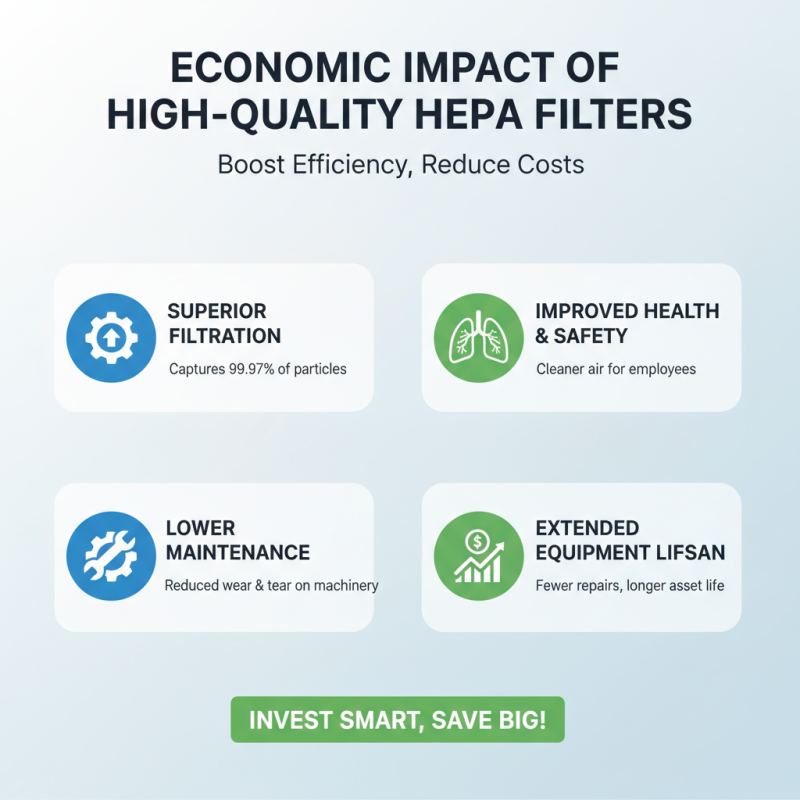
In today’s industrial landscape, the choice of HEPA filters significantly influences operational costs. High-quality HEPA filters capture up to 99.97% of airborne particles. This efficiency leads to cleaner air, which is crucial for both employee health and equipment longevity. Companies that invest in these filters often note reduced maintenance costs. Clean air reduces the wear and tear on machinery, extending its lifespan and lowering repair expenses.
While the initial investment in high-end filters can be daunting, the long-term savings can be substantial. Some facilities report savings up to 30% in energy costs due to improved airflow and reduced strain on HVAC systems. However, many overlook these advantages. The focus tends to remain on upfront costs rather than overall value. This mindset can be limiting.
Moreover, not all HEPA filters are created equal. Choosing the wrong one can lead to inefficient performance. Businesses must thoroughly consider their unique environments and specific air quality needs. It’s also essential to rethink maintenance practices. Regularly replacing filters ensures optimal function, but many companies delay this due to perceived costs. This can lead to hidden expenses and health risks, revealing a gap in proactive planning.