Choosing the right Laminar Flow Hood Filter supplier affects product protection, operator confidence, and maintenance costs. Cleanroom managers often notice the difference during installation. A poorly fitted filter may create edge leakage, uneven airflow, or unexpected pressure alarms.
This guide examines ten leading suppliers worldwide through practical purchasing criteria. These include HEPA and ULPA performance, factory testing, gasket quality, frame materials, airflow resistance, and replacement availability. Documentation also matters. Reliable suppliers should provide test reports, serial numbers, dimensional drawings, and clear installation guidance. Their technical teams should understand cleanroom classifications and equipment integration, not only filter sales.
Real-world experience shows that price rarely tells the whole story. A lower quotation may exclude testing, custom sizing, freight protection, or after-sales support. Some suppliers offer strong engineering assistance but longer production times. Others respond quickly yet provide less transparent documentation. No supplier is perfect.
That matters.
The following comparison is intended as a careful starting point, not an absolute verdict. Supplier capabilities can change by region, factory, and application. Buyers should confirm current specifications before ordering. They should also compare airflow requirements with the hood manufacturer’s recommendations. A filter that looks suitable on paper may perform poorly when installed incorrectly. By considering technical evidence, service reliability, and user experience, this list helps laboratories, hospitals, and pharmaceutical facilities make more defensible purchasing decisions.
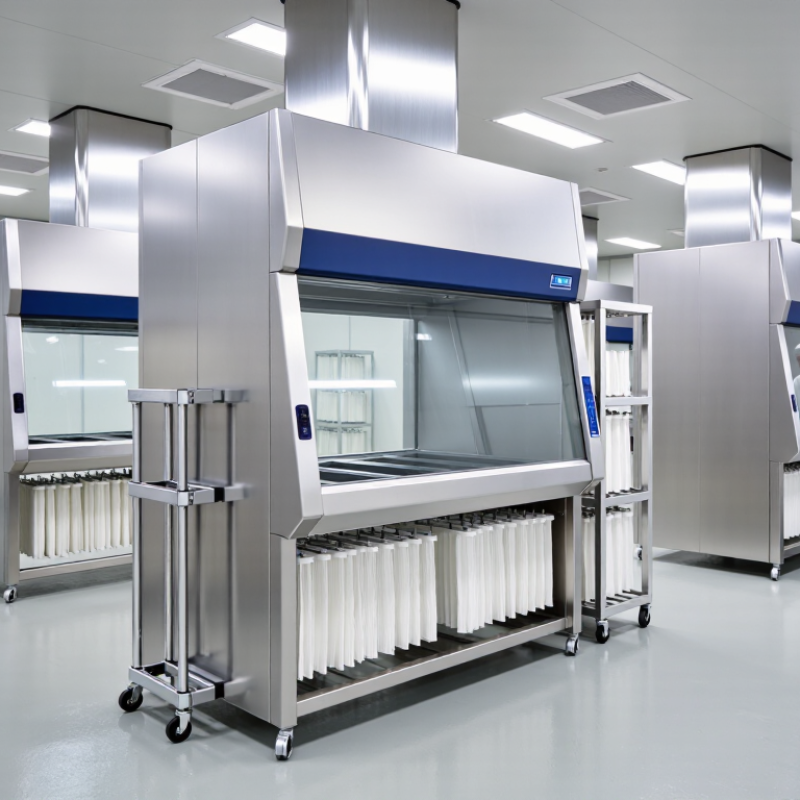
Laminar flow hood filters protect sensitive work by removing airborne particles from supplied air. They support a clean, one-directional airflow across the workspace. HEPA filters are common, while ULPA filters serve applications requiring tighter particle control. Filter selection depends on the hood’s design, airflow direction, and contamination risk.
Performance should be verified, not assumed from a product label. Key measures include particle-retention efficiency, pressure drop, airflow uniformity, and resistance to leakage. ISO 29463 and EN 1822 provide recognized methods for classifying high-efficiency filters, including performance at the most penetrating particle size. ISO 14644-1 helps evaluate the surrounding clean environment. A supplier should provide an individual test report, serial traceability, gasket details, and replacement guidance. In practice, a perfect efficiency number can still hide poor installation or uneven airflow. That weakness deserves attention.
Tips: Check the filter’s rated airflow before ordering. Measure pressure drop during commissioning and routine maintenance. Inspect seals, clamps, and frame edges for bypass gaps. Avoid choosing only by the lowest price. A filter that loads quickly may increase fan strain and operating costs. Visual inspection alone is not enough. Independent certification is useful, but it does not replace site testing. Even experienced teams can overlook small seal failures, especially after repeated filter changes.
The table compares ten commonly supplied laminar-flow filter configurations and the technical criteria used to evaluate them. Company and brand names are intentionally omitted.
| No. | Filter Configuration | Typical Classification | Rated Efficiency | Common Airflow Range | Typical Application | Key Performance Checks | Relevant Standards |
|---|---|---|---|---|---|---|---|
| 1 | H13 HEPA Mini-Pleat Filter | H13 | ≥99.95% at the most penetrating particle size (MPPS) | Approximately 0.30–0.50 m/s face velocity | General clean benches and non-hazardous sample preparation | Leak testing, uniformity, pressure drop, seal integrity | EN 1822; ISO 29463; ISO 14644-1 |
| 2 | H14 HEPA Mini-Pleat Filter | H14 | ≥99.995% at MPPS | Approximately 0.30–0.50 m/s face velocity | Pharmaceutical, medical, and precision laboratory work | MPPS efficiency, pressure drop, airflow uniformity, gasket condition | EN 1822; ISO 29463; IEST-RP-CC034 |
| 3 | U15 ULPA Filter | U15 | ≥99.9995% at MPPS | Approximately 0.30–0.45 m/s face velocity | Highly contamination-sensitive manufacturing and research | Very low particle penetration, pressure drop, scan test, airflow profile | EN 1822; ISO 29463; ISO 14644-3 |
| 4 | U16 ULPA Filter | U16 | ≥99.99995% at MPPS | Approximately 0.25–0.45 m/s face velocity | Advanced semiconductor, optics, and nanotechnology processes | Particle penetration, pressure drop, filter-pack integrity, velocity uniformity | EN 1822; ISO 29463; ISO 14644-3 |
| 5 | Gel-Seal HEPA Filter | Usually H13 or H14 | Depends on the declared H-class rating | Approximately 0.30–0.50 m/s face velocity | Applications requiring enhanced perimeter sealing and low bypass risk | Gel-channel continuity, knife-edge engagement, scan test, pressure drop | EN 1822; ISO 29463; IEST-RP-CC034 |
| 6 | Gasket-Seal HEPA Filter | Usually H13 or H14 | Depends on the declared H-class rating | Approximately 0.30–0.50 m/s face velocity | Standard clean benches and compact laminar-flow modules | Gasket compression, frame flatness, bypass leakage, airflow uniformity | EN 1822; ISO 29463; ISO 14644-3 |
| 7 | Low-Pressure-Drop HEPA Filter | Typically H13 or H14 | Must meet the specified H-class efficiency | Designed for approximately 0.30–0.50 m/s | Energy-conscious cabinets and systems with limited fan capacity | Initial pressure drop, airflow stability, efficiency, service-life projection | EN 1822; ISO 29463; ISO 16890 for prefilters where applicable |
| 8 | High-Temperature HEPA Filter | Application-specific H13 or H14 | Declared efficiency at the specified operating temperature | Application-dependent; airflow must be rebalanced after installation | Controlled thermal processes and specialized laboratory equipment | Temperature resistance, seal durability, media integrity, pressure drop | EN 1822; ISO 29463; applicable fire and material requirements |
| 9 | PTFE-Membrane HEPA/ULPA Filter | H13, H14, or U-class depending on design | Declared classification at MPPS | Approximately 0.25–0.50 m/s face velocity | Low-shedding, chemically sensitive, and specialized clean-air systems | Membrane integrity, chemical compatibility, pressure drop, scan testing | EN 1822; ISO 29463; ISO 14644-3 |
| 10 | HEPA Filter with Replaceable Prefilter Stage | Final filter commonly H13 or H14 | Final-stage efficiency follows the declared H-class rating | Approximately 0.30–0.50 m/s face velocity | Dustier environments where prefiltration can extend final-filter life | Prefilter grade, final-filter efficiency, combined pressure drop, loading trend | EN 1822; ISO 29463; ISO 16890 for general ventilation prefilters |
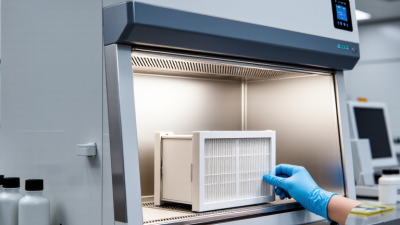
Evaluating global laminar flow hood filter suppliers requires more than comparing prices. Start with the filter’s intended use, dimensions, airflow target, and replacement schedule. A reliable supplier should provide efficiency data, pressure-drop results, media specifications, and clear lot-traceability records. Evidence matters. Ask for recent test reports from an independent laboratory, not only a sales sheet. Confirm whether the reported efficiency matches the test method used in your facility.
Experience becomes visible in small details. The supplier should explain frame materials, gasket options, sealing methods, and storage limits. Request a sample or pilot filter before placing a large order. Measure fit, leakage, airflow stability, and noise after installation. Do not guess. A poorly fitted filter can disrupt a clean work area, even when its headline efficiency looks impressive. Technical staff should answer practical questions without hiding behind vague claims. Their response time also matters during urgent maintenance.
For international purchasing, examine packaging, export documents, lead times, and replacement availability in your region. Check how the supplier handles damaged shipments, failed inspections, and design changes. Written warranty terms are useful, but service records reveal more. Ask for references from facilities with similar airflow requirements, while protecting confidential information. Be cautious with unusually low quotations; they may exclude testing or transport costs. I have found that supplier comparisons can become too neat on paper. Real performance may shift with humidity, installation skill, and aging equipment. Recheck assumptions during commissioning and keep measured data for future purchases.
Top 10 Laminar Flow Hood Filter Suppliers Worldwide
The worldwide market for laminar flow hood filters is growing with pharmaceutical, biotechnology, and electronics production. MarketsandMarkets’ 2024 cleanroom technology report forecasts continued expansion through 2028, driven by stricter contamination control. However, published market figures vary between research firms. That difference deserves attention.
A reliable top-10 supplier list should assess more than price. Check HEPA or ULPA efficiency, EN 1822 or ISO 29463 test records, airflow resistance, and replacement availability. A qualified supplier should provide batch-level certificates and traceable performance data. Filters rated H14 commonly achieve 99.995% efficiency at the most penetrating particle size. Small specification changes can affect cabinet velocity and product protection. This is where practical experience matters.
Tips: Request a signed test certificate. Confirm dimensions first. Ask about shipping protection and storage limits. Compare pressure-drop data at your operating airflow, not only the headline efficiency. Suppliers with regional service teams may reduce downtime, even when their quotation is higher. ISO 14644-1 guidance also supports routine particle monitoring, but it does not replace filter integrity testing. One weakness remains: many online rankings rely on self-reported supplier information. Buyers should verify laboratory accreditation, warranty terms, and technical references before selecting the final ten.
Supplier-neutral technical benchmark of commonly specified HEPA and ULPA filter classes used in laminar flow hoods. The chart shows minimum integral efficiency at the most penetrating particle size (MPPS), based on EN 1822 and ISO 29463 classification values rather than company or brand performance.
Higher filtration efficiency indicates greater particle-capture performance. Actual filter selection also depends on airflow resistance, face velocity, dimensions, sealing, and certification requirements.
Top 10 Laminar Flow Hood Filter Suppliers Worldwide
Comparing the top suppliers requires more than counting filter models. A practical supplier should offer HEPA and ULPA options, replacement cartridges, housings, gaskets, and complete fan-filter units. Check whether dimensions match your hood without forced modifications. A filter that fits poorly can create bypass leakage around the frame. Some suppliers also provide custom sizes for older equipment, which can reduce downtime during replacement.
Certifications deserve careful review. Look for documented quality systems, tested filtration performance, and factory reports linked to each filter serial number. ISO 9001 supports process control, while ISO 14644 knowledge helps suppliers discuss cleanroom performance accurately. EN 1822 testing may clarify HEPA or ULPA efficiency, but the certificate should match the exact model. A polished certificate list is not enough. Ask for test methods, airflow conditions, pressure drop, and scan-test results.
Service often separates reliable suppliers from convenient sellers. Compare technical support, installation guidance, delivery promises, warranty terms, and emergency replacement capacity. Experienced teams can help measure face velocity with a calibrated instrument and identify damaged seals during commissioning. Ask whether reports arrive with the shipment, not weeks later. I would not trust the lowest quotation automatically. It may exclude testing, freight, or installation advice. My own comparison would record response time, documentation quality, and after-sales clarity. That process is less perfect, but it reveals practical reliability.
Selecting a laminar flow hood filter supplier requires more than comparing prices. Laboratory risk assessment should guide the decision. The WHO Laboratory Biosafety Manual, 4th edition, identifies risk assessment as the foundation of effective laboratory controls.
Ask suppliers for filter efficiency reports, factory test certificates, and serial-level traceability. EN 1822 classifies high-efficiency filters by their most penetrating particle size. Under this standard, H13 filters provide at least 99.95% efficiency, while H14 filters provide at least 99.995%. These figures matter, but they do not replace installation testing. A damaged gasket can undermine excellent filter media.
Request an airflow verification plan. ISO 14644-1:2015 evaluates cleanroom air cleanliness through airborne particle concentration, not supplier reputation. A capable supplier should explain scan testing, pressure-drop limits, replacement intervals, and disposal procedures. IEST-RP-CC001 also supports standardized HEPA filter performance testing.
Look beyond the datasheet. Check response times, calibration records, packaging protection, and technical support in your region. Ask whether the supplier can match the filter to your hood’s dimensions and fan capacity. An attractive quote may hide costly compatibility problems. No checklist is perfect. Smaller laboratories may also over-specify filtration and restrict airflow unnecessarily. A documented consultation with an independent certifier can expose that mistake before installation. Supplier quality should remain measurable, traceable, and open to review.