Top 10 Spray Booth Inlet Filters for Optimal Performance?
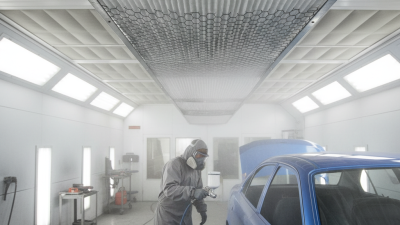
In the world of industrial painting, Spray Booth Inlet Filters play a crucial role in ensuring optimal performance and air quality. According to the U.S. Environmental Protection Agency, inadequate filtration can lead to increased pollution and decreased product quality. The right inlet filter can capture particles effectively, reducing contaminants in the spray booth environment.
A recent study by the National Institute of Standards and Technology highlights that filtering efficiency directly impacts the durability and quality of coatings. For instance, poorly maintained filters can cause uneven finishes and increased rework. This creates not only financial waste but also delays in production schedules.
Choosing the best Spray Booth Inlet Filters is essential yet often overlooked. Many operators underestimate the filter’s impact on air quality and equipment longevity. This oversight can lead to costly repercussions. Understanding the top options available ensures better decision-making. The filters you choose can significantly enhance your workspace, resulting in cleaner air and improved finishes.
Understanding the Importance of Spray Booth Inlet Filters
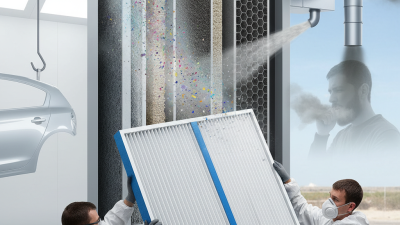
In the spray booth industry, inlet filters play a crucial role. They prevent contaminants from entering the booth during the painting process. By filtering out dust, dirt, and overspray, these filters ensure the final product maintains a high level of quality. When clean air enters the booth, it enhances the painting consistency. This is vital for achieving optimal performance.
However, selecting the right inlet filter can be challenging. Many factors come into play. For instance, the type of coating being used can affect filter selection. Not all filters are created equal. Some may clog quicker than others, requiring frequent replacements. This can lead to increased maintenance costs and downtime. It’s essential to analyze the performance and longevity of each filter option.
Monitoring filter efficiency is another critical element. Regular inspections can reveal when filters need changing. Neglecting this can result in poor air quality inside the booth. This may compromise the painting process. Filters should not only be an afterthought but also a point of regular evaluation. Ultimately, investing time in understanding these filters pays off in product quality and operational efficiency.
Criteria for Selecting the Best Inlet Filters for Spray Booths
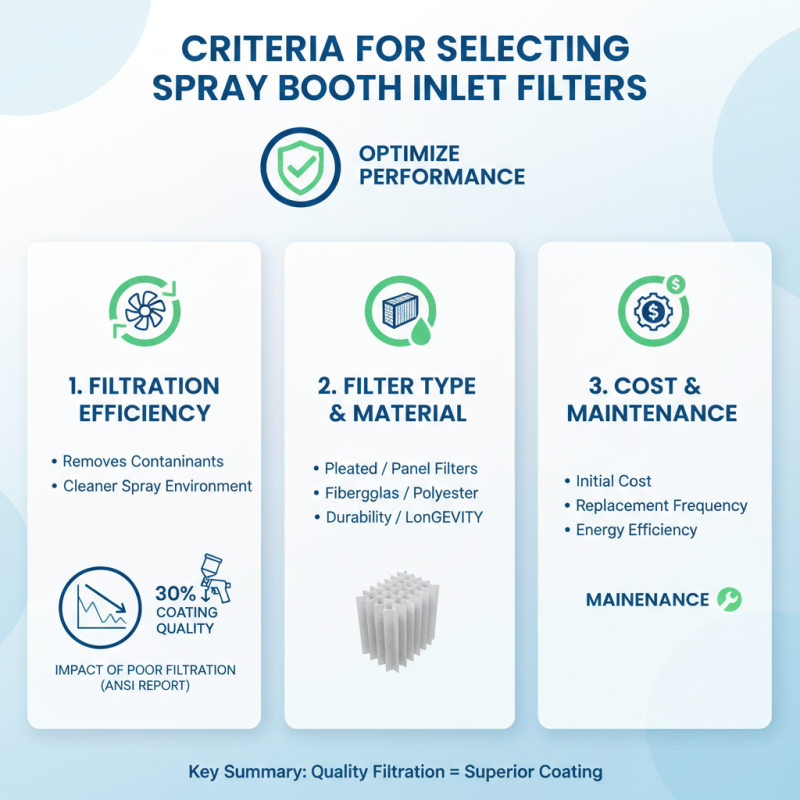
Selecting the best inlet filters for spray booths is crucial for optimizing performance. Effective filters remove contaminants, ensuring a cleaner environment for spray applications. According to a report from the American National Standards Institute, improper filtration can decrease coating quality by up to 30%. This highlights the importance of quality in filter selection.
When evaluating inlet filters, consider particle capture efficiency. A filter that captures particles as small as 0.3 microns is ideal. Look for options with a high MERV rating, ideally over 13. This ensures that pollutants like dust and paint overspray are effectively trapped. However, higher efficiency often leads to increased airflow resistance. This can strain the spray booth’s ventilation system, resulting in potential inefficiencies.
Additionally, evaluate the filter's lifespan and maintenance requirements. Filters that clog quickly can lead to increased downtime. The average lifespan of a filter can be anywhere from 30 to 90 days, depending on usage and environment. Regularly checking and replacing filters is essential, yet many neglect this maintenance. This oversight can have detrimental effects on overall booth performance and lead to unexpected costs.
Top Features to Look for in High-Performance Inlet Filters
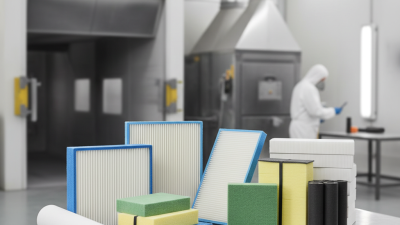
When selecting inlet filters for spray booths, consider their key features. High-performance filters improve air quality and maintain system efficiency. Look for filters made of high-quality materials that can withstand various conditions. HEPA or pleated designs offer excellent particle capture rates. This ensures a cleaner work environment and reduces contamination risks.
Tips: Regularly check and replace filters based on usage. Dirty filters can impair airflow and affect performance. It's essential to maintain a routine inspection schedule. Additionally, consider the filter's pressure drop rating. A lower rating signifies less energy consumption and better airflow.
Durability is another aspect worth noting. Filters should resist wear and tear over time. Evaluate how long filters last under your specific conditions. Some filters may seem cost-effective initially but fail quickly. This requires frequent replacements, leading to increased maintenance costs. Be mindful of these aspects to achieve optimal filter performance.
Top 10 Spray Booth Inlet Filters for Optimal Performance
This chart displays the performance metrics of the top 10 spray booth inlet filters in terms of filtration efficiency, air flow resistance, and durability. These characteristics are vital for ensuring optimal performance in spray booth operations.
Review of the Top 10 Spray Booth Inlet Filters on the Market
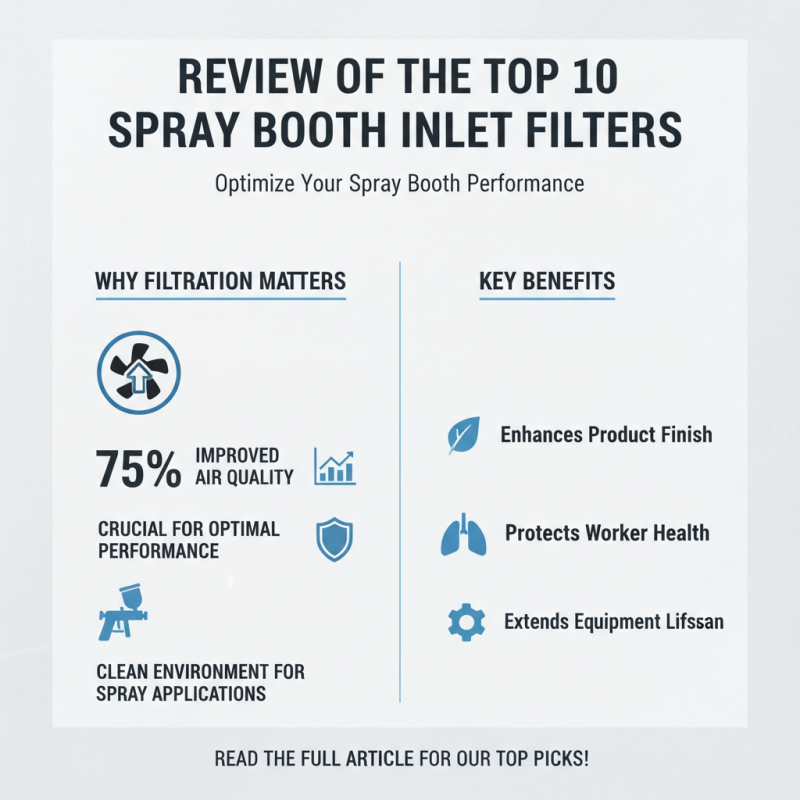
In the pursuit of optimal spray booth performance, selecting the right inlet filter is crucial. Recent industry studies indicate that effective filtration can improve air quality by up to 75%. This statistic highlights the importance of using high-quality filters to ensure a clean environment for spray applications.
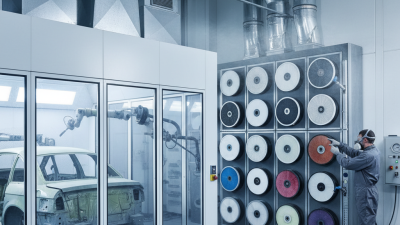
The top spray booth inlet filters on the market vary in effectiveness and design. Some filters boast multi-layer constructions designed to capture a broader range of particles. These filters are essential in preventing contaminants from interfering with paint application. Additionally, filters that maintain a low-pressure drop are often preferred. They provide better airflow without sacrificing filtration efficiency, which is vital in high-demand environments.
However, not all filters are created equal. Some may not perform as advertised. Users have reported issues with filter life and efficiency over time. An industry survey found that nearly 30% of users experienced premature clogging. This highlights the need for careful selection and maintenance practices. Continuous monitoring and data analysis can prevent these issues, ensuring that your spray booth operates at peak performance.
Maintenance Tips for Prolonging the Life of Inlet Filters
Maintaining the longevity of spray booth inlet filters is crucial for optimal performance. Regular inspection is essential. Check for dirt buildup or visible damage. Filters should be cleaned or replaced as needed. A dirty filter impacts airflow, leading to inefficiency. Sometimes, filters may seem clean but still require replacement. Trust your judgment on when to change them.
Periodically, scheduling routine maintenance can prevent bigger issues. Consider a maintenance log to track when each filter was serviced. Dust and particulates accumulate over time. Ignoring this can result in poor air quality and finish defects. Be mindful of your operating environment; high dust areas may require more frequent checks.
Proper installation is another key factor. Ensure seals are tight to prevent air leaks. Misalignment can compromise filter effectiveness. Some users underestimate the role of proper installation. Simple errors like this can lead to costly repairs down the line. Make it a habit to review installation guidelines. Proper maintenance can improve filter efficacy and boost spray booth performance.
Top 10 Spray Booth Inlet Filters for Optimal Performance
| Filter Type |
Efficiency (%) |
Max Airflow (CFM) |
Filter Life (Months) |
Material |
| Pleated Filter |
95 |
1200 |
6 |
Synthetic |
| HEPA Filter |
99.97 |
800 |
12 |
Glass Fiber |
| Carbon Filter |
80 |
1000 |
5 |
Activated Carbon |
| Electrostatic Filter |
90 |
1500 |
9 |
Synthetic Fiber |
| Washable Filter |
85 |
900 |
24 |
Aluminum |
| Panel Filter |
70 |
1100 |
4 |
Cellulose |