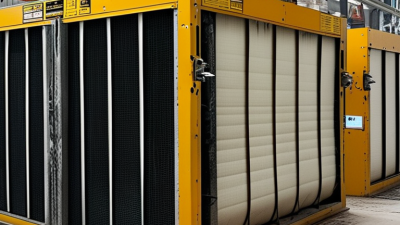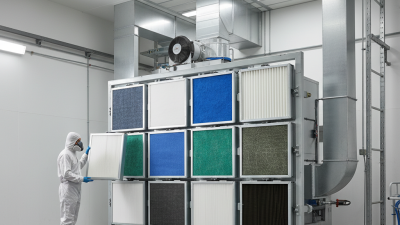
Choosing the right Ffu Filter Unit is rarely a simple matter of comparing prices. Global cleanroom buyers must examine airflow uniformity, HEPA or ULPA filtration, noise levels, energy use, and service access. A unit may look efficient on paper yet perform poorly after installation. Real conditions matter.
William Whyte, a respected cleanroom contamination-control researcher, stated, “The purpose of a cleanroom is to control contamination.” His words remain highly relevant when evaluating modern FFU systems. The best unit should support stable air cleanliness, predictable pressure control, and practical maintenance. It should also match the room’s ceiling grid, production process, and operating schedule.
This guide reviews seven leading Ffu Filter Unit options for international buyers. Each selection considers filtration efficiency, fan performance, controls, construction quality, lifecycle cost, and supplier reliability. Certifications and test reports deserve close attention. Marketing claims are not enough.
Small details matter.
For example, a removable filter guard can shorten replacement time. Low-noise motors can improve operator comfort during long shifts. Integrated monitoring may reveal pressure changes before they affect production. However, no ranking stays perfect. Regional voltage, shipping conditions, spare-part access, and installation skills can change the final decision. A premium unit is not always the best fit. A cheaper model may create hidden costs through noise, energy consumption, or difficult servicing.
Readers should treat this comparison as a practical starting point, not an unquestionable verdict. Site validation remains essential. The right Ffu Filter Unit is the one that performs reliably in the buyer’s actual cleanroom.
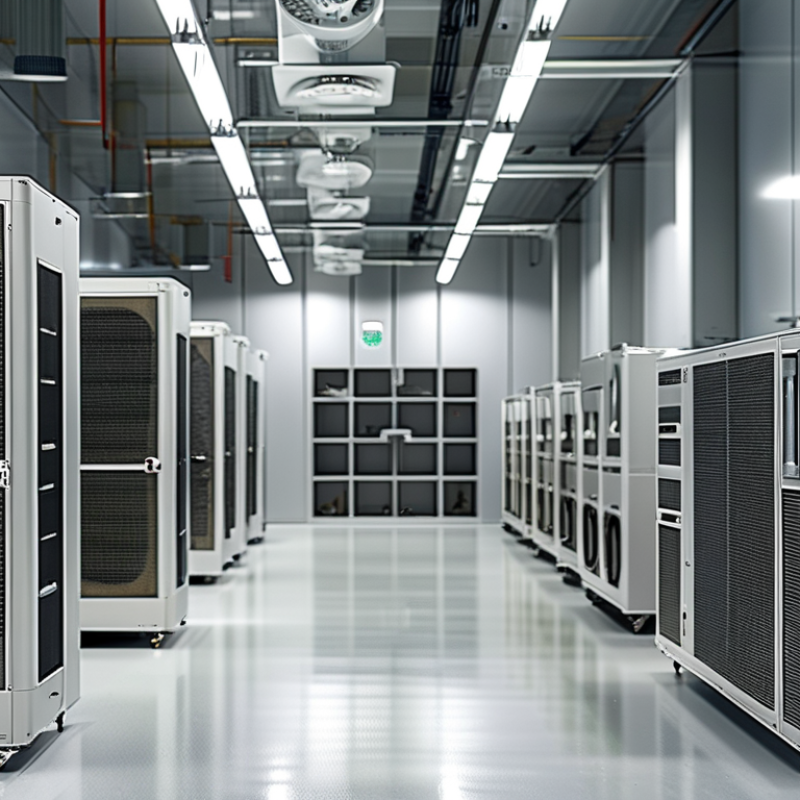
For global cleanroom buyers, FFU selection begins with the required ISO 14644-1 classification. This standard limits airborne particle concentrations, not simply airflow speed. ISO Classes 1 through 9 describe cleanliness levels at selected particle sizes, such as 0.1, 0.3, or 0.5 micrometres. The correct class depends on the process, occupancy state, and contamination risk.
A common mistake is treating 0.45 m/s as a universal pass-or-fail value. It is not. This airflow velocity is widely used as a design reference for unidirectional clean air, especially across terminal filters. Actual acceptance limits should follow the project specification, risk assessment, and measured uniformity. During commissioning, technicians should map velocity across the filter face, verify room pressure, and perform particle testing under defined operating conditions. Smoke visualization can reveal turbulence that an average velocity reading misses.
FFU buyers should also review airflow volume, filter efficiency, motor control, noise, heat output, and service access. A unit may meet its nominal velocity yet perform poorly after installation. Ceiling layout matters. So does filter loading over time.
In field work, readings can drift because of instruments, room activity, or uneven ceiling panels. That uncertainty deserves attention. A practical selection process combines certified data, calibrated instruments, documented test methods, and an honest review of maintenance conditions. Specification sheets help, but they never replace site verification.

7 Best FFU Filter Units for Global Cleanroom Buyers?
HEPA and ULPA Performance: H14 at 99.995% and U15 at 99.9995%
For global cleanroom buyers, filter classification should guide FFU selection, not replace engineering judgment. H14 filters provide 99.995% efficiency at the most penetrating particle size under EN 1822 testing. U15 increases that figure to 99.9995%, offering tighter particle control for critical processes.
Small differences matter.
In practice, the correct FFU depends on room classification, airflow targets, pressure loss, and process sensitivity. A U15 filter usually creates greater resistance than an H14 filter. The fan may then require more power, stronger controls, and careful balancing. Selecting the highest grade automatically is not always efficient or necessary.
During commissioning, technicians should verify airflow uniformity across the diffuser face, not only read the fan display. A calibrated particle counter, differential pressure gauge, and installed-filter leak test provide stronger evidence. Gasket compression also deserves attention. A high-grade filter cannot compensate for a poor seal.
I have seen specifications look excellent while room performance remained uneven. That result is frustrating, but it shows why factory data needs field verification. Buyers should request efficiency reports, pressure-drop curves, electrical details, and replacement-filter availability. Local voltage compatibility matters too. So does service access.
H14 may suit many controlled manufacturing areas. U15 can be justified where extremely low particle levels protect sensitive products. The better choice is the one that meets validated performance targets without creating unnecessary operational burden.
7 Best FFU Filter Units for Global Cleanroom Buyers?
Seven FFU types serve different cleanroom demands. Standard HEPA FFUs usually deliver stable airflow at moderate energy use. ULPA models capture finer particles, but their denser media can reduce airflow and shorten filter life. High-airflow FFUs suit large rooms or stricter air-change targets. They may produce more noise near occupied workstations.
Low-profile FFUs fit restricted ceiling spaces and are easier to install around lighting systems. EC-motor FFUs often reduce energy consumption through variable-speed control. AC-motor units can offer simpler servicing, though their speed adjustment is usually less flexible. Fan-filter units with washable prefilters may protect the main filter in dusty areas. However, added prefiltration needs regular cleaning.
Tips: Compare airflow at the required pressure, not at zero resistance. Check measured noise at one meter. Ask for power data at your operating speed. Filter life depends on dust loading, humidity, maintenance, and room discipline. A unit rated for 1,000 cubic meters per hour may deliver less after filter loading. That detail matters. I would also test several units in a mock-up room before ordering hundreds. Published data can look precise, yet installation conditions often change the result. Door openings, unbalanced returns, and neglected prefilters can waste energy quickly.
Seven FFU types compared by airflow, noise, energy consumption, and filter service life.
The figures are representative operating benchmarks for common FFU configurations using 610 × 610 mm filter modules. Actual performance varies with filter efficiency, face velocity, room pressure, loading, and motor control settings. Filter life depends strongly on particulate concentration and pre-filtration quality.
7 Best FFU Filter Units for Global Cleanroom Buyers?
For global buyers, the best FFU is not simply the quietest unit. It must match local power conditions, control systems, and maintenance skills. An EC motor is a strong starting point because it adjusts speed efficiently and supports stable airflow. Check the motor’s operating range, not only its efficiency label. Small details matter.
A practical shortlist should include units with 110–240 V input and clear protection requirements. Confirm frequency compatibility before ordering. Some “universal” inputs still require careful wiring or external protection. Control integration is equally important. Look for 0–10 V, Modbus, or dry-contact options that connect with the cleanroom management system. Test communication during commissioning, not after installation.
The seven strongest choices usually combine EC motors, wide voltage input, reliable HEPA or ULPA filtration, low noise, accessible service panels, sensor support, and documented factory testing. Ask for airflow curves at the intended pressure drop. A filter unit may appear efficient at one condition, then perform poorly after loading. I have seen purchasing teams focus heavily on price and overlook replacement access. That mistake becomes expensive in high-ceiling rooms. Installation drawings, wiring diagrams, spare-part guidance, and response procedures also indicate supplier reliability. Specifications can look complete, yet unclear control logic may slow the entire project.
| Rank | FFU Profile | Nominal Size | Motor Type | Input Voltage | Typical Airflow | Filter Option | Control Integration | Typical Noise | Best-Fit Application |
|---|---|---|---|---|---|---|---|---|---|
| 1 | Universal EC FFU | 1200 × 600 mm | Electronically commutated (EC) | 110–240 V AC, 50/60 Hz | 900–1,600 m³/h | H14 HEPA; optional ULPA | 0–10 V, Modbus RTU, alarm relay | ≤58 dB(A) | General ISO 5–8 cleanrooms and modular ceilings |
| 2 | High-Capacity EC FFU | 1200 × 1200 mm | Electronically commutated (EC) | 110–240 V AC, 50/60 Hz | 1,800–3,200 m³/h | H14 HEPA | 0–10 V, RS-485, centralized BMS gateway | ≤62 dB(A) | Large ceiling modules and higher air-change requirements |
| 3 | Low-Profile EC FFU | 600 × 600 mm | Electronically commutated (EC) | 110–240 V AC, 50/60 Hz | 450–850 m³/h | H13 or H14 HEPA | 0–10 V speed control; dry-contact alarm | ≤55 dB(A) | Restricted ceiling voids, laboratories, and small clean zones |
| 4 | ULPA Process FFU | 1200 × 600 mm | Electronically commutated (EC) | 110–240 V AC, 50/60 Hz | 800–1,400 m³/h | U15 or U16 ULPA | 0–10 V, Modbus RTU, filter-pressure alarm | ≤60 dB(A) | Semiconductor, optics, and critical particle-control areas |
| 5 | Fan-Speed Feedback FFU | 1200 × 600 mm | Electronically commutated (EC) | 110–240 V AC, 50/60 Hz | 850–1,500 m³/h | H13 or H14 HEPA | 0–10 V, tachometer output, RS-485 option | ≤59 dB(A) | Facilities requiring airflow verification and predictive maintenance |
| 6 | Plug-and-Play FFU | 600 × 1200 mm | Electronically commutated (EC) | 110–240 V AC, 50/60 Hz | 850–1,500 m³/h | H14 HEPA | Local potentiometer, 0–10 V remote input | ≤60 dB(A) | Retrofit projects and rapid installation in international facilities |
| 7 | Energy-Optimized FFU | 1200 × 600 mm | Electronically commutated (EC) | 110–240 V AC, 50/60 Hz | 750–1,350 m³/h | H13 or H14 HEPA | 0–10 V, Modbus RTU, operating-status feedback | ≤56 dB(A) | Continuous operation where energy use and lifecycle cost are priorities |
Selection note: Airflow, sound level, power consumption, and filter pressure drop vary with filter media, face velocity, ceiling configuration, and commissioning conditions. Confirm performance through factory test data and applicable cleanroom standards before purchase.
The best FFU depends on the process, not a universal ranking. Pharmaceutical rooms often need stable HEPA filtration, low leakage, and documented performance for validation. Semiconductor areas may require ULPA filtration, extremely low particle release, and precise airflow control. Hospitals usually prioritize reliable filtration, quiet operation, easy maintenance, and occupant comfort. These are different priorities. A single unit cannot satisfy every room equally.
When comparing seven FFU options, examine filter efficiency, airflow volume, pressure capability, motor control, noise, energy use, housing materials, and monitoring functions. Measure the room’s actual resistance, not only the catalog value. Stainless steel housings can support demanding pharmaceutical cleaning routines. Sealed construction helps reduce bypass risks around the filter frame. Variable-speed motors can adjust airflow during commissioning and operation. However, overly complex controls may create maintenance problems. That point is often underestimated.
Tips: Ask for factory test data, filter scan results, sound levels, and motor service details. Check whether replacement filters are locally available. Confirm compatibility with building controls before ordering. For hospitals, review acoustic performance beside patient areas. For semiconductor facilities, assess vibration and particle behavior under real operating conditions. For pharmaceutical projects, connect the FFU choice with room classification and validation plans. I would also test one unit before a full purchase. Specifications can look perfect on paper, yet installation details sometimes tell another story.