Leave Your Message

China Top Paint Booth Fiberglass Filter Manufacturers

China Top Paint Booth Fiberglass Filter Manufacturers introduces a practical review of suppliers serving automotive, furniture, metal, and industrial coating operations. A Paint Booth Fiberglass Filter is not merely a roll of green or white media. Its density, fiber structure, pressure drop, capture efficiency, and flame-resistance documentation can directly affect booth cleanliness and maintenance costs.

W. Edwards Deming, a respected quality-management expert, said, “Quality comes not from inspection, but from the improvement of the production process.” This principle fits filtration selection. Reliable manufacturers should control fiber formation, bonding consistency, roll dimensions, packaging, and batch traceability. Their technical teams should also explain performance data in practical terms, not hide behind impressive labels.

Look closely at the details.

A strong supplier can provide test reports, product specifications, installation guidance, and samples for evaluation. Buyers should compare initial resistance, dust-holding capacity, replacement intervals, and compatibility with the booth’s airflow design. A filter that appears inexpensive may load quickly, increase fan energy use, or leave overspray on exhaust components.

China has many capable manufacturers, but quality is not uniform. Some product pages remain vague. That deserves scrutiny. Factory visits, independent testing, and clear communication can reveal more than polished photographs. This guide therefore considers manufacturing experience, export reliability, technical support, and documented product performance. It also recognizes an uncomfortable truth: no single Paint Booth Fiberglass Filter suits every coating process. The right choice depends on airflow, paint chemistry, booth configuration, and operating discipline.
China Top Paint Booth Fiberglass Filter Manufacturers

Definition and Function of Fiberglass Filters in Paint Booths

China Top Paint Booth Fiberglass Filter Manufacturers

Definition and Function of Fiberglass Filters in Paint Booths

Fiberglass filters are layered glass-fiber media designed to capture airborne paint overspray. They are commonly installed in exhaust sections, where atomized coating particles travel toward the booth outlet. The fibers create a tortuous path. Wet particles contact the strands and remain trapped within the filter depth.

A properly selected filter helps protect exhaust ducts, fans, and nearby working areas from paint buildup. It also supports stable airflow, which is important for finish quality and operator visibility. However, fiberglass media does not remove every solvent vapor or gas. That limitation is often overlooked. Filter performance depends on fiber density, thickness, coating type, spray volume, and booth velocity. Pressure-drop readings provide useful evidence. A visual check alone can mislead.

Tips: Check the filter face and pressure gauge during each production shift. Replace loaded media before airflow becomes unstable. Keep spare rolls sealed and dry. Record replacement dates, paint types, and pressure readings. This simple log can reveal recurring problems. Do not compress the media during installation, because crushed fibers reduce its effective capture area. Confirm compatibility with the coating process and local ventilation requirements. Selection charts are helpful, but real operating data matters more. Experienced technicians should review unusual loading, uneven deposits, or sudden airflow changes. A filter may appear clean while its internal layers are already saturated.
Key Criteria for Selecting a China-Based Filter Manufacturer

Selecting a China-based fiberglass filter manufacturer requires more than comparing prices. Paint booth filters face overspray, airflow resistance, and frequent replacement cycles. Ask for technical data covering fiber diameter, thickness, density, filtration efficiency, and pressure drop.

Request samples before signing a large order. Install them in a working booth and record airflow, paint capture, and service life. A useful supplier should explain testing methods clearly. Check whether production uses controlled curing, clean cutting, and sealed packaging. Small details matter. Broken edges can release fibers and reduce filter performance.

Factory experience should be visible, not merely claimed. Review quality records, batch traceability, inspection tools, and corrective-action procedures. Confirm that the manufacturer can provide consistent dimensions for your booth frame. Export experience also helps with labeling, moisture protection, and delivery planning. Communication deserves attention too. Slow replies may become costly during urgent production changes.

A supplier’s certifications should be current and relevant to the product. Do not accept copied reports without verification. Third-party testing is useful, but factory controls matter more over time. I would also discuss minimum order quantities and replacement schedules early. A cheaper filter may create higher labor costs through faster loading. The first choice is rarely perfect. Leave room for testing, feedback, and revision.

Manufacturing Processes and Quality Standards

China’s leading fiberglass filter manufacturers often begin with carefully selected glass fibers.

Fiber diameter affects strength, airflow, and paint capture. During forming, fibers are layered into a progressive-density structure. The coarse side faces the spray area. Finer fibers remain deeper inside the media.

Controlled binder application helps the filter keep its shape during cutting and installation. Curing ovens must maintain stable temperature and air circulation. Uneven curing can create brittle edges or loose fibers. Operators should check thickness, basis weight, tensile strength, and dimensional tolerance from every production batch.

Simple checks matter.

Quality testing should include pressure drop, paint-holding capacity, airflow uniformity, and flame behavior. Results need clear test methods and traceable records. Manufacturers should compare samples before and after simulated spraying.

A low initial pressure drop may look attractive, but rapid loading can increase operating costs.

That detail is easy to miss.

Reliable factories also inspect packaging, roll winding, and moisture protection. Damaged edges can cause bypass leakage inside a booth. Production records should identify raw materials, curing conditions, inspection dates, and batch numbers. Relevant local fire, workplace safety, and environmental requirements must guide final specifications.

No process is flawless.

Periodic review, field feedback, and corrective action keep quality from becoming a paper exercise.

Major Product Types and Their Industrial Applications

China Top Paint Booth Fiberglass Filter Manufacturers

Major Product Types and Their Industrial Applications

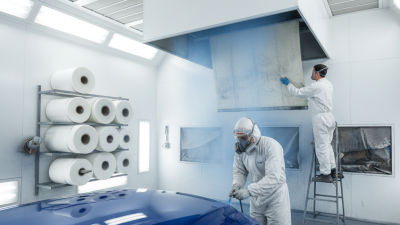
Fiberglass filters for paint booths come in several practical forms. Roll media suits large booths because technicians can cut it to the required length. Cut pads work well in smaller spray areas and replacement panels. Multi-layer filters combine coarse and fine fibers. They improve particle capture while controlling airflow resistance. Some manufacturers also produce framed exhaust filters for faster installation.

Automotive body shops often use high-loft fiberglass media in exhaust sections. It captures overspray before air reaches the final filtration stage. Furniture factories need filters that handle lacquer, varnish, and wood dust. Metal finishing plants commonly select denser media for powder and liquid coating operations. Aircraft component facilities may require tighter specifications, traceable batches, and documented pressure-drop results.

A reliable Chinese manufacturer should provide fiber density, thickness, airflow data, and capture-efficiency testing. Batch consistency matters. A filter that looks identical may perform differently after storage or cutting. In practical booth inspections, uneven loading often indicates poor sealing or unsuitable media, not only a bad filter. Operators should check the filter face, frame gaps, and fan pressure regularly. Flame-retardant options may be appropriate where local safety requirements demand them. Yet, “higher efficiency” is not always better. Excessive resistance can reduce booth performance and increase energy use. Clear technical advice is still missing from some supplier catalogs.

China Top Paint Booth Fiberglass Filter Manufacturers - Major Product Types and Their Industrial Applications

Fiberglass Filter Product Type Typical Construction Nominal Thickness Typical Filtration Role Common Paint Booth Position Industrial Applications Operational Advantages Replacement and Safety Considerations
Fiberglass Paint Arrestor Roll Continuous, progressively densified glass-fiber media supplied in rolls; commonly backed with a retaining scrim or support layer. Approximately 25–75 mm Captures wet overspray and paint particles from booth exhaust air. Exhaust plenum, rear wall, or downstream filter bank in crossdraft and downdraft booths. Automotive refinishing, commercial vehicle painting, agricultural equipment, machinery coating, and general metal finishing. Easy to cut and install; suitable for large filter areas; progressive density helps distribute loading through the media. Replace when airflow resistance rises, paint loading is excessive, or the booth manufacturer’s pressure limit is reached. Use only where the media is rated for the coating process.
Fiberglass Exhaust Filter Pad Pre-cut or roll-format glass-fiber pad, often supported by a lightweight scrim to improve handling and dimensional stability. Approximately 25–50 mm Primary overspray capture for low-to-moderate paint loading. Rear exhaust wall, side exhaust panels, or ceiling exhaust sections. Small spray booths, furniture finishing, cabinet coating, light industrial painting, and maintenance workshops. Simple replacement procedure and adaptable sizing; provides a practical option for intermittent spraying operations. Install with the airflow direction specified by the filter design. Do not compress the pad excessively because compression can reduce usable airflow and filtration area.
High-Capacity Progressive-Density Fiberglass Filter Multi-layer glass-fiber structure with coarser fibers on the air-entering side and finer fibers toward the clean-air side. Approximately 50–100 mm Higher-capacity capture of paint mist and overspray before exhaust treatment equipment. Exhaust filter wall or large-area filter cassette assembly. High-production automotive lines, heavy equipment, truck bodies, rail components, and industrial coating facilities. Greater dust-holding and paint-holding capacity than a uniform-density pad; can help extend service intervals when correctly sized. Actual service life depends on coating type, spray rate, airflow, transfer efficiency, and booth loading. Monitor differential pressure rather than relying only on a calendar schedule.
Fiberglass Filter with Reinforced Scrim Glass-fiber media laminated or bonded to a supporting mesh, net, or scrim to reduce sagging during use. Approximately 25–75 mm Overspray capture where the filter must retain its shape under continuous airflow. Vertical exhaust wall, ceiling filter frame, or large unsupported filter opening. Bus and coach painting, container coating, structural steel finishing, and large fabricated-part spray booths. Improved mechanical stability and easier handling during replacement; suitable for wider filter spans than unsupported media. Check that the scrim and binder are compatible with the booth’s temperature, solvent exposure, and coating chemistry. Replace damaged or separated media promptly.
Fine-Grade Fiberglass Overspray Media Finer glass-fiber arrangement designed for increased capture of smaller paint droplets after initial overspray removal. Approximately 50–100 mm Secondary overspray capture and polishing of exhaust air. Downstream exhaust stage, secondary filter bank, or final overspray section. Automotive topcoat application, appliance finishing, precision metal coating, and applications requiring cleaner exhaust ductwork. Can reduce carryover of residual paint mist when used after an appropriate primary filter stage. Fine media can load more rapidly when used as the only filter. A prefilter or primary overspray stage is often needed to prevent premature blockage.
Ceiling-Supply Fiberglass Filter Media Low-shedding, bonded glass-fiber media designed for air entering the spray zone rather than for collecting wet overspray. Approximately 20–50 mm Removal of airborne dust and particulates from incoming booth air. Ceiling supply plenum or intake filter frame. Automotive refinishing, vehicle assembly, furniture finishing, electronics enclosures, and clean coating areas. Helps protect the finish from airborne contamination and supports more consistent booth airflow when evenly loaded. Supply-air media is not a substitute for exhaust overspray filters. Replace if visibly soiled, damaged, or associated with a measurable airflow reduction.
Cut-to-Size Fiberglass Filter Sheets Flat sheets or panels produced in standard or custom dimensions for use with reusable frames and retaining grids. Approximately 25–75 mm General-purpose paint overspray capture or intake-air prefiltration. Panel filter frames, modular booth sections, and custom exhaust openings. Repair shops, powder-coating preparation areas, industrial maintenance, agricultural machinery, and custom spray enclosures. Flexible sizing and convenient inventory management; suitable for booths with non-standard dimensions. Measure the opening and airflow direction carefully before ordering. Gaps around the frame can allow bypass and reduce effective filtration.
High-Temperature Fiberglass Filter Media Glass-fiber media selected for processes involving elevated air temperatures, subject to the temperature rating of the binder, backing, and complete filter assembly. Approximately 25–75 mm Particulate and overspray capture in warm exhaust or curing-related air streams. Exhaust or intake sections exposed to elevated process temperatures. Industrial baking and coating lines, heated metal finishing, composite-part processing, and controlled-temperature spray operations. Maintains dimensional integrity within its specified operating range and can support processes where standard media is unsuitable. Confirm the complete assembly’s maximum continuous and peak temperature ratings. Fiberglass media must not be treated as automatically suitable for every heated or combustible process.

Selection note: Filter performance depends on fiber structure, basis weight, airflow velocity, coating material, spray method, booth design, and maintenance practice. Always verify pressure-drop, temperature, fire-safety, and compatibility requirements against the paint booth and filter manufacturer’s technical documentation.

Supplier Evaluation, Customization, and Export Considerations

China Top Paint Booth Fiberglass Filter Manufacturers

Choosing a Chinese fiberglass filter supplier requires more than comparing price lists. Request samples, technical data sheets, and recent test reports. Check filtration efficiency, pressure drop, fiber density, roll width, and temperature resistance. For paint booths, stable airflow matters because overloaded filters can increase fan energy and reduce coating quality. Ask how the supplier controls thickness during production. Uneven material may create visible dust paths.

Customization should match your booth design, not only your preferred size. Suppliers may cut panels, produce rolls, add support mesh, or adjust density for different paint loads. Confirm tolerances in writing. A practical trial should run through your booth under normal spray conditions. Measure pressure before and after use. One weakness in many evaluations is trusting laboratory data without checking field performance.

Tips: Ask for batch traceability, packaging photos, replacement schedules, and a clear sample approval process. Confirm whether quotations include cutting, export packing, and documentation. For overseas shipments, review moisture protection, carton strength, pallet dimensions, and Incoterms. Check the HS code with your customs broker, since classification can vary by product structure and destination. Request certificates required by the importing market, but verify their authenticity and validity. A dependable supplier answers technical questions directly and admits limits. That honesty is useful.