How to Choose the Right Ceiling Air Filter?
Choosing the right Ceiling Air Filter is not a matter of selecting the highest rating available. The correct choice depends on airflow, room use, equipment limits, and maintenance habits. A filter that looks impressive on paper may reduce airflow when installed in an older ceiling system. That can increase energy use and strain the fan.
Dr. Richard Corsi, a recognized indoor-air-quality researcher, has said, “Filtration is one part of a larger strategy for improving indoor air quality.” His point matters in offices, schools, clinics, and homes. A Ceiling Air Filter can capture dust, pollen, and some fine particles, but it cannot solve every ventilation problem. Room occupancy, outdoor-air supply, humidity, and cleaning routines also influence indoor conditions.
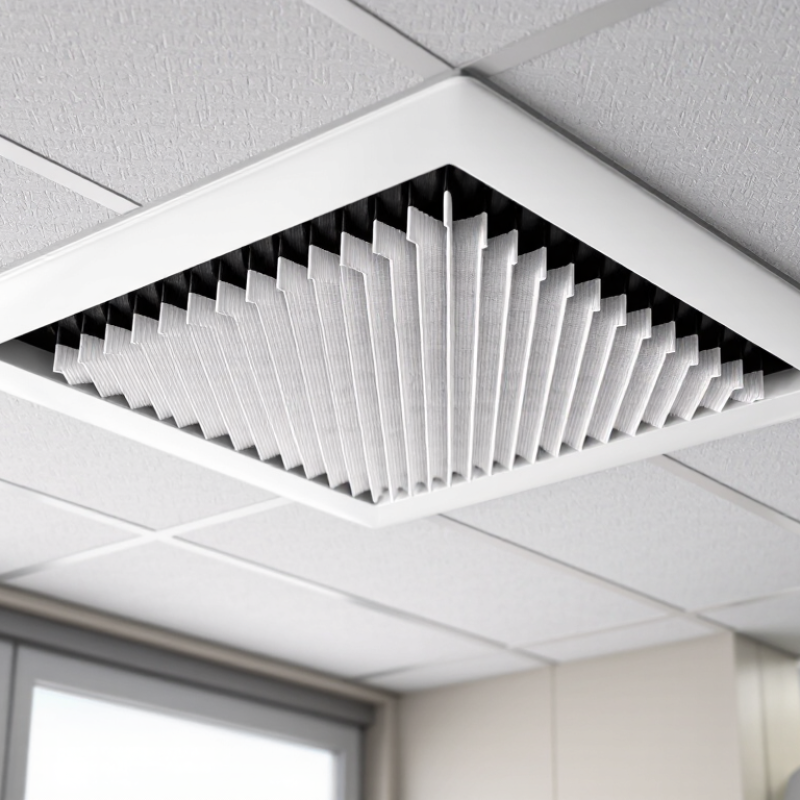
Look closely at the filter label. MERV rating, dimensions, pressure drop, and replacement intervals all matter. A loose edge can leave visible gaps around the frame. Dust may collect there like a dark outline. The filter must fit the ceiling unit, not merely match its advertised size. High-efficiency media can be useful, but only when the fan can handle the resistance.
Small details matter.
This guide will compare filter ratings, materials, airflow performance, and practical installation concerns. It will also examine cost over time, because the cheapest filter may require more frequent replacement. Some recommendations remain uncertain without testing the actual system. That limitation deserves attention. A careful decision combines manufacturer data, professional inspection, and real observations from the occupied space.
Define Your Ceiling Air Filter Needs
How to Choose the Right Ceiling Air Filter?
Define Your Ceiling Air Filter Needs
Start with the room, not the filter label. A classroom, clinic, kitchen, and office create different airborne particles. Note the room’s size, occupancy, humidity, and nearby dust sources. Check the existing filter’s length, width, and thickness carefully. A filter that looks close may still fit poorly.
For general dust, a medium-efficiency filter may provide practical protection. Rooms with fine particles or allergy concerns may need higher efficiency. However, stronger filtration can restrict airflow and increase system stress. Check the HVAC equipment’s specifications before selecting a higher-rated filter. Measure airflow professionally when possible. A clean filter should not whistle, sag, or leave visible gaps around its frame.
Tips: Write down the filter size and efficiency rating before shopping. Ask a qualified technician to confirm compatibility. Replace the filter according to actual loading, not only the calendar. In a busy room, a white filter can turn gray surprisingly quickly. I once focused too much on particle capture and overlooked pressure drop. That mistake made the system louder. Needs can change with renovations, seasonal pollen, or increased occupancy. Recheck the filter after a few weeks. Small adjustments often reveal more than assumptions.
Understand Filter Ratings and Air Quality Standards
Choosing the right ceiling air filter starts with understanding its rating, not its appearance. In practice, I check the filter’s MERV value, size, airflow direction, and pressure drop. MERV measures how effectively a filter captures different particle sizes under controlled testing. A higher rating can remove finer particles, including some dust, pollen, and smoke particles. However, higher resistance may reduce airflow and strain the ventilation system.
Look for testing based on recognized standards, such as ASHRAE 52.2 or ISO 16890. These standards make filter performance easier to compare. HEPA filters provide very high particle removal, but they require compatible equipment and careful installation. A rating alone does not guarantee clean indoor air. Gaps around the frame can let contaminated air bypass the filter. Small details matter.
Air quality also depends on ventilation, humidity, maintenance, and indoor pollution sources. ASHRAE ventilation guidance can help building managers assess fresh-air needs. Local regulations may set additional requirements for schools, offices, or healthcare spaces. I once focused too heavily on the highest filter rating and overlooked airflow noise. That was a mistake. Measure pressure changes after installation, inspect the filter monthly, and replace it when visibly loaded or when system guidance requires it. Keep records. They reveal problems early.
How to Choose the Right Ceiling Air Filter?
Filter selection should balance particle-capture performance, airflow resistance, HVAC compatibility, and indoor air-quality goals. The chart compares minimum composite efficiency thresholds associated with MERV ratings under ASHRAE Standard 52.2 for three particle-size ranges.
E1 represents particles from 3.0–10.0 micrometers, E2 represents 1.0–3.0 micrometers, and E3 represents 0.3–1.0 micrometers. Values show threshold efficiencies commonly used to classify MERV performance; MERV 8 E3 performance is below 20%. Higher-rated filters can improve fine-particle removal, but the HVAC system must be designed to handle the added pressure drop.
Match Filter Size, Material, and Compatibility
How to Choose the Right Ceiling Air Filter?
Matching filter size, material, and compatibility prevents poor airflow and wasted maintenance time. Measure the ceiling opening, not just the old filter. Check length, width, and depth with a tape measure. A filter that looks close may still leave gaps. Air can bypass the filter through those spaces. Use the equipment manual or the frame label to confirm the required dimensions.
Material affects both filtration and system performance. Fiberglass filters usually offer basic dust control, while pleated synthetic filters capture smaller particles. Higher-efficiency filters can improve indoor air quality, but they may also restrict airflow. Check the filter’s published efficiency rating and the system’s pressure requirements. In maintenance work, I have seen clean filters cause problems when their resistance was too high. That detail is easy to miss. Compatibility matters as much as efficiency. Confirm the filter fits the track, seals evenly, and suits the air-handling unit.
Tips: Measure twice. Record the exact size. Inspect the frame for bent rails or damaged seals. Replace a filter that is damp, crushed, or heavily loaded with dust. If airflow weakens after installation, stop and check the pressure rating. A better filter is not always the better choice.
Compare Airflow, Efficiency, and Energy Use
Choosing the right ceiling air filter requires more than selecting the highest efficiency rating. Airflow, particle capture, and energy use must work together. A highly efficient filter can trap smaller particles, but it may also create greater resistance. The ceiling diffusers may then deliver less air, while the fan works harder.
In facility inspections, I check the filter’s pressure drop, airflow rating, and replacement condition. A clean filter usually supports steadier ventilation. As dust builds up, resistance increases and energy demand can rise. I once focused too heavily on particle efficiency and overlooked airflow balance. Some rooms became noticeably warmer. That experience changed my approach.
Tips: Compare filters under the same test conditions. Check the manufacturer’s airflow and pressure-drop data. Measure airflow after installation, not only before it. Consider occupancy, dust levels, humidity, and required cleanliness. A moderate-efficiency filter may suit a normal office, while healthcare or industrial spaces may require tighter particle control. However, local standards and professional assessments should guide that decision. Filter performance can vary in real ceilings, especially when frames leak or fit poorly. Perfect selection is difficult. Recheck the system after several weeks.
How to Choose the Right Ceiling Air Filter? - Compare Airflow, Efficiency, and Energy Use
Typical performance ranges for standard 24 × 24 in (610 × 610 mm) ceiling air filters. Actual results vary by filter design, airflow, and HVAC system condition.
| Filter Type |
Typical MERV Rating |
Recommended Airflow |
Particle Capture Performance |
Initial Pressure Drop |
Relative Fan Energy Use |
Best Suited For |
| Pleated Fiberglass |
MERV 5–8 |
500–2,000 CFM |
Basic removal of larger dust, lint, and pollen particles |
0.10–0.25 in. w.g. |
Low |
Low-occupancy spaces and systems where low resistance is the priority |
| Pleated Synthetic |
MERV 8–11 |
500–2,000 CFM |
Improved capture of dust, pollen, mold spores, and some fine particles |
0.15–0.35 in. w.g. |
Low to Moderate |
Offices, schools, retail areas, and general commercial buildings |
| High-Efficiency Pleated |
MERV 11–13 |
500–1,800 CFM |
Strong removal of fine dust, smoke particles, and respiratory aerosols |
0.20–0.45 in. w.g. |
Moderate to High |
Healthcare support areas, classrooms, offices, and buildings with higher indoor-air-quality targets |
| Extended-Surface- Area Filter |
MERV 13–14 |
600–2,000 CFM |
High capture of fine particles with more media area than standard pleated filters |
0.25–0.50 in. w.g. |
Moderate to High |
Commercial HVAC systems designed for higher filtration with adequate fan capacity |
| Mini-Pleat HEPA |
HEPA, typically ≥99.97% at 0.3 µm |
300–1,000 CFM |
Very high removal of fine particles, including many submicron particles |
0.80–1.50 in. w.g. |
High |
Critical environments that are specifically engineered for HEPA filtration |
Selection guidance: Choose the highest-efficiency filter that the HVAC fan and ceiling system can support without reducing required airflow. A filter with a higher pressure drop can increase fan energy use, reduce ventilation performance, and shorten equipment life. Confirm the system’s allowable pressure drop and airflow requirements before installation.