Leave Your Message

10 Best Ceiling Air Filters for Global Buyers?

Choosing the right ceiling filtration system is more difficult than comparing product prices. A global buyer must examine airflow, filter efficiency, dimensions, noise, maintenance, and local availability. A Ceiling Air Filter that performs well in a Singapore office may struggle in a dusty warehouse in Mexico. Climate matters. So does the building’s ventilation design.

Dr. Richard Corsi, a respected indoor-air-quality researcher, offers a practical reminder: “The best air cleaner is one that is used consistently and maintained properly.” This principle shapes our selection of the 10 best Ceiling Air Filter options for international buyers. Each product should be judged by measurable performance, not attractive packaging or vague claims. MERV ratings, HEPA performance, pressure drop, replacement cost, and installation access deserve close attention. A strong filter can still reduce airflow if the ceiling unit is poorly matched.

Small details matter.

For example, a compact clinic may need quiet operation and reliable particle control. A busy factory may require a stronger frame, longer service life, and easier filter replacement. Buyers should also confirm voltage requirements, shipping conditions, warranty coverage, and certification records. These points are often overlooked. They should not be.

No ranking is perfect. Product availability changes, test methods differ, and real-world results depend on maintenance. Some models may look excellent on paper but disappoint after several months of use. This guide combines technical specifications, practical experience, and buyer-focused comparisons to create a clearer starting point. The final decision should still consider the building, occupants, budget, and local professional advice.
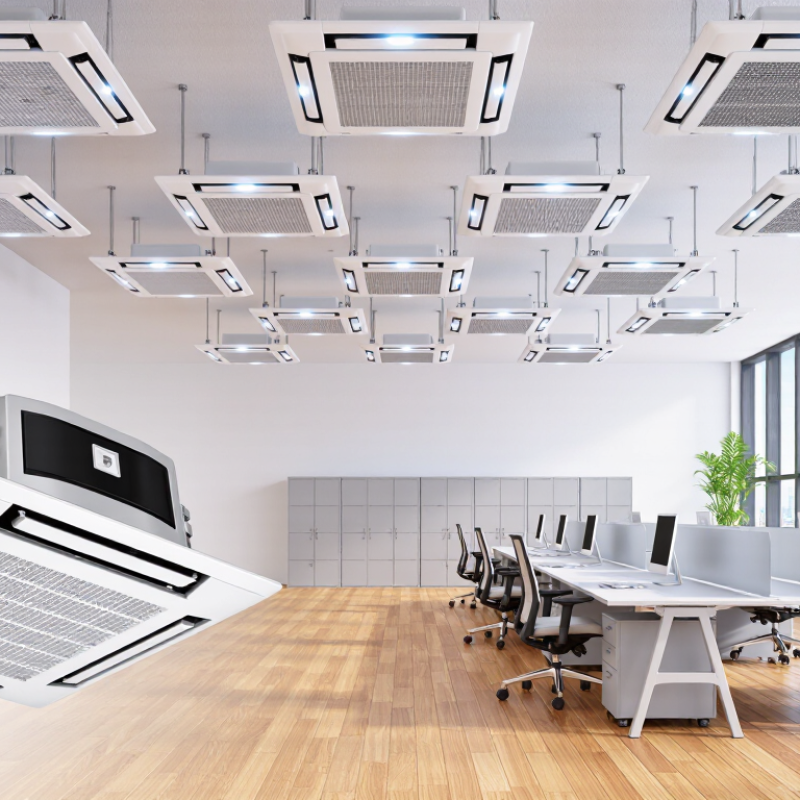
10 Best Ceiling Air Filters for Global Buyers?

Ceiling Air Filter Basics: MERV 8–16, HEPA 99.97%, and ISO 16890

Ceiling air filters are not interchangeable just because they fit the grille. MERV 8 can capture many larger particles, including dust and pollen, while MERV 13–16 targets finer particles more effectively. Higher resistance can also reduce airflow in systems not designed for it. Check the equipment manual and measure the filter opening before buying. A snug fit matters; even a narrow gap can let air bypass the media.

HEPA filtration is commonly defined as capturing at least 99.97% of particles measuring 0.3 microns under specified test conditions. That figure does not guarantee the same performance after installation. Ceiling units need suitable fans, sealed housings, and enough airflow to serve the room. ISO 16890 uses ePM particle-removal classifications for general ventilation filters. Its ratings are useful for comparison, but they do not translate directly into MERV or HEPA grades. The labels can be confusing. Compare the exact test standard, pressure drop, and intended application.

Tips: Check the filter’s dimensions and airflow rating, then inspect its edge seal for gaps. Replace it when visibly loaded or at the interval recommended by the equipment maker. Dust patterns around a grille can reveal leakage, though they are not a formal performance test. I would not choose the highest rating by default; the fan may struggle, and the room could receive less air.

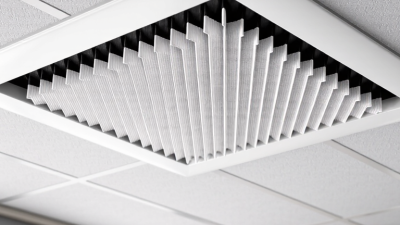
How to Rank 10 Global Ceiling Filters by Efficiency, Pressure Drop, and CADR

Rank ceiling air filters with test data, not catalog claims. Start with efficiency measured under ASHRAE Standard 52.2, which evaluates particle removal across three size ranges and assigns MERV ratings. A higher MERV rating can capture more particles, but it does not guarantee better room performance. Compare the tested rating, filter dimensions, and airflow conditions. The U.S. EPA notes that clean-air delivery rate, or CADR, reflects both particle removal and airflow for portable air cleaners. It is not a universal rating for ceiling filters, so treat unlike test methods cautiously.

Pressure drop matters in real installations. Ask for initial resistance in pascals at a stated airflow, then check whether the ceiling unit’s fan can maintain its design flow. A filter that looks excellent on paper may reduce airflow as dust accumulates. That trade-off is easy to overlook. For a defensible ranking, record efficiency, pressure drop, CADR only where the test method applies, and the test standard for each candidate. ASHRAE 52.2 and EPA guidance provide useful reference points, but neither replaces site-specific verification.

Tips: Request the full test report, not only a summary sheet. Compare values at matching airflow and filter size. Note the replacement interval and loaded-filter pressure drop; if unavailable, mark the gap rather than guessing. A small omission can change the ranking.

10 Best Ceiling Air Filters for Global Buyers? — How to Rank 10 Global Ceiling Filters by Efficiency, Pressure Drop, and CADR

How to read this comparison: The entries below are filter efficiency classes, not specific products. Efficiency figures are class thresholds under the named test standards and are not directly interchangeable across standards. Pressure drop depends on the filter’s construction, dimensions, airflow, and loading, so a class alone cannot provide a reliable value. CADR is generally a tested air-cleaner system rating, not a standalone rating for a replacement filter.

Rank* Filter class Standard Efficiency information Pressure drop CADR Ceiling-system buying note
1 EN 1822 H14 EN 1822 At least 99.995% overall efficiency at the most penetrating particle size (MPPS). Product- and airflow-specific; check the manufacturer’s initial pressure-drop curve. Not assigned to the filter class; system testing required. Use only where the ceiling unit is designed for HEPA resistance and has a verified seal.
2 EN 1822 H13 EN 1822 At least 99.95% overall efficiency at MPPS. Product- and airflow-specific; verify against the fan’s available static pressure. Not assigned to the filter class; system testing required. Confirm the housing, gasket, and airflow are suitable for HEPA filtration.
3 EN 1822 E12 EN 1822 At least 99.5% overall efficiency at MPPS. Product- and airflow-specific; request data at the intended operating airflow. Not assigned to the filter class; system testing required. Check that the ceiling unit can maintain its required airflow at the loaded-filter condition.
4 EN 1822 E11 EN 1822 At least 95% overall efficiency at MPPS. Product- and airflow-specific; compare published curves, not class labels. Not assigned to the filter class; system testing required. Verify filter dimensions and sealing to prevent air bypass around the element.
5 ASHRAE MERV 16 ANSI/ASHRAE 52.2 MERV 16 minimum fractional efficiency: 95% in the 0.3–1.0 μm size range, as specified by the standard. Not specified by MERV alone; obtain the product’s pressure-drop data. Not assigned by ASHRAE 52.2; system testing required. Confirm the ceiling system’s fan capacity and filter-frame compatibility.
6 ASHRAE MERV 15 ANSI/ASHRAE 52.2 MERV 15 minimum fractional efficiency: 85% in the 0.3–1.0 μm size range, as specified by the standard. Not specified by MERV alone; obtain the product’s pressure-drop data. Not assigned by ASHRAE 52.2; system testing required. Ask for test data at the actual face velocity used by the ceiling unit.
7 ASHRAE MERV 14 ANSI/ASHRAE 52.2 MERV 14 minimum fractional efficiency: 75% in the 0.3–1.0 μm size range, as specified by the standard. Not specified by MERV alone; obtain the product’s pressure-drop data. Not assigned by ASHRAE 52.2; system testing required. A practical candidate only if the HVAC manufacturer permits this resistance level.
8 ASHRAE MERV 13 ANSI/ASHRAE 52.2 MERV 13 minimum fractional efficiency: 50% in the 0.3–1.0 μm range, 85% in the 1.0–3.0 μm range, and 90% in the 3.0–10.0 μm range. Not specified by MERV alone; compare product data at the required airflow. Not assigned by ASHRAE 52.2; system testing required. Check airflow and pressure-drop limits before upgrading from a lower-efficiency filter.
9 ASHRAE MERV 11 ANSI/ASHRAE 52.2 MERV 11 minimum fractional efficiency: 20% in the 1.0–3.0 μm range and 65% in the 3.0–10.0 μm range. Not specified by MERV alone; obtain the product’s pressure-drop data. Not assigned by ASHRAE 52.2; system testing required. Compare lifecycle and airflow requirements with the current filter specification.
10 ASHRAE MERV 8 ANSI/ASHRAE 52.2 MERV 8 minimum fractional efficiency: 20% in the 3.0–10.0 μm range. Not specified by MERV alone; obtain the product’s pressure-drop data. Not assigned by ASHRAE 52.2; system testing required. Often considered for lower-resistance applications; follow the equipment maker’s requirements.

*The rank is an indicative ordering by the stated class efficiency, not a universal performance ranking across test standards. Before purchasing, verify the applicable local standard, exact filter dimensions, initial and final pressure drop at the intended airflow, ceiling-unit fan capacity, and any independently tested system-level clean-air delivery rate. Do not infer CADR from filter efficiency alone.

Filter Media and Frame Choices: Fiberglass, Pleated, Synthetic, and HEPA

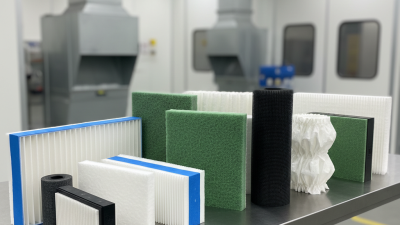
Ceiling air filters vary in both media and frame construction. Fiberglass filters are often inexpensive and allow strong airflow, but they generally capture fewer fine particles than denser options. Pleated filters provide more surface area in a similar-sized frame. Their performance depends on the stated efficiency rating and the system’s ability to handle added resistance. Synthetic media can offer consistent particle capture and moisture tolerance, though “synthetic” alone does not guarantee a particular level of filtration. Check the product specifications, not just the material name.

HEPA media is designed for very high particle removal, but it is not a simple drop-in upgrade for every ceiling unit. Its dense construction may restrict airflow unless the fan and housing are designed for it. Frame fit matters, too. A small gap around the edges can let air bypass the filter, reducing its practical value. Measure the opening, check airflow requirements, and confirm how the filter is held in place. A snug fit is essential. I’ve found that frame details are easy to overlook, especially when comparing filters online.

Tips: Match the filter to the unit’s stated size and pressure limits. Replace it when visibly loaded or at the interval specified by its maker. If airflow weakens, reconsider the filter choice; higher filtration is not always better for an incompatible system. Keep the old filter nearby when measuring. It can reveal frame depth and latch placement, though it may have sagged or changed shape.

Global Compliance Guide: ASHRAE 52.2, EN 1822, ISO 16890, and 0.3 μm

10 Best Ceiling Air Filters for Global Buyers?

Choosing a ceiling air filter requires more than comparing a rating on the package. ASHRAE 52.2 uses MERV values to describe particle removal across tested size ranges. It does not equal a direct 0.3 μm guarantee. EN 1822 evaluates high-efficiency filters around their most penetrating particle size, or MPPS. This value may differ from 0.3 μm. ISO 16890 reports ePM1, ePM2.5, and ePM10 performance, making it useful for broader ventilation planning. These standards measure different things.

For global purchasing, request the complete test report, airflow rate, pressure drop, and filter dimensions. A filter may perform well in a laboratory but restrict an older ceiling unit. That creates noise, leakage, or reduced ventilation. The 0.3 μm figure remains a useful reference, not a universal pass-or-fail rule. In practice, many buyers compare numbers too quickly. I would also check the test method, mounting direction, gasket quality, and replacement schedule. Local building and indoor-air requirements still matter.

Tips: Match the standard to the application. Use MERV for general HVAC comparison, ISO 16890 for regional ventilation needs, and EN 1822 for critical high-efficiency filtration. Confirm whether efficiency is reported at 0.3 μm or MPPS. Measure the installed frame carefully. Small gaps matter. Keep the documentation.

10 Ceiling Air Filter Classes for Global Buyers

Reference efficiency benchmarks based on ASHRAE 52.2 and EN 1822 classifications. MERV values show the minimum reported efficiency for particles in the 3–10 μm range, while H13 shows the minimum efficiency at the most penetrating particle size (MPPS). These test methods are not directly interchangeable.

ASHRAE 52.2 / MERV

MERV ratings use particle-size efficiency bands, including E1: 0.30–1 μm, E2: 1–3 μm, and E3: 3–10 μm.

EN 1822 / H13

H13 requires at least 99.95% integral efficiency at MPPS under EN 1822 testing.

ISO 16890

ISO 16890 reports ePM1, ePM2.5, and ePM10 performance and should be selected according to the target particle-size range.

0.3 μm Consideration

A 0.3 μm claim should identify the test method, efficiency level, airflow, pressure drop, and whether the result is initial or conditioned.

Source framework: ASHRAE Standard 52.2 MERV particle-size efficiency bands, EN 1822 HEPA classification, and ISO 16890 ePM reporting principles. Confirm the complete test report and pressure-drop data before specifying a ceiling filter.

Selecting Ceiling Filters by HVAC Loads, Room Use, and Replacement Cost

10 Best Ceiling Air Filters for Global Buyers?

Selecting a ceiling filter starts with the HVAC load, not the price tag. A high-efficiency filter can capture finer particles, but it may also restrict airflow. Check the air-handling unit’s pressure limit before choosing a dense filter. In a large office, blocked airflow can create warm corners and noisy diffusers. In a small bedroom, quieter operation may matter more than maximum filtration. I once replaced a filter with a higher-rated model and noticed weaker airflow within days. That choice looked better on paper.

Room use changes the practical priority. Clinics, classrooms, kitchens, and retail spaces produce different particle loads. A classroom may need frequent replacement during allergy season. A kitchen ceiling needs careful control of grease and moisture. For occupied healthcare areas, confirm the required filtration grade with a qualified facilities professional. Local standards and ventilation designs vary between countries. Do not rely on a rating alone. Installation quality matters too.

Replacement cost includes labor, access equipment, disposal, and downtime. A cheaper filter may become expensive if it loads quickly. Measure the ceiling frame accurately, including thickness and gasket depth. Keep spare filters dry and record installation dates. Inspect them monthly at first. Dust patterns can reveal uneven loading or bypass around the frame. Some advice online sounds certain, but building conditions are rarely identical. Recheck the selection after seasonal changes, renovations, or a new occupancy pattern.