Choosing the best commercial HEPA filter manufacturer in China takes more than comparing prices or product photos. A filter may look sturdy on a screen, yet its performance depends on materials, construction, testing, and consistent production. Commercial Hepa Filter buyers should examine efficiency ratings, pressure drop, frame options, and documentation before making a decision. Small details matter. A loose seal or uneven pleat spacing can affect how a filter fits and performs in an actual air-handling system.
This guide explores how to assess Chinese manufacturers using practical, verifiable criteria. It considers product range, quality-control processes, customization, communication, and the evidence suppliers provide for their claims. Useful questions include: Are test reports available for the specific model? Can the manufacturer explain its inspection process? Does it understand the operating conditions of your application? These checks do not guarantee a perfect purchase. They do make vague promises easier to spot.
There is no single manufacturer that suits every facility. A hospital, electronics plant, and commercial office may have different airflow requirements, replacement schedules, and installation constraints. Even a well-made filter can be the wrong choice if its dimensions or resistance do not match the system. The comparisons ahead are intended to help buyers ask better questions, verify key details, and make a more informed shortlist. Some evidence may still be incomplete; that deserves a closer look, not a confident guess.
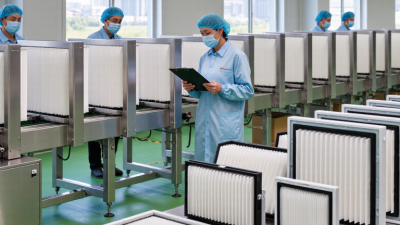
A commercial HEPA filter manufacturer in China is more than a company assembling frames and pleated media. It should control the complete process, from fiber selection to final inspection. That includes pleat spacing, sealant application, frame strength, and airflow resistance. Experienced engineers can explain how each choice affects filtration efficiency and operating costs. Small gaps matter.
Reliable manufacturers test finished filters under recognized procedures, such as ISO 29463 or EN 1822, according to the target market. They should provide clear efficiency data, pressure-drop results, and serial-based traceability. A proper production facility usually has controlled assembly areas, calibrated instruments, and documented inspection records. Photos alone are not enough. Buyers should request sample reports and confirm whether testing covers the actual model ordered.
A capable supplier also studies the installation environment. Hospital isolation rooms, pharmaceutical areas, and commercial HVAC systems may require different dimensions, gaskets, airflow rates, and replacement schedules. Technical support should cover drawings, leakage risks, and maintenance guidance. Packaging deserves attention too, because damaged corners can ruin an otherwise sound filter.
Some manufacturers communicate confidently but explain little. That should invite questions, not quick approval. I have found that a lower purchase price can hide higher fan energy use or inconsistent sealing. No factory is perfect, and production errors can occur. The stronger manufacturers admit this risk, investigate root causes, and improve their inspection process. Reliability grows through evidence, not promises.
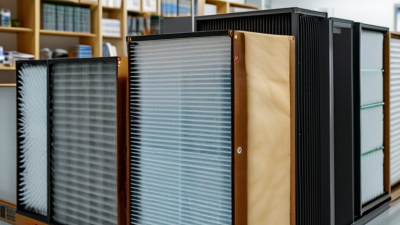
Choosing the best commercial HEPA filter manufacturer in China requires more than comparing prices. The key test is documented performance. Under EN 1822, an H13 filter must achieve at least 99.95% efficiency at its most penetrating particle size. H14 requires 99.995%. The U.S. EPA also defines HEPA performance as 99.97% removal of 0.3-micron particles under its test method. These figures are not interchangeable.
Request full factory evidence. This should include ISO 29463 or EN 1822 test reports, MPPS efficiency results, pressure-drop data, and individual leak-scan records. Check whether the report covers the exact filter size and airflow rate. A laboratory sample may perform well, while a production unit has uneven pleats or a weak seal. That detail matters.
Look closely at the frame, gasket, separator, adhesive, and media area. A strong manufacturer should control incoming materials, pleat spacing, curing time, and final inspection. ISO 9001 certification supports process control, but it does not prove filter efficiency. Ask for batch traceability and retention samples. I would also inspect factory airflow testing, not only paperwork. No supplier is perfect. Even experienced buyers can overvalue certificates and overlook pressure drop, which increases fan energy and operating cost. The 2023 EPA technical guidance on air cleaners repeatedly links effective filtration with proper sizing, airflow, and maintenance, not efficiency alone. That is where many evaluations become too simple.
| Evaluation Dimension | Relevant Standard or Benchmark | What to Verify | Evidence to Request |
|---|---|---|---|
| Filter classification and stated efficiency | EN 1822-1:2019; ISO 29463 series; China’s GB/T 13554-2020 | Confirm the exact classification system and filter class stated in the specification. Under EN 1822, H13 and H14 have overall efficiencies of at least 99.95% and 99.995%, respectively, at the most penetrating particle size (MPPS). | Product datasheet identifying the standard, class, rated airflow, pressure drop, and test conditions. |
| Factory test and leak detection | EN 1822 and ISO 29463 test methods, as applicable to the claimed class | Check that each finished filter is tested using a suitable aerosol and that the test report distinguishes overall efficiency from local leakage results where required by the selected classification method. | Representative filter test reports, leak-scan records where applicable, test equipment details, and calibration records. |
| Independent test verification | Test method and filter class must match the applicable product specification | Verify that any third-party report covers the same filter model, dimensions, construction, and rating being offered. A certificate or report for a different product does not establish performance of the offered unit. | Complete laboratory report with sample identification, test date, method, results, and laboratory accreditation scope if accreditation is claimed. |
| Rated airflow and pressure drop | Product specification and project operating requirements | Compare initial pressure drop at the stated airflow and filter size. Values are product-specific; compare only results measured at equivalent conditions rather than relying on a universal benchmark. | Test data listing airflow, face dimensions, initial pressure drop, and measurement conditions. |
| Materials and construction | Approved technical specification and intended application requirements | Review filter media, separators or separatorless design, frame, sealant, gasket, and protective components. Check chemical, temperature, humidity, and cleanliness requirements for the intended installation. | Bill of materials or controlled construction specification, material declarations, and documented change-control process. |
| Production consistency and traceability | Documented quality management and lot-control practices | Confirm that production lots can be traced to materials, assembly records, and final test results. Evaluate how nonconforming products and corrective actions are handled. | Sample lot records, inspection plans, nonconformance procedure, and corrective-action records with confidential information removed if necessary. |
| Dimensional fit and installation details | Project drawings and equipment interface requirements | Verify dimensions, tolerances, sealing arrangement, airflow direction, and retention details against the housing or system. Performance testing does not by itself confirm compatibility with a specific installation. | Dimensioned drawings, installation instructions, and a documented sample or fit-check process. |
| Packaging, handling, and delivery | Project-specific shipping and storage requirements | Check protection against impact, moisture, contamination, and damage to the media or gasket. Confirm that labels preserve product identity and traceability during shipment. | Packaging specification, storage instructions, shipping inspection procedure, and sample labels. |
| Technical support and after-sales response | Contractual service requirements | Assess availability of application support, installation guidance, complaint handling, and replacement procedures. Define response times and responsibilities before purchase. | Written service commitments, warranty terms, escalation contacts, and documented complaint-handling process. |
Evaluation note: No single certificate or efficiency figure identifies the best manufacturer for every application. Compare products against the same standard, class, dimensions, airflow, and test conditions, and verify the evidence for the specific model being purchased.
Commercial HEPA suppliers in China generally fall into several groups. Filter-media producers make glass-fiber or synthetic layers, but may not assemble finished filters. Their strength is material control: fiber consistency, pleatability, and resistance to airflow. Ask for data on pressure drop and particle efficiency, not just a product label.
Finished-filter manufacturers build panels, box filters, and compact units for ventilation systems. Their capabilities may include pleat spacing, separator choices, gasket options, and frame materials such as galvanized steel or aluminum. Some offer scan testing to locate leaks across the filter face. Details matter. A strong filter can still underperform if its seal or housing fit is poor.
System-oriented manufacturers may also supply housings, installation support, or cleanroom filtration packages. They can help match filters to airflow and operating conditions, though their product range may be less specialized. No category wins every time. A buyer should compare test methods, batch records, replacement availability, and technical response quality. I would also check whether quoted performance applies to the complete filter, rather than the media alone. That distinction is easy to miss.
A reliable manufacturer proves performance through controlled production, not attractive brochures. The U.S. Department of Energy specifies 99.97% minimum efficiency at 0.3 micrometers for HEPA filters. This requirement appears in DOE-STD-3020-2005. However, commercial projects often follow EN 1822:2019 or ISO 29463. Under EN 1822, H13 filters require at least 99.95% efficiency, while H14 filters require 99.995% at the most penetrating particle size. The test point matters.
Look for traceable glass-fiber media, controlled pleat spacing, and sealed separators. Each filter should carry a serial number, airflow rating, pressure-drop result, and leak-test record. ISO 29463-5 describes individual filter testing with a calibrated aerosol challenge. A manufacturer should also show calibration certificates and test-equipment maintenance logs. Factory experience helps here. Small sealing defects can appear around corners, gaskets, or frame joints.
Factory audits should include humidity control, adhesive curing records, and sampling procedures. Request raw test data, not only a certificate. A certificate can be genuine and still hide weak batch control. I would question any supplier refusing independent retesting. That concern is practical. EN 1822 testing uses the most penetrating particle size, yet some sales documents highlight only a convenient particle size. The better supplier explains this difference clearly and accepts occasional third-party verification. Performance consistency is harder than achieving one impressive test result.
Who Is the Best Commercial HEPA Filter Manufacturer in China?
Selecting the best commercial HEPA filter manufacturer requires evidence, not polished sales language. The U.S. Department of Energy defines HEPA performance as 99.97% efficiency at 0.3 microns. IEST-RP-CC001 also supports individual filter testing and certification. Ask each Chinese manufacturer for factory test reports, MPPS efficiency, airflow resistance, and leak-test records. Missing data is a warning sign.
Standards matter more than brochures. EN 1822 classifies H13 filters at a minimum of 99.95% efficiency and H14 filters at 99.995% efficiency. Confirm which standard the supplier follows. Then inspect pleat spacing, separator design, gasket compression, frame materials, and scan-test procedures. A reliable manufacturer should explain these details clearly. The factory should also provide batch traceability, calibration records, and sample retention policies. Small details matter.
Do not select by price alone. A lower-cost filter may create higher fan energy consumption through excessive pressure drop. Request airflow data at the operating point, not only at laboratory conditions. Video audits can help, but they are not physical inspections. No supplier is perfect. Even a strong factory may show inconsistent sealing during a difficult production batch. Independent pre-shipment testing remains worthwhile, especially for hospitals, laboratories, and clean manufacturing areas. A useful supplier answers uncomfortable questions without changing the subject.
The chart presents a practical sourcing framework for selecting a commercial HEPA filter manufacturer in China. Filtration efficiency should be verified against EN 1822 or ISO 29463, where H13 and H14 filters are commonly classified at minimum efficiencies of 99.95% and 99.995%, respectively. Buyers should also evaluate airflow resistance, independent testing, production consistency, customization capability, and after-sales support.