How to Choose Top China Filters for Spray Booths?
Choosing a reliable Filter For Spray Booth requires more than comparing price tags or filter thickness. A booth may look clean while airflow is already weakening. Overspray can settle on walls, ducts, lighting covers, and freshly painted surfaces. The right filter must capture particles without forcing the exhaust fan beyond its working range.
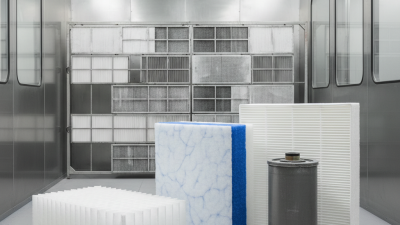
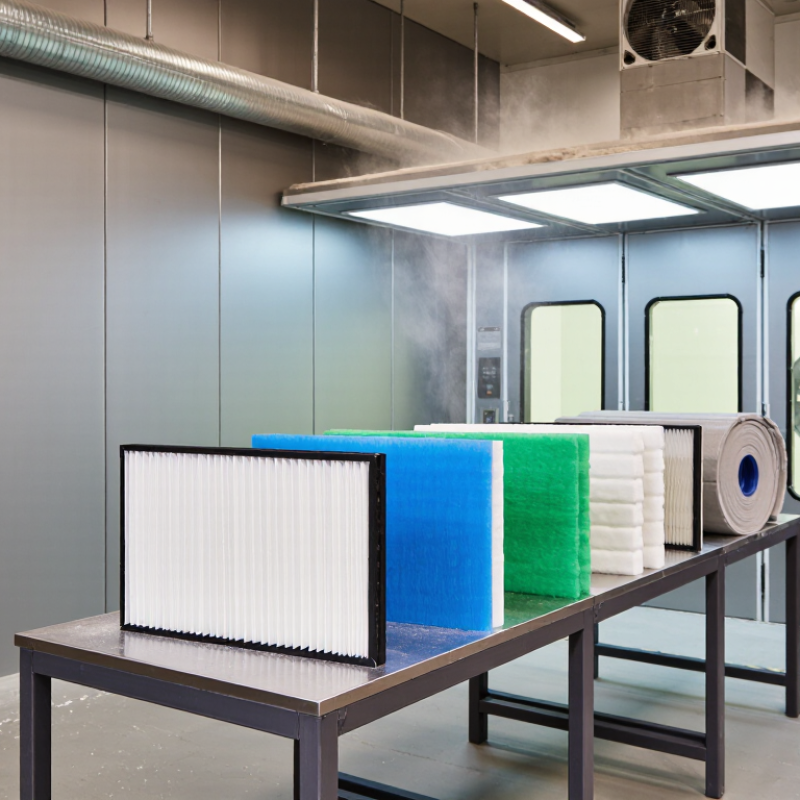
As spray-booth filtration consultant Daniel Mercer says, “A filter is not successful when it merely catches paint; it must protect airflow, finish quality, and maintenance time together.” This principle helps buyers examine filter media, pressure drop, dust-holding capacity, flame resistance, and replacement frequency. Cardboard arrestors may suit light-duty applications, while layered polyester or fiberglass media can support heavier overspray loads. Every booth behaves differently.
Measure the details.
Check the booth’s dimensions, fan capacity, coating type, and daily production hours. A filter that performs well in a furniture shop may fail quickly in an automotive refinishing line. Watch the pressure gauge, inspect loading patterns, and record replacement intervals. These small records often reveal more than a supplier brochure.
China offers many capable filtration manufacturers, but quality control is not identical across suppliers. Ask for technical data, material specifications, batch consistency, and application references. A sample test is valuable. Still, it is not perfect. Humidity, paint viscosity, operator habits, and cleaning schedules can change the result. The best choice balances filtration efficiency, stable airflow, worker protection, and realistic operating costs. An informed selection begins with evidence, not confident promises.
Define Booth Airflow: Apply NFPA 33’s 100 fpm Minimum for Open-Face Booths
How to Choose Top China Filters for Spray Booths?
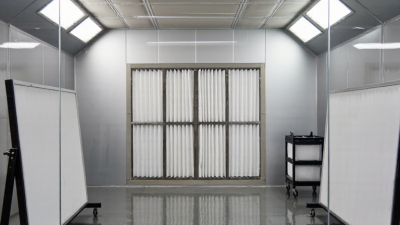
Begin with booth airflow, not filter price. NFPA 33 requires a minimum average face velocity of 100 feet per minute for open-face spray booths. OSHA 29 CFR 1910.94(c) also lists 100 fpm for many open-surface spray applications. Measure airflow across the booth opening with a calibrated anemometer. A reading near the center is not enough. Check corners, filter banks, and operator height. Airflow should capture overspray without disturbing the coating pattern.
When comparing China-made filters, request pressure-drop data at the actual airflow rate. A filter that looks dense may load quickly and reduce capture velocity. The U.S. EPA’s AP-42 surface-coating guidance treats overspray as particulate emissions, making filter loading a measurable operating concern. Ask for media construction, fire-performance documentation, dust-holding capacity, and test conditions. ISO 16890 ratings can help with general filtration comparisons, but they do not replace spray-booth performance testing.
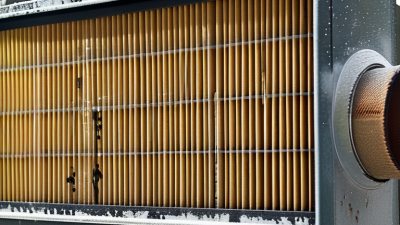
Watch the filter frame, gasket seal, and replacement fit. Small bypass gaps can defeat expensive media. In practical inspections, a clean front surface can hide heavy loading inside the pad. That assumption is easy to make, and often wrong. Replace filters according to pressure drop and airflow readings, not appearance alone. I would also verify certificates independently; paperwork is useful, but field measurements remain the stronger evidence.
How to Choose Top China Filters for Spray Booths? - Define Booth Airflow: Apply NFPA 33’s 100 fpm Minimum for Open-Face Booths
| Booth Opening Size |
Opening Area |
NFPA 33 Minimum Face Velocity |
Minimum Exhaust Airflow |
Approx. Airflow in m³/h |
Recommended Filter Bank Face Area |
Typical Filter Arrangement |
Selection Considerations |
8 ft × 8 ft
(2.44 m × 2.44 m) |
64 ft²
(5.95 m²) |
100 fpm
(0.508 m/s) |
6,400 CFM |
Approximately 10,870 m³/h |
At least 64 ft² of effective open filter area |
Four 20 in × 20 in modules, or an equivalent filter bank |
Use a rigid support grid and maintain uniform airflow across the entire opening. |
10 ft × 8 ft
(3.05 m × 2.44 m) |
80 ft²
(7.43 m²) |
100 fpm
(0.508 m/s) |
8,000 CFM |
Approximately 13,590 m³/h |
At least 80 ft² of effective open filter area |
Six 20 in × 20 in modules, or a suitably sized continuous bank |
Confirm that the fan can maintain the required airflow as the filters load with overspray. |
12 ft × 8 ft
(3.66 m × 2.44 m) |
96 ft²
(8.92 m²) |
100 fpm
(0.508 m/s) |
9,600 CFM |
Approximately 16,310 m³/h |
At least 96 ft² of effective open filter area |
Eight 20 in × 20 in modules, or an equivalent full-width bank |
Use pressure-drop monitoring to identify loading before airflow falls below the design target. |
16 ft × 8 ft
(4.88 m × 2.44 m) |
128 ft²
(11.89 m²) |
100 fpm
(0.508 m/s) |
12,800 CFM |
Approximately 21,750 m³/h |
At least 128 ft² of effective open filter area |
Ten or more 20 in × 20 in modules, sized to match the booth layout |
Large booths generally benefit from multiple filter sections to improve access, balancing, and replacement efficiency. |
Compare Efficiency: ISO 16890 ePM Ratings and ASHRAE MERV 13–16
Choosing top China filters for spray booths starts with the air-quality target, not the lowest quotation. ISO 16890 reports removal against PM1, PM2.5, and PM10. ASHRAE MERV rates filters across several particle-size bands. These systems are not interchangeable labels. A filter marked ePM1 70% should not be casually called MERV 15. Ask for the complete test report, rated airflow, and initial pressure drop.
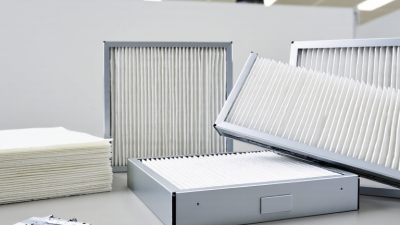
In a working booth, efficiency must remain stable as paint mist loads the media. MERV 13–16 can provide stronger fine-particle capture, but higher ratings often increase resistance. That can reduce booth airflow and disturb the visible spray pattern. Check the fan’s available static pressure first. Then compare filters at the same airflow, face velocity, and loading condition. Examine sealed frames, even pleat spacing, and gaskets around the edges.
I once saw a clean filter perform poorly because air bypassed a loose frame.
Measure it. Use pressure gauges across each stage. Replace prefilters before they restrict airflow. Keep records of pressure rise, filter life, and booth cleanliness. Supplier documents matter, but field checks matter more. Request ISO 16890 or ASHRAE test evidence from an accredited laboratory when possible. Do not accept a conversion chart without questions. Humidity, overspray, and uneven loading can change results. My first comparison was too confident because it ignored these conditions. Batch consistency and traceable quality checks also deserve attention when selecting Chinese-made filters.
Verify HEPA Performance: Require H13 Filters with 99.95% MPPS Efficiency
When choosing China filters for spray booths, verify the test standard before comparing price or appearance. EN 1822:2019 classifies H13 filters at 99.95% minimum efficiency against the most penetrating particle size, or MPPS. This is not the same as a general “99.95% filtration” claim. The MPPS result reflects the filter’s weakest capture range. A filter can look dense and still perform poorly there.
Request an individual test report, not only a supplier certificate. The document should show the H13 classification, MPPS efficiency, airflow, pressure drop, and leak-test result. ISO 29463 follows the same high-efficiency filter principle, while ISO 16890 mainly reports ePM1, ePM2.5, and ePM10 performance.
These ratings should not replace an H13 MPPS test. During inspection, check the gasket, frame corners, and sealing surface. A perfect media pack cannot compensate for bypass air. Small gaps matter.
Tips: Install a suitable prefilter to capture paint mist and extend H13 service life. Monitor pressure drop with a gauge near the clean-air side. IEST-RP-CC001 also supports practical HEPA testing and installation control. Replace filters when airflow falls, not only when they look dirty. A visual check is useful, but incomplete.
One limitation remains: laboratory efficiency may not match booth performance after poor installation, vibration, or uneven airflow. Recheck the system after commissioning.
Evaluate China Suppliers: GB/T 14295 Tests, Pressure Drop, Fire Safety, and Cost
How to Choose Top China Filters for Spray Booths?
When evaluating China suppliers, start with documented performance, not catalog photos.
Ask for GB/T 14295 test reports from an independent laboratory. Check the tested filter class, airflow, efficiency, and sample identification. The report should match the proposed product.
Pressure drop matters greatly in a spray booth.
Request initial resistance data at your actual airflow, not a general rating. A filter showing 120 Pa at 3,000 m³/h may perform differently at 5,000 m³/h. Compare pressure rise after loading. Lower resistance can reduce fan energy, but it may also indicate weaker media. That trade-off deserves attention.
Fire safety needs practical verification.
Review the media’s flame behavior, frame material, adhesive details, and available fire-test evidence. Confirm compatibility with paint mist, cleaning chemicals, temperature, and booth airflow. Ask how suppliers control batch consistency. A single sample proves little. Visit the production site when possible, or use pre-shipment inspection.
Cost comparisons should include freight, replacement frequency, labor, disposal, and energy consumption. The cheapest unit may create higher operating costs. I have seen evaluations focus too heavily on purchase price. That approach is incomplete. Also check dimensions, sealing quality, lead time, and technical support. Small gaps around a filter can defeat an otherwise strong specification.