Leave Your Message

Top Spray Booth Ceiling Filter Suppliers for Global Buyers

Choosing the right Spray Booth Ceiling Filter is more demanding than comparing prices on a supplier website. Global buyers must examine filtration efficiency, airflow resistance, dimensional accuracy, fire performance, packaging, and replacement consistency. A filter that looks clean may still restrict airflow after several production shifts. Small details matter. The frame can warp. The seal can leak. Paint particles can accumulate above the visible surface.

A useful principle comes from aerosol scientist Dr. William C. Hinds: “Filter performance depends on particle size, airflow, and loading.” This statement helps explain why one filter cannot suit every spray booth. Coating materials, booth design, humidity, fan capacity, and working schedules all influence results. Experienced suppliers should provide technical data, test methods, product drawings, and clear guidance for installation. They should also explain limitations instead of promising perfect performance.

This guide reviews leading Spray Booth Ceiling Filter Suppliers for Global Buyers. It considers product quality, customization, export experience, documentation, lead times, and after-sales support. Practical evidence matters. So does consistency.

Not every impressive specification tells the full story.

Some suppliers publish efficiency percentages without describing test conditions. That gap deserves attention. Buyers should request samples, verify fit, and compare pressure-drop data before placing large orders. A reliable supplier supports stable booth airflow, cleaner working surfaces, and more predictable maintenance planning. Still, no ceiling filter can correct poor booth balance or neglected ventilation equipment. That uncomfortable point is easy to overlook. It should not be.

Top Spray Booth Ceiling Filter Suppliers for Global Buyers

Types of Spray Booth Ceiling Filters for Different Applications

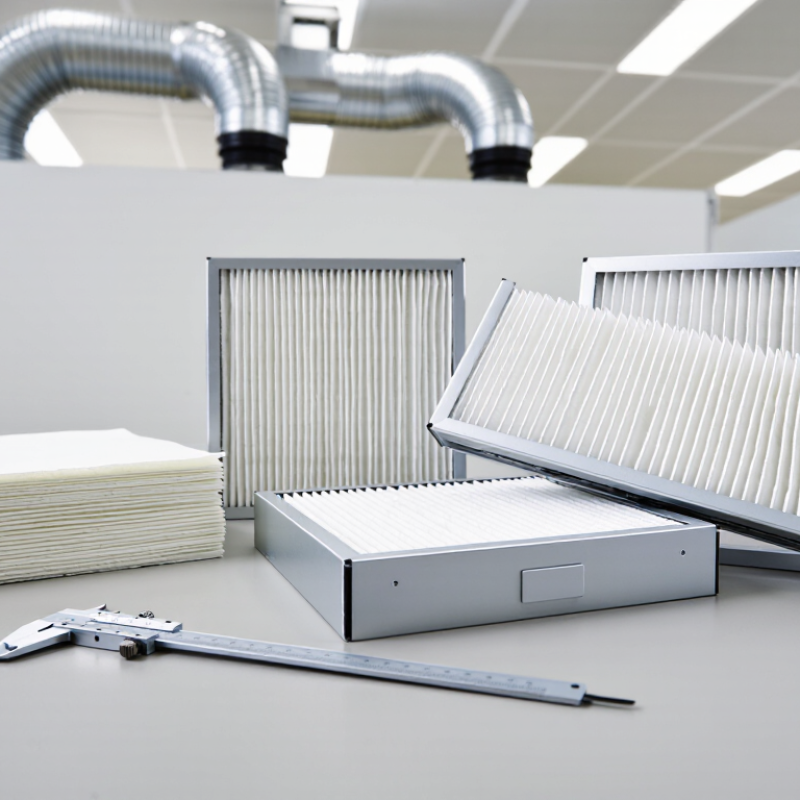
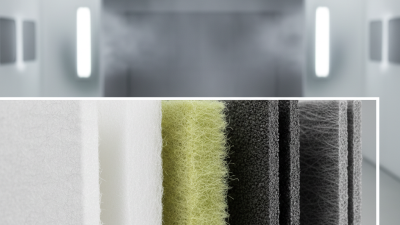
Spray booth ceiling filters are not interchangeable. Each type supports a different coating process. Progressive-density fiberglass or synthetic media suits general industrial painting and solvent-based coatings. Its layered structure captures overspray while keeping airflow stable. For automotive refinishing, high-loft polyester media can reduce dust entering the booth. It also tolerates frequent replacement cycles in busy workshops.

Waterborne coatings need cleaner incoming air. Fine-fiber polyester or multi-layer synthetic filters are often better choices. They provide stronger particle capture than basic fiberglass media. However, tighter media increases pressure drop. ASHRAE Standard 52.2 rates filters by MERV performance; MERV 13 media must capture at least 50% of 0.3–1 micron particles, 85% of 1–3 micron particles, and 90% of 3–10 micron particles. These figures help buyers compare performance, but they do not predict every booth’s result.

High-finish aerospace or precision coating areas may use ceiling modules designed for very fine filtration. HEPA-grade options can support stricter cleanliness targets, yet their resistance may demand stronger fans and higher energy use. The U.S. Department of Energy’s 2023 fan-system guidance shows that pressure losses directly affect operating energy. That detail is easy to overlook. In practice, I would check face velocity, initial resistance, dust-holding capacity, and replacement dimensions together. A filter that looks efficient on paper may perform poorly when overloaded, badly sealed, or installed with uneven airflow. Select from tested data under ISO 16890 or ASHRAE methods, not appearance alone.

Top Spray Booth Ceiling Filter Suppliers for Global Buyers - Types of Spray Booth Ceiling Filters for Different Applications

Ceiling Filter Type Typical Filter Media Suitable Spray Booth Applications Key Performance Characteristics Recommended Airflow Position Buyer Selection Criteria Replacement Considerations
High-Loft Synthetic Ceiling Media Progressively structured polyester or synthetic-fiber media, often supplied in rolls or panels. General automotive refinishing, industrial painting, furniture finishing, and light-to-medium overspray control. Good dust holding Low fiber shedding Stable airflow Final-stage intake filtration above the booth or plenum. Check media weight, thickness, dimensional tolerance, airflow resistance, and compatibility with the ceiling-frame design. Replace when pressure drop rises, airflow decreases, or visible loading affects finish quality.
Fiberglass Paint-Arrestor Media Continuous or layered fiberglass strands, commonly bonded or progressively layered for paint-particle capture. Paint-spray areas requiring economical prefiltration and protection of downstream exhaust or intake components. High dust capacity Economical Broad availability Usually used as a prefilter or overspray-control layer; verify suitability for the clean-air ceiling position. Confirm fire behavior, binder type, thickness, roll width, and whether the media is designed for intake or exhaust service. Do not rely only on appearance; monitor differential pressure and follow the booth operator's maintenance limits.
Polyester Pocket or Bag Ceiling Filter Multi-pocket synthetic bags supported by a rigid header or frame. Large industrial booths, high-air-volume rooms, and installations needing greater dust-holding capacity. High holding capacity Longer service potential Lower change frequency Air-handling units or supply-air sections feeding the booth plenum. Match the number of pockets, pocket depth, header dimensions, airflow volume, and available installation depth. Replace the complete pocket assembly when the media is loaded, damaged, wet, or no longer seals correctly.
Rigid-Frame Synthetic Panel Filter Pleated or non-pleated synthetic media installed in a cardboard, plastic, or metal support frame. Compact spray booths, modular booths, maintenance workshops, and ceiling systems with standard panel openings. Easy installation Consistent fit Simple disposal Supply-air filtration before the ceiling diffuser or booth plenum. Verify panel dimensions, gasket location, airflow direction, frame strength, and resistance at the intended airflow rate. Replace individually or as a scheduled set when pressure drop exceeds the booth's operating limit.
Diffusion-Ceiling Filter Module Ceiling filter media combined with a perforated plate, diffuser, support grid, or air-distribution module. Automotive spray booths and finishing rooms where uniform downward airflow is important for surface quality. Uniform air distribution Reduced turbulence Finish-quality focused Final supply-air stage directly above the spray zone. Evaluate face velocity, sealing method, module size, access arrangement, and compatibility with the existing ceiling grid. Change the filter media without disturbing the diffuser whenever the system design permits.
Activated-Carbon Ceiling Filter Synthetic or fibrous media combined with activated carbon granules or carbon-impregnated material. Odor-sensitive areas and selected low-concentration vapor-control applications; not a substitute for exhaust treatment. Odor adsorption Limited vapor control Application-specific Usually installed in an air-handling or recirculation stage only when permitted by the booth design and regulations. Confirm the target contaminant, carbon weight, contact time, humidity limitations, and whether recirculation is legally allowed. Replace based on breakthrough risk, odor return, pressure drop, and the supplier's adsorption-life guidance.
HEPA Final Ceiling Filter Fine-fiber glass or synthetic media in a sealed rigid frame, typically with a protective face screen. Clean finishing environments, sensitive coating processes, laboratories, and applications requiring very low particulate levels. Very high particle removal Strict sealing required Higher resistance Final clean-air supply stage after suitable prefilters. Review the tested efficiency standard, rated airflow, initial resistance, gasket design, scan-test documentation, and frame depth. Use prefilters to protect the HEPA stage; replace when terminal pressure drop or integrity testing indicates a change is required.
Washable or Reusable Mesh Prefilter Aluminum mesh, stainless-steel mesh, or washable synthetic screen arranged in layered sections. Coarse dust protection upstream of disposable ceiling media in workshops and high-dust environments. Reusable Coarse particle capture Low consumable cost First-stage intake filtration before finer ceiling filters. Check washable-material compatibility, drainability, corrosion resistance, cleanability, and pressure-drop performance. Clean at a controlled interval; replace if mesh is distorted, corroded, contaminated, or unable to seal.
Oil- and Moisture-Resistant Synthetic Filter Hydrophobic or chemically treated polyester and other synthetic fibers designed for demanding air-handling conditions. Booths exposed to humidity, waterborne coating processes, oil mist, or frequent cleaning operations. Moisture resistance Dimensional stability Reduced media breakdown Supply-air or prefiltration stage, depending on the product construction. Confirm chemical compatibility, water repellency, allowable humidity, temperature range, and whether the media can be safely disposed of. Replace after saturation, deformation, coating contamination, or a measurable increase in airflow resistance.
Custom-Cut Ceiling Filter Roll Roll-form polyester, fiberglass, or composite media cut to the booth's required length and width. Non-standard ceiling grids, replacement programs, retrofit projects, and booths with large continuous filter areas. Flexible sizing Lower packaging volume Retrofit friendly Installed across a continuous ceiling support grid or retaining frame. Provide exact cut size, media orientation, thickness, edge-sealing method, roll length, and required airflow rating. Store rolls dry and protected from compression; replace sections that are loaded, torn, or poorly seated.

Note: Performance values and service intervals vary with booth design, airflow volume, coating type, contaminant loading, humidity, and local safety requirements. Buyers should request current technical data sheets, pressure-drop curves, material safety information, and dimensional drawings before ordering.

Key Performance Standards for Evaluating Ceiling Filter Suppliers

Top Spray Booth Ceiling Filter Suppliers for Global Buyers

Key Performance Standards for Evaluating Ceiling Filter Suppliers

Reliable ceiling filter suppliers should provide verified performance data, not only attractive efficiency claims. ASHRAE Standard 52.2 measures particle removal across 0.3–10 micrometers. Under its MERV scale, MERV 13 filters show at least 85% average efficiency for 1–3 micrometer particles. This matters when overspray becomes fine and airborne. Ask suppliers for the complete test report, airflow volume, initial pressure drop, and final resistance. A high rating can still restrict airflow.

ISO 16890 evaluates filters by ePM1, ePM2.5, and ePM10 particle groups. Its classification requires tested efficiency within the relevant particle range. Suppliers should also demonstrate stable airflow across the ceiling, dimensional accuracy, fire-performance documentation, and cleanroom-compatible packaging when required. In practical booth inspections, uneven filter loading often appears near access doors and exhaust paths. That detail deserves attention. Certification alone is not enough.

Tips: Request samples before large orders. Measure pressure drop at your actual operating airflow, not only laboratory airflow. Check whether the supplier records batch numbers and replacement dates. Confirm the filter frame will not sag after moisture exposure. I have seen specifications omit this point, and it later caused poor sealing. Compare total operating cost, including fan energy, disposal, delivery time, and replacement consistency. ASHRAE Handbook guidance also links pressure resistance with fan energy, so the cheapest filter may become expensive during continuous production.

How to Compare Global Spray Booth Ceiling Filter Manufacturers

Comparing global spray booth ceiling filter manufacturers requires more than checking efficiency percentages. Start with documented airflow performance. OSHA 29 CFR 1910.94(c) references 100 feet per minute for many open-face spray booths. A supplier should show how its ceiling filter maintains airflow under real loading conditions. Ask for initial pressure drop, final replacement pressure, test method, and face-velocity data.

ISO 16890 classifications help compare particle removal, while ASHRAE Standard 52.2 supports measured efficiency and resistance testing. However, a high efficiency rating can mislead. A filter that loads quickly may increase fan energy and disturb paint finish. EPA AP-42, Chapter 4.2, also highlights the importance of coating-use conditions and transfer efficiency when assessing booth emissions. Global manufacturers should provide batch traceability, fire-performance documents, dimensional tolerances, and stable production records. ISO 9001 certification is useful, but it does not replace product testing.

Tips: Request samples from two production batches. Test them at your actual airflow. Check pleat depth, sealing edges, and dust release after installation. Ask whether technical data reflects laboratory conditions or a working booth. Delivery promises deserve scrutiny, especially for custom sizes. I have seen attractive specifications fail during maintenance because the frame warped slightly. That detail is easy to overlook. Compare lifecycle cost, not only purchase price. Include freight, replacement intervals, disposal procedures, and energy demand in the same spreadsheet. A perfect specification sheet is not proof of reliable field performance.

Top Spray Booth Ceiling Filter Suppliers for Global Buyers

How to Compare Global Spray Booth Ceiling Filter Manufacturers

This indicative comparison uses common technical purchasing criteria for spray booth ceiling filter media. The values represent typical market ranges for synthetic and fiberglass filter constructions rather than data from any specific company or brand. Buyers should confirm ISO 16890 classification, pressure drop, airflow performance, roll dimensions, fire behavior, and test conditions on the supplier’s technical datasheet.

International Purchasing, Certification, and Shipping Considerations

Top Spray Booth Ceiling Filter Suppliers for Global Buyers

International purchasing starts with performance, not the lowest quotation. Ask suppliers for filtration efficiency, pressure drop, airflow capacity, and service-life data. Confirm the filter’s dimensions, media weight, backing layer, and frame fit before ordering samples. A 600 mm panel can still fail when its gasket compresses unevenly.

Certification requires careful checking. Request current test reports from recognized laboratories, not only a printed certificate. Depending on the destination, buyers may need fire-resistance evidence, material declarations, or environmental compliance documents. ISO 16890 and ASHRAE 52.2 may support evaluation, but neither replaces application-specific testing. A certificate alone proves little. Verify the report number, testing date, product model, and measured values. Some suppliers provide excellent documents, yet their production batches vary. This deserves attention.

Shipping details can change the real purchase cost. Confirm the HS code, Incoterm, carton dimensions, pallet requirements, and moisture protection. Folded media may reduce freight volume, but compression can damage its structure. Ask for loading photos and packing specifications. For sea transport, use sealed inner packaging and humidity indicators when practical. For urgent air shipments, calculate dimensional weight rather than relying on product weight. Build time for customs review and replacement units. My own preference is to approve a small trial shipment first, although this slows procurement. It can reveal fit, odor, dust shedding, and packaging weaknesses before a full container arrives.

Installation, Maintenance, and Supplier Support Requirements

Ceiling filter performance begins with correct installation, not the filter box. Global buyers should request booth drawings, airflow direction, filter dimensions, and pressure-drop data before ordering. OSHA 29 CFR 1910.94(c) requires spray-finishing ventilation to maintain defined air movement, including 100 feet per minute across many open booth faces. Suppliers should help verify this requirement on site.

Seal every frame.

A practical installation uses continuous gaskets, evenly latched retainers, and accessible inspection panels. Poor sealing can allow paint overspray to bypass the media, even when the filter appears clean. ISO 16890 supports performance classification by particulate efficiency, but it does not replace booth-specific testing. The supplier should provide test methods, airflow limits, technical sheets, and compatible replacement media. NFPA 33 also emphasizes ventilation, fire protection, and equipment conditions for spray application areas.

Maintenance needs measurable controls. Install a differential-pressure gauge and record readings after filter changes, cleaning, and production changes. Do not rely only on appearance. A ceiling filter may look acceptable while airflow has already declined. Replacement triggers should follow the booth manufacturer’s pressure limit, not a generic calendar.

Supplier support matters during failures. Confirm emergency lead times, packaging protection, installation instructions, and disposal guidance. Ask for remote troubleshooting and documented batch traceability. I have seen maintenance plans fail because replacement filters arrived with different thicknesses. That mistake is easy to overlook. Buyers should recheck fit, pressure drop, and airflow after every media change, then retain the records for audits and future purchasing.