Leave Your Message
Choosing a reliable Flow Hood Laminar supplier can shape product quality, delivery schedules, and long-term operating costs. For global buyers, the search involves more than comparing prices or polished catalog photos. A cleanroom manager may need a specific airflow range, while a laboratory planner may prioritize quiet operation and easy filter replacement. Small details matter. Ask how suppliers document airflow uniformity, filter efficiency, and factory inspection results. Request current test records, not only general claims.
China has many manufacturers serving different budgets and applications, but their capabilities can vary. Some offer custom dimensions or control options; others focus on standard models with shorter lead times. Buyers should compare construction materials, motor specifications, warranty terms, packaging, and technical support before making a decision. Clear drawings and written specifications help prevent mismatched expectations. Still, paperwork cannot show everything. A factory visit, video inspection, or independent sample review may reveal practical issues that brochures miss. I would not treat the lowest quote as the best value without checking what it excludes.
This guide introduces supplier considerations for international purchasing, including product evaluation, communication, and shipment planning. It does not rank companies without verified, current evidence. Instead, it offers a careful framework for narrowing options and asking better questions. Confirm that proposed equipment suits the intended workspace and operating conditions. Standards and buyer requirements may differ by project, so verify them with qualified professionals. Good sourcing takes patience. A missed detail can become an expensive delay.
Understanding Flow Hoods and Laminar Airflow
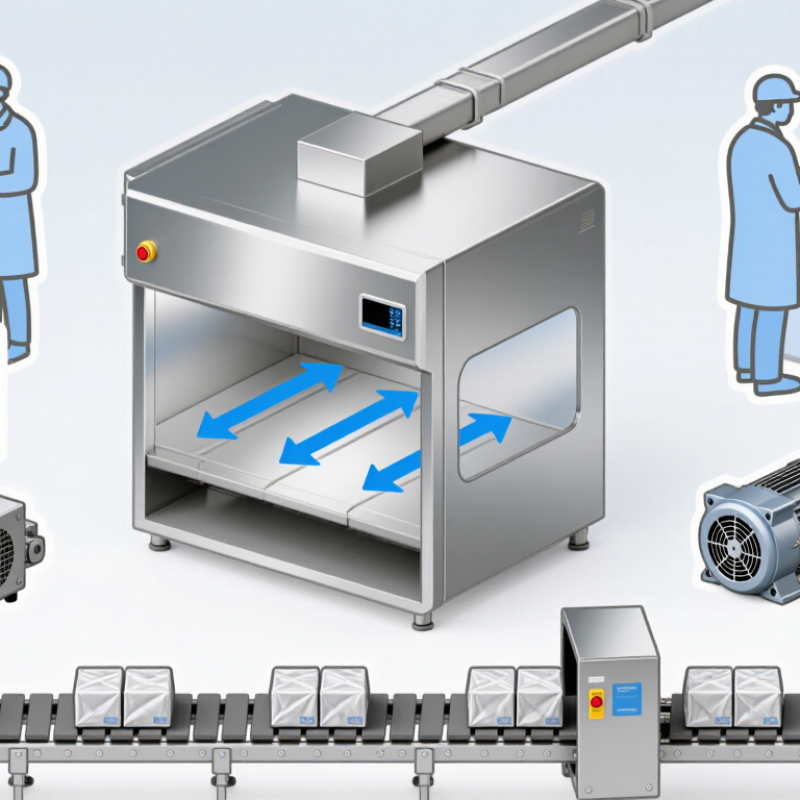
A flow hood creates a steady stream of filtered air across a clean work area. In a horizontal design, air moves from the rear filter toward the operator; in a vertical design, it moves downward. This airflow helps limit particles settling on exposed materials. It does not automatically protect workers from hazardous vapors or infectious aerosols. That distinction is easy to overlook.
ISO 14644-1:2015 classifies cleanrooms by airborne particle concentration. For ISO Class 5, the limit is 3,520 particles of 0.5 micrometers or larger per cubic meter of air. This benchmark helps buyers compare cleanliness requirements, but a hood’s actual performance depends on testing, installation, and use. A certificate alone is not the whole story. Ask for airflow uniformity and filter integrity test results, and confirm the hood suits the process and room conditions.
Tips: Keep bulky items away from the filter face and avoid rapid arm movements across the work zone. Both can disturb airflow. Arrange tools before starting, leaving a clear path for air to reach the work surface. Even careful users may block that path without noticing. A practical evaluation should include noise, workspace dimensions, and accessible maintenance—not just the headline particle rating.
Use this comparison to define the right equipment and evaluate supplier documentation. Specifications vary by model and test conditions; confirm the exact configuration, applicable standards, and performance reports before purchase.
| Equipment or Evaluation Dimension | Typical Characteristics | What Global Buyers Should Check | Important Limitation or Application Note |
|---|---|---|---|
| Vertical laminar-flow clean bench | Filtered air moves downward over the work surface and is discharged toward the front opening or through a return path, depending on design. | Ask for airflow diagrams, working-area dimensions, filter specifications, airflow uniformity results, and the test method used. | Designed primarily to protect the work and product from airborne particles. It does not provide the same personnel or environmental containment as a biological safety cabinet. |
| Horizontal laminar-flow clean bench | Filtered air travels from the rear filter face toward the operator across the work zone. | Confirm that the airflow direction suits the process, and review operator exposure considerations and the intended use stated in the manual. | Air is generally directed toward the operator, so it is not appropriate for hazardous biological or chemical materials requiring containment. |
| HEPA filtration | A commonly cited HEPA benchmark is at least 99.97% efficiency at 0.3 μm under the relevant test method. | Request the filter certificate, test standard, filter grade, dimensions, leak-test results, and replacement procedure. | Efficiency claims depend on the test method and filter classification. A filter certificate alone does not establish the cleanliness of the assembled work zone. |
| Airflow velocity | Clean benches often operate around 0.3–0.5 m/s (approximately 60–100 ft/min), but the appropriate value depends on the equipment design and test protocol. | Check the specified operating range, measurement locations, uniformity criteria, and whether readings are taken at the filter face or work area. | Do not compare velocity figures without checking where and how they were measured. Excessive or uneven airflow may disrupt work or reduce protection. |
| Cleanliness classification | Some manufacturers specify a target particle-cleanliness class for the work zone, measured under defined conditions. | Request particle-count test results, the applicable ISO 14644-1 classification, sampling locations, and whether the result is at-rest or operational. | A cleanliness class describes airborne particle concentration under stated test conditions; it does not by itself certify sterility or biological safety. |
| Work-zone size and construction | Available widths, depths, and materials differ by model. Work surfaces may use stainless steel or other cleanable materials. | Compare usable internal dimensions, clear opening height, surface finish, edge design, lighting, service ports, and access for cleaning. | Confirm that the unit fits through the delivery route and into the installation space, including clearance for filter service and maintenance. |
| Noise and energy use | Both depend on the fan, filter loading, operating speed, and equipment size. | Request sound-pressure and power-consumption data with the measurement conditions, operating setting, and test distance stated. | Figures measured under different conditions are not directly comparable. Ask whether the published values apply to the selected configuration. |
| Factory testing and documentation | Useful records may include airflow measurements, particle counts, filter integrity or leak tests, electrical checks, and a user manual. | Request model-specific, dated reports with test methods, acceptance criteria, instrument details, and calibration information where applicable. | Generic certificates may not describe the exact unit supplied. Agree in writing on required tests and acceptance criteria before production. |
| Export readiness | Electrical configuration, plug type, language, packaging, and regulatory documentation may need to match the destination market. | Confirm voltage, frequency, plug and wiring requirements, manuals, labels, shipping protection, spare parts, and applicable destination-market obligations. | Compliance requirements vary by country and intended use. Buyers should verify applicable rules with qualified local advisers or authorities. |
| Supplier comparison | Compare suppliers using the same written specification rather than price alone. | Evaluate product range, customization limits, quality controls, test-report traceability, warranty terms, lead time, service support, and spare-filter availability. | Request references or verifiable project records where appropriate, and define inspection, documentation, and after-sales responsibilities in the purchase contract. |