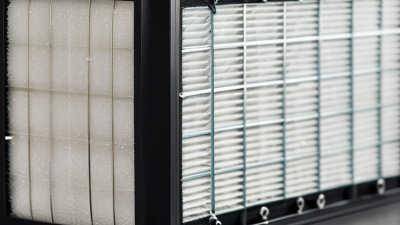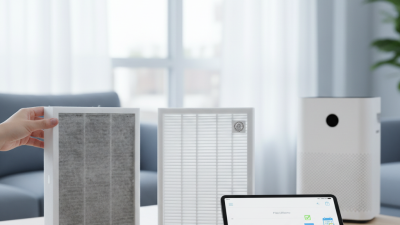
Choosing a Hepa Filter manufacturer in China takes more than comparing prices or catalog claims. Buyers need to examine filtration ratings, test methods, production consistency, and the fit between a filter and its intended system. A clean-looking specification sheet is useful. It is not the whole story. The frame, seal, media, and workmanship all affect performance once the filter is installed.
Indoor-air researcher Jeffrey Siegel has emphasized that filtration performance depends on both the filter and how it is used. This is a paraphrase of his broader research, not a verbatim quotation. That distinction matters: responsible sourcing should separate verified evidence from sales language. For manufacturers, useful evidence may include current test reports, documented quality controls, material traceability, and clear answers about custom sizes. Ask how units are inspected, too. A small gap around a filter can undermine an otherwise impressive rating.
China’s market includes established producers and newer suppliers, with different strengths in cleanroom, HVAC, and industrial applications. A fair comparison should consider technical capability, communication, delivery reliability, and after-sales support—not just factory photos. Some details remain hard to judge remotely. That is worth admitting. This guide introduces leading Chinese Hepa Filter manufacturers and the practical questions buyers can use to assess them. No single ranking fits every project; the right choice depends on the operating conditions and the evidence each supplier can provide.
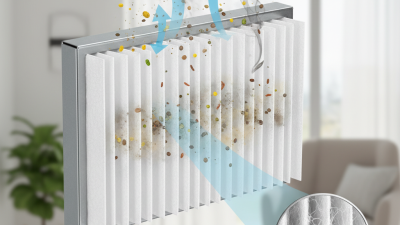
A HEPA filter is not simply a dense white sheet. It uses layered fibers to capture particles through interception, impaction, and diffusion. The U.S. Department of Energy’s commonly cited benchmark requires at least 99.97% efficiency at 0.3 micrometers. This particle size is a practical test reference, not a claim that every particle behaves identically. Real performance depends on airflow, filter condition, and how well the unit seals.
European standard EN 1822 classifies filters by their efficiency at the most penetrating particle size, or MPPS. Its H13 grade requires at least 99.95% overall efficiency; H14 requires at least 99.995%. These figures describe tested filter performance, not necessarily the whole air-cleaning device. A small gap around a frame can undermine impressive test results. That detail is easy to overlook.
When comparing specifications, check the test method, pressure drop, and rated airflow alongside the efficiency number. Higher efficiency may increase resistance, so a poorly matched fan can reduce delivered airflow. ISO 29463 also provides a framework for classifying and testing high-efficiency filters. Still, standards do not replace installation checks or routine maintenance. A filter can look clean and perform poorly. That deserves a second look.
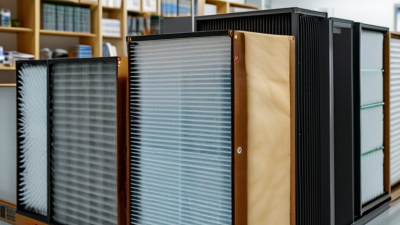
A reliable assessment starts with test evidence, not polished product photographs. Ask how each filter’s efficiency and pressure drop are measured, and whether results come from documented testing. The test method should match the filter’s stated classification. Check that reports identify the tested model, test conditions, and date. A certificate alone may not show how consistently production units perform. Details matter.
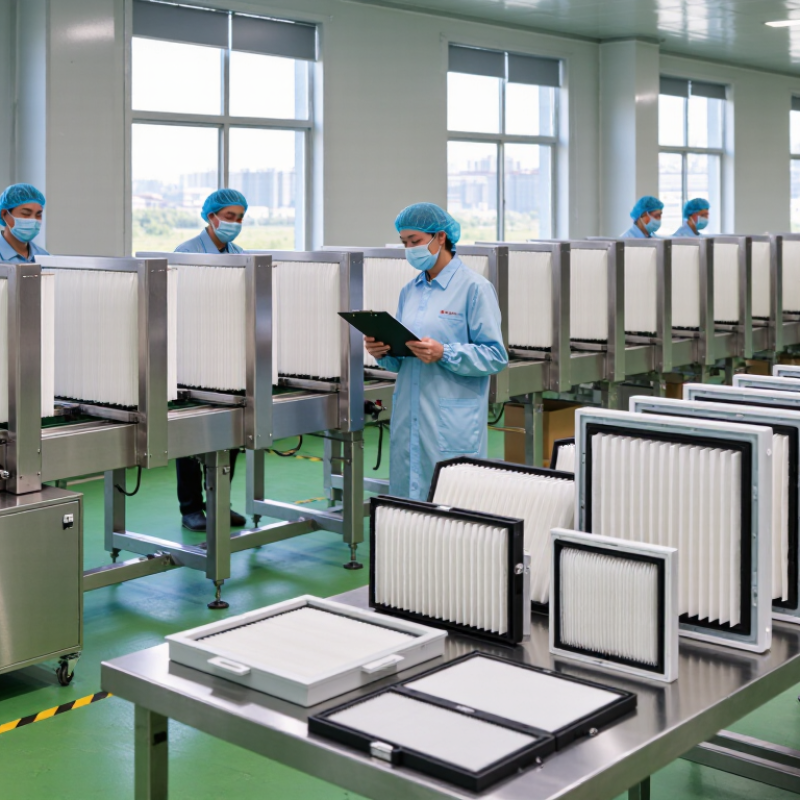
Factory capability is another useful signal. Review how manufacturers control pleat spacing, sealant application, frame dimensions, and final leak testing. These details can affect airflow and filtration performance. During a factory review, look for clear inspection records and traceable batches. Ask what happens when a sample fails. A specific answer is more convincing than a broad quality promise. Still, one visit cannot prove that every batch meets the same standard.
Experience with comparable applications also helps. A supplier should explain how humidity, airflow, installation, and replacement schedules may affect filter selection. Request samples and compare their dimensions, construction, and accompanying test documents against your requirements. Check whether technical staff respond with practical information rather than simply recommending the highest efficiency option. No checklist is perfect. I would also ask how the manufacturer handles design changes, because even a small frame adjustment can complicate maintenance or fit.
Chinese HEPA filter manufacturers serve healthcare, pharmaceuticals, electronics, food processing, and commercial HVAC. Their products range from ceiling-mounted terminal filters to deep-pleat units fitted into industrial air-handling systems. In a hospital, the filter may sit above a procedure room; in a semiconductor plant, it can protect a tightly controlled production line. The specifications differ. So does the testing.
The US Environmental Protection Agency defines HEPA filtration as capturing at least 99.97% of airborne particles at 0.3 microns, a demanding benchmark often used to describe filter performance. ISO 29463 provides a classification and testing framework for high-efficiency filters. Buyers should check test results, airflow resistance, seal integrity, and replacement intervals—not just the efficiency figure. Small leaks around a frame can undermine an otherwise strong filter.
For pharmaceutical and healthcare applications, manufacturers need to demonstrate consistent performance and provide traceable test documentation. Electronics facilities may prioritize low particle shedding and stable airflow across large filter arrays. Food plants often need housings that can be cleaned and maintained without disrupting production. China has a broad base of filtration producers, but supplier capability varies. That matters. A catalogue claim is not the same as independent validation, and specifications can be easy to misread.
| Manufacturer Profile | Typical HEPA Products | Industries Served | Relevant Performance Information | Common Verification Requirements |
|---|---|---|---|---|
| Cleanroom filtration specialist | Terminal filter units, high-capacity box filters, and cleanroom ceiling filters | Semiconductor, electronics, pharmaceutical, and precision manufacturing facilities | Products may be specified in H13 or H14 classes under EN 1822. The standard’s efficiency classification is based on performance at the most penetrating particle size (MPPS). | Individual filter efficiency and pressure-drop testing; leak testing where required; documented test reports and traceability |
| Pharmaceutical and biotechnology filtration supplier | Gel-seal or gasket-seal HEPA filters, terminal housings, and replacement filters for controlled environments | Pharmaceutical production, biotechnology, laboratories, and healthcare clean areas | Selection depends on the required cleanroom design and air-handling system. H13 and H14 are common high-efficiency classes; the required class should be confirmed against the project specification. | Filter integrity testing, installation leak testing, material documentation, and qualification records as required by the facility |
| HVAC and commercial air-filtration producer | Mini-pleat, deep-pleat, and rigid-frame HEPA filters for air-handling units | Commercial buildings, hospitals, laboratories, and industrial HVAC systems | Airflow capacity, initial pressure drop, dimensions, and filter class are selected to suit the system design. A higher-efficiency filter can increase resistance to airflow. | Efficiency classification, airflow and pressure-drop data, dimensions, frame compatibility, and operating-temperature limits |
| Industrial process-filtration producer | Robust-frame HEPA filters and application-specific high-efficiency filter assemblies | Automotive paint operations, industrial manufacturing, nuclear-related applications, and process exhaust systems | Construction materials and sealing arrangements must be suitable for the operating temperature, humidity, chemicals, and airflow conditions of the application. | Application-specific material review, structural integrity checks, leak testing, and verification against the project’s applicable standards |
| Portable and equipment-filter manufacturer | Compact HEPA filters for air purifiers, vacuum equipment, and small ventilation devices | Consumer appliances, commercial cleaning equipment, and portable air-cleaning devices | Performance depends on the complete device as well as the filter element. Product claims should identify the test method, particle size range, and test conditions. | Element efficiency, airflow resistance, sealing and bypass checks, and device-level performance testing where applicable |
This table describes common manufacturer profiles and product capabilities, not a ranked list of companies. Actual specifications vary by model; confirm classification, test method, dimensions, and operating conditions in the supplier’s technical documentation.
Comparing China’s HEPA filter manufacturers is more useful than relying on a simple ranking. Their products may differ in filter grades, media construction, frame materials, and airflow resistance. Ask for test reports that identify the tested model, airflow, and particle-size conditions. A certificate alone does not prove every product performs equally. Check whether reports come from a qualified independent laboratory, and confirm that production batches follow the same specifications.
Capabilities matter beyond filtration efficiency. Some manufacturers can customize dimensions, pleat depth, separators, and gasket materials for specific equipment. Others may offer stronger process controls, traceable materials, or more consistent delivery. Request sample filters, inspection records, and details about leak testing. A practical check is to compare pressure drop at the same airflow, not just headline efficiency. Small differences affect fan energy and replacement schedules. I would not call any supplier “best” without matching its evidence to the buyer’s operating conditions.
Tips: Share your target airflow, temperature, humidity, and installation space before requesting a quote. Ask how defects are handled and how often production is inspected. Then test a sample in the actual housing. It takes more time, but avoids a common mismatch. Even careful comparisons can miss issues that appear only after months of use.
Choosing a HEPA filter manufacturer in China requires more than comparing prices. Check whether the supplier can provide current test reports for the exact filter model you plan to buy. Ask which test method was used, what particle size was measured, and whether results came from an independent laboratory. A certificate for a different product is not enough. Request samples and compare frame dimensions, seal quality, pleat spacing, and pressure drop. These details affect installation and airflow. They are easy to overlook on a spreadsheet.
Tips: Ask for a sample, test report, and written product specification before placing a large order. Clarify minimum order quantities, lead times, packaging, and how defects are handled. Get answers in writing.
Production consistency matters as much as a strong sample. Ask how incoming media and finished filters are inspected, and whether batch records can be shared. If possible, arrange a factory audit or use a qualified third-party inspector. Confirm that the manufacturer can meet your required dimensions and provide stable output across repeat orders. Communication is also a practical test: give the supplier a clear drawing and see whether questions are specific. A missed detail can still happen, even with careful checks. Allow time for trial fitting and verification before relying on a new source.
Compare the minimum filtration efficiencies defined by EN 1822. When selecting a manufacturer, ask for independent test reports confirming the filter class and performance at the most penetrating particle size (MPPS).
Values show minimum integral efficiency at MPPS: E10 85%, E11 95%, E12 99.5%, H13 99.95%, and H14 99.995%.