Leave Your Message

2026 Best Paint Booth Exhaust Filter Roll for Global Buyers?

In 2026, global buyers need more than a low price when selecting a Paint Booth Exhaust Filter Roll. Filter performance affects airflow, coating quality, maintenance time, and workplace cleanliness. A suitable roll should capture overspray effectively without restricting the booth’s designed air volume. Small details matter. Density, thickness, fiber structure, roll length, and cutting accuracy can change daily operating costs.

This guide examines practical buying factors from an operator’s perspective. It considers paint type, spray volume, booth size, replacement frequency, and disposal planning. Reliable suppliers should provide clear technical data, consistent batch quality, packaging protection, and responsive support. Buyers should also verify compatibility with local workplace and environmental requirements. Those requirements vary by country and application. Do not rely on a product photograph alone.

Real-world evaluation is not always perfect. A filter that performs well in one booth may load quickly in another. Humidity, overspray concentration, and operator technique can change results. That is easy to overlook. Therefore, global purchasers should request samples, review test information, and compare pressure-drop behavior before placing large orders. A practical trial can reveal problems that a specification sheet misses. This article offers a careful framework for comparing 2026 filter roll options, while recognizing that no single material suits every paint booth. Reliable decisions come from measured performance, documented experience, and honest review of operating conditions.

2026 Best Paint Booth Exhaust Filter Roll for Global Buyers?

What Is a Paint Booth Exhaust Filter Roll?

2026 Best Paint Booth Exhaust Filter Roll for Global Buyers?

What Is a Paint Booth Exhaust Filter Roll?

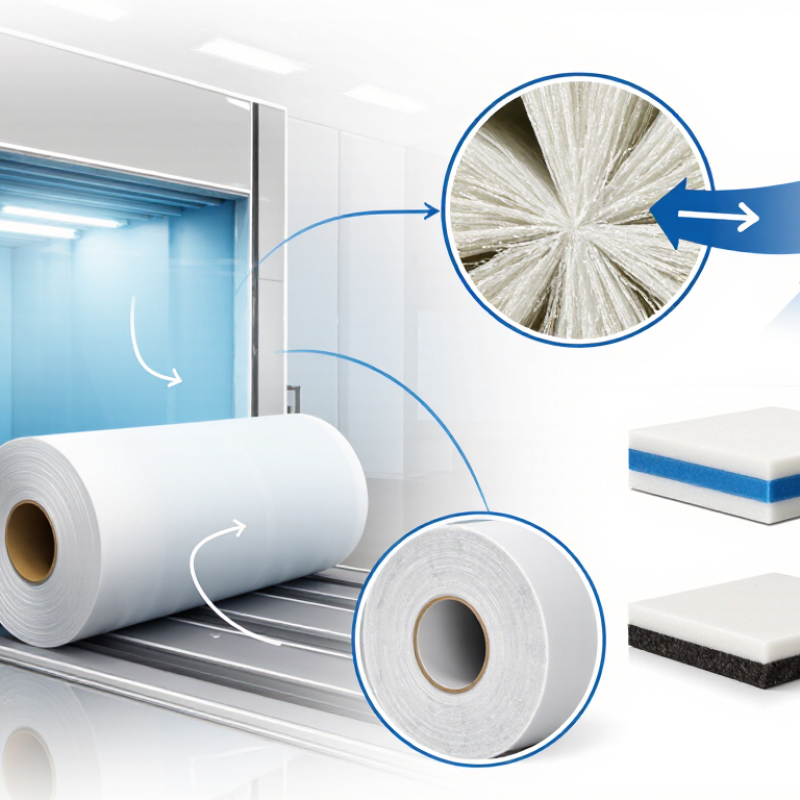
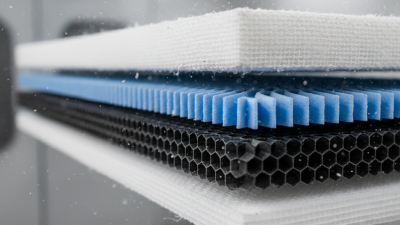
A paint booth exhaust filter roll is a continuous sheet of fibrous media. It captures airborne paint overspray before exhaust air leaves the booth. Operators cut the roll into panels, matching the booth’s frame dimensions. The media commonly uses layered synthetic fibers, cardboard grids, or progressive-density structures.

It is not a vapor filter. It will not reliably remove solvents or hazardous gases. The U.S. EPA’s AP-42 surface-coating guidance separates overspray control from volatile organic compound control. That distinction matters during specification. A filter roll can protect ductwork, fans, and nearby surfaces, but gas treatment requires different equipment.

Performance depends on more than capture efficiency. The American Society of Heating, Refrigerating and Air-Conditioning Engineers evaluates air filters through particle-size efficiency and pressure-drop testing. In practice, a roll with high initial efficiency may load quickly. Airflow then falls, spray patterns change, and booth pressure becomes unstable. I have seen buyers focus only on thickness. That is an incomplete decision.

Useful purchasing data includes initial pressure drop, final resistance, dust-holding capacity, roll length, fire behavior, and disposal instructions. The European standard EN 12215 also addresses spray booth ventilation and safety performance. Yet standards do not replace field checks. Humidity, coating type, spray volume, and maintenance habits can change results. Measure airflow regularly. A cheaper roll can become expensive when replacement is frequent.

How Paint Booth Exhaust Filter Rolls Work

2026 Best Paint Booth Exhaust Filter Roll for Global Buyers?

How Paint Booth Exhaust Filter Rolls Work

A paint booth exhaust filter roll captures overspray before air leaves the booth. Its fibrous media creates a maze for airborne paint particles. Larger particles strike the fibers directly. Smaller particles slow down and attach through interception and diffusion. Clean air then moves toward the exhaust fan.

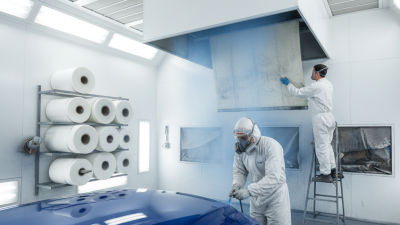
The roll advances as the front layer becomes loaded. Some systems use a manual crank, while others use timed or pressure-based replacement. During booth inspections, technicians often check the filter surface, airflow, and pressure difference together. A visibly dirty roll is not always ready for replacement. A slight pressure increase may already affect spray quality and worker comfort.

Filter efficiency depends on fiber structure, airflow speed, paint type, and installation. Poor sealing can let air bypass the media. That mistake is easy to miss. A filter roll also does not remove every solvent vapor. Separate controls may be required for gaseous contaminants. Buyers should compare roll width, thickness, capture efficiency, pressure drop, and operating temperature. Humid storage can deform the media, so dry packaging and careful handling matter. Local disposal requirements should guide the treatment of used material. Performance testing is useful, but field conditions remain imperfect. Even a well-chosen filter needs regular inspection and thoughtful adjustment.

Key Factors for Choosing the Best Filter Roll in 2026

Choosing a paint booth exhaust filter roll in 2026 requires more than comparing catalog prices. The best option balances capture efficiency, airflow stability, service life, and safe handling. Start with the booth’s measured airflow, opening size, and coating process. Do not rely on a generic roll width. Small gaps can create visible overspray trails.

Filter media should match particle load, humidity, temperature, and pressure-drop limits. Fiberglass, synthetic, and layered media can perform differently under heavy wet-paint conditions. Ask for technical data, test methods, and recommended replacement pressure readings. Reliable suppliers should clarify whether resistance figures describe new or loaded media. That distinction matters. Check documents against local workplace and environmental requirements.

Installation quality also affects filter performance. Inspect the holding frame, edge seals, support grid, and airflow direction during commissioning. A differential-pressure gauge gives stronger evidence than appearance alone. Replace the roll when readings exceed the booth’s approved limit, not only when the surface looks dirty. A common purchasing mistake is treating longer life as automatically better. High loading capacity may increase resistance and reduce booth balance. I would challenge that assumption with a small trial, measured before and after replacement. Record overspray buildup, pressure change, replacement time, and disposal conditions. These details reveal weaknesses that a sales sheet may hide. Human inspection still matters.್ಟ

Comparing Filter Materials, Efficiency, and Service Life

2026 Best Paint Booth Exhaust Filter Roll for Global Buyers?

Material choice changes both capture efficiency and replacement cost. Fiberglass rolls are economical and hold heavy overspray, but loose fibers can shed when saturated. Polyester rolls usually offer stronger structure and cleaner handling. They also tolerate repeated airflow changes better. Paper media can provide fine capture, yet it often loads quickly in high-solids coating work.

Efficiency needs careful interpretation. ASHRAE Standard 52.2 measures particle removal by size, not total wet-paint capture. ISO 16890 uses ePM1, ePM2.5, and ePM10 categories, which are useful for general ventilation filters. Neither rating alone predicts paint-booth service life. EPA AP-42 Section 4.2 reports conventional spray transfer efficiency commonly around 20–40%, while higher-transfer methods can exceed 60%. More overspray reaches the exhaust filter when application control is poor. It clogs quickly.

Service life depends on coating solids, booth airflow, humidity, and filter depth. A deeper polyester roll may last longer, but its pressure drop can rise unnoticed. Install a manometer and record readings at startup. Replace the roll when pressure drop reaches the booth designer’s limit, or when airflow becomes unstable. OSHA 29 CFR 1910.94 requires exhaust systems and filters to remain properly maintained.

In field maintenance, visual color is an unreliable replacement signal. A pale filter can already restrict airflow. A dark filter may still perform acceptably. Buyers should request pressure-drop data, test standards, roll density, and disposal guidance. This is where specifications often remain incomplete. A higher efficiency rating is not automatically better; the correct balance is stable airflow, adequate capture, and predictable replacement intervals.

Global Buying, Compliance, Installation, and Maintenance Considerations

For global buyers, a paint booth exhaust filter roll is a compliance component, not merely consumable fabric. Filter efficiency, pressure drop, fire resistance, and disposal requirements should match the coating process. OSHA 29 CFR 1910.107 specifies at least 100 feet per minute across many open spray-booth faces. Local rules may require different airflow calculations. Check the installation country before ordering.

The filter roll should arrive labeled with basis weight, capture efficiency, temperature limits, and test method. A higher-efficiency filter can increase fan load when poorly selected. That mistake is common. The U.S. EPA’s AP-42 guidance identifies coating operations as important VOC emission sources, so weak capture can create both environmental and workplace concerns. During installation, keep the roll flat, seal side gaps, and mark airflow direction. Measure pressure before and after the filter bank. NFPA 33 guidance also stresses maintaining suitable ventilation and preventing combustible residue accumulation.

Tips: Request a sample first. Compare pressure drop at the booth’s actual airflow, not a catalogue headline. Replace media when pressure reaches the equipment maker’s limit, or when overspray visibly loads the surface. Inspect weekly in busy workshops. Record date, airflow, pressure, and filter batch. Records support audits and reveal waste. I would also review disposal practice with a local specialist; contaminated media is not automatically ordinary waste. Regional interpretation can be surprisingly inconsistent.

2026 Best Paint Booth Exhaust Filter Roll for Global Buyers? - Global Buying, Compliance, Installation, and Maintenance Considerations

Evaluation Dimension Recommended Specification or Practice Typical Reference Value Why It Matters to Global Buyers Verification Method
Primary application Paint booth exhaust overspray filtration for automotive refinishing, industrial coating, furniture finishing, and metal painting Designed for wet or dry paint particles; not intended to replace vapor or gas-phase carbon filtration Separates particulate control from solvent-vapor control and helps prevent incorrect filter selection Review the technical data sheet and confirm the paint chemistry and booth process with the supplier
Filter media construction Progressively layered synthetic or fiberglass media with a supporting backing or scrim Common roll widths: approximately 0.75–2.1 m; roll lengths often 10–25 m Layered construction improves dust-holding capacity while allowing the roll to be cut to booth dimensions Check dimensions, media type, backing strength, and roll weight before ordering
Particle capture rating Select a rating suitable for overspray loading and the booth exhaust design rather than relying only on a generic efficiency label Typical paint-arrestor products are often specified in the approximate 90–98% range for tested coarse or overspray particles Efficiency values are meaningful only when the test particle size and test method are stated Request the test standard, particle-size range, pressure-drop curve, and application conditions
Initial pressure drop Choose the lowest pressure drop that provides the required overspray capture and booth cleanliness Often approximately 50–150 Pa at the manufacturer’s rated face velocity; actual values vary by media and airflow Lower resistance can reduce fan energy use and help maintain designed booth airflow Compare laboratory pressure-drop curves at the actual or nearest operating airflow
Final replacement pressure Set a replacement limit based on booth airflow, fan capacity, and the equipment manufacturer’s instructions Many systems use approximately 200–400 Pa as an operational trigger, but the correct limit is system-specific Replacing too early increases cost; replacing too late can reduce capture and overload the fan Install a differential-pressure gauge or electronic monitor and record readings during operation
Airflow compatibility Match the filter to the booth’s cross-sectional area, exhaust volume, fan curve, and face velocity Spray-booth airflow requirements vary widely; use the booth design value rather than a universal airflow assumption A filter that is too restrictive may cause poor ventilation, uneven coating, or fan overload Confirm rated airflow, face velocity, fan capacity, and actual booth measurements
Fire and flame performance Use media with documented flame-spread or flammability performance suitable for the installation No single fire rating is suitable for every country or booth configuration Paint overspray and solvent residues can increase combustible loading in exhaust systems Obtain the applicable test report and have the local authority or qualified fire professional review the installation
VOC and solvent control Use particulate filter roll for overspray only; add an approved vapor-control system when required Fiberglass or synthetic particulate media does not generally remove solvent vapors effectively Prevents under-designed systems and supports compliance with air-emission requirements Review the coating safety data sheet, local air permit, and emission-control requirements
North American compliance review Check applicable workplace ventilation, spray-application, fire, electrical, and environmental rules Requirements may involve national, state, provincial, and municipal authorities A filter product certificate alone does not certify the complete paint-booth installation Obtain approval from the relevant occupational-safety, fire, building, and environmental authorities
European compliance review Assess machinery safety, workplace exposure, explosive-atmosphere risk, waste handling, and local ventilation requirements Applicable obligations depend on the booth design, coating, solvent load, and country of installation European conformity documentation normally covers the equipment or system, not just loose filter media Request the declaration and technical documentation applicable to the complete equipment
Asia-Pacific and Middle East review Confirm national fire, occupational-safety, environmental, import, and electrical requirements before shipment Requirements differ substantially by country, industrial zone, and local authority Local approval may be required even when the filter is manufactured to an international specification Use a local engineer, importer, or compliance consultant to confirm the project requirements
Roll cutting and orientation Cut cleanly to the retaining frame and install with the specified airflow direction and backing orientation Provide sufficient overlap or sealing according to the frame design; avoid gaps and bypass paths Improper cutting or orientation can reduce capture and allow overspray to reach the fan and duct Use the installation drawing and inspect the entire perimeter after fitting
Frame and sealing Use a rigid, corrosion-resistant retaining frame with secure clamping and compatible seals Frame depth and seal type must match the booth exhaust opening and media thickness Bypass leakage can defeat a high-efficiency filter and contaminate downstream equipment Inspect gaskets, clamps, frame distortion, and visible leakage during commissioning
Storage before use Keep rolls sealed, dry, clean, and protected from direct sunlight, water, chemicals, and crushing Recommended storage conditions are commonly about 5–40°C with moderate humidity; follow the supplier’s limits Moisture and deformation can reduce media performance and make installation difficult Record receipt condition, storage date, lot number, and packaging damage
Inspection frequency Inspect media condition, pressure drop, frame seals, and overspray accumulation routinely Visual checks are commonly performed daily or per shift in high-loading operations; formal records should be maintained Early detection reduces airflow loss, product defects, and unplanned downtime Use a checklist covering pressure readings, tears, gaps, saturation, and fan performance
Replacement trigger Replace when the approved pressure limit is reached, the media is damaged, or visible bypass and saturation occur Service life may range from days to several months depending on paint volume, solids content, booth airflow, and work schedule Calendar-based replacement alone can cause unnecessary cost or unsafe overuse Base the decision on differential pressure, visual condition, production quality, and maintenance history
Used-filter handling Bag, label, and store used filters in accordance with the coating and solvent waste classification Waste classification depends on retained paint, hazardous ingredients, local law, and contamination level Used filters may be regulated waste and can present fire, exposure, or environmental risks Review the coating safety data sheet and confirm disposal requirements with an authorized waste provider
Packaging and logistics Use moisture-resistant packaging with roll protection, clear labels, dimensions, quantity, lot number, and country-of-origin information Confirm pallet size, gross weight, cubic volume, customs classification, and stacking limits before booking freight Rolls are bulky relative to their weight, so freight and warehouse space can materially affect landed cost Request a packing list, commercial invoice data, transport dimensions, and pre-shipment photographs
Quality-control documents Require a technical data sheet, certificate of conformity, batch traceability, and test information Key data should include media type, thickness, basis weight, dimensions, airflow, pressure drop, and test method Consistent documentation supports tender evaluation, incoming inspection, and repeat purchasing Compare supplied documents with the purchase specification and retain lot records
Total landed cost Evaluate media price, usable area, service life, pressure-drop energy, freight, duties, waste disposal, and downtime The lowest unit price is not necessarily the lowest cost per operating hour or per painted vehicle/component A lifecycle comparison gives a more reliable basis for global sourcing decisions Calculate cost per square metre, replacement interval, energy impact, and disposal cost using trial data
Buyer’s note: Filter performance, fire classification, waste status, and installation requirements must be confirmed for the specific paint booth, coating materials, airflow design, and jurisdiction. A filter roll should not be selected as a substitute for a complete ventilation, fire-protection, or VOC-control assessment.