Choosing the China best Ffu Filter Unit is not simply a price comparison. Global buyers need verified airflow, stable filtration, and dependable supplier evidence. A polished product page can hide weak testing. That is the uncomfortable part.
Professor William Whyte, a respected cleanroom technology authority, stated, “The main purpose of a cleanroom is to control airborne contamination.” This principle should guide every Ffu Filter Unit purchase. Buyers should examine HEPA grade, filter leakage results, airflow volume, noise level, and power requirements. H13 or H14 classification alone does not prove complete system performance. Request the actual test report. Check the test method. Confirm the filter size, gasket design, fan type, and control mode.
Small details matter.
A unit operating at 220–240 volts may require different wiring for another facility. A 50 Hz motor may not suit every market. Stainless steel housing helps in humid areas, but it can increase weight and cost. Buyers should also review factory quality controls, batch traceability, warranty terms, replacement filters, and after-sales response times. Independent inspection is useful before shipment. It may feel excessive, yet one failed installation can disrupt an entire cleanroom schedule.
This guide compares Chinese Ffu Filter Unit manufacturers through practical evidence, not attractive claims. It considers laboratory data, production experience, customization ability, packaging protection, and communication reliability. No supplier is perfect. Even a strong specification can miss real-world maintenance problems. Careful buyers should ask sharper questions, verify every critical figure, and choose performance that remains stable after installation.
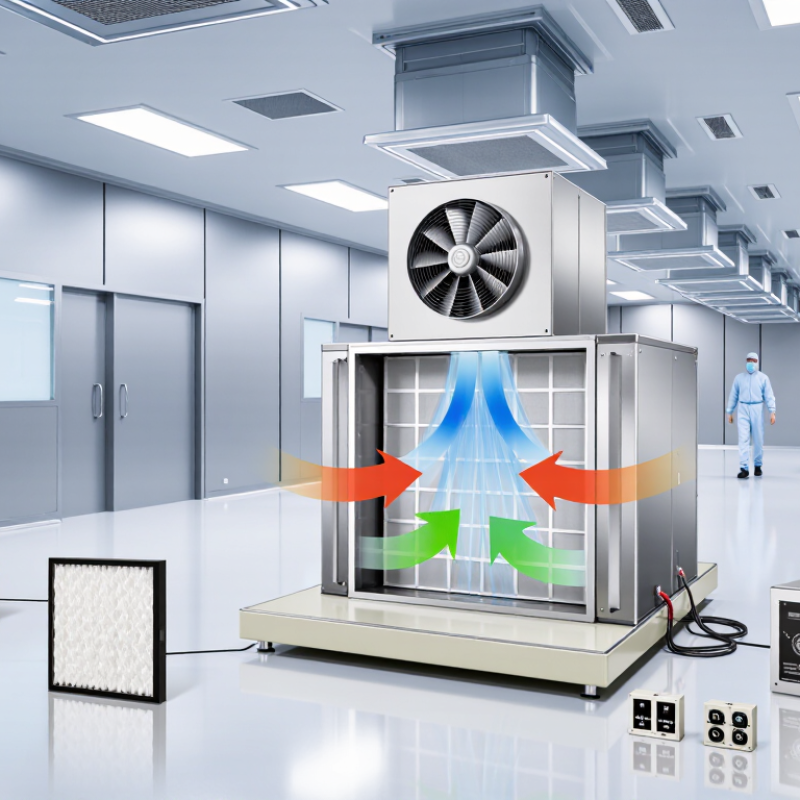
A Fan Filter Unit (FFU) is a ceiling-mounted air-cleaning module for controlled environments. It combines a fan, pre-filter, HEPA or ULPA filter, housing, and control system. The fan draws air from the room or ceiling plenum. Filtered air then returns through the discharge face. According to the U.S. Environmental Protection Agency, certified HEPA filters remove at least 99.97% of 0.3-micron particles under defined test conditions. This does not mean sterilization. ISO 14644-1 sets the ISO 5 limit at 3,520 particles per cubic meter for particles 0.5 microns and larger.
An FFU’s real performance depends on more than filter efficiency. Airflow uniformity, filter-seal leakage, pressure drop, noise, and control accuracy also matter. The International Energy Agency reports that buildings consume about 30% of global final energy. Therefore, inefficient FFU motors can create a noticeable operating burden in large cleanrooms. A common mistake is choosing the highest airflow without checking room pressure and process needs. More air is not automatically cleaner. It may increase turbulence. That detail deserves review.
Tips: Match airflow to room volume and cleanliness requirements. Request factory test data for airflow, power, sound, and filter leakage. Check the filter scan-test method. Inspect gasket compression during installation. Recheck pressure drop after commissioning. Small installation errors can weaken an otherwise excellent FFU.
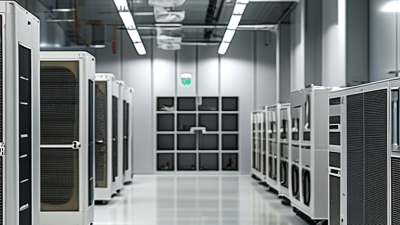
A Fan Filter Unit (FFU) is a ceiling-mounted air-cleaning module that combines a fan with a high-efficiency filter. The chart below shows estimated nominal airflow for common FFU face sizes at a face velocity of 0.45 m/s.
Airflow is calculated from filter face area × 0.45 m/s × 3,600 seconds per hour. Actual FFU performance varies according to fan speed, filter resistance, filter loading, and system design.
In China, fan filter units are usually designed around ceiling modules, cleanroom pressure, heat load, and required air changes. A typical unit combines a centrifugal or EC fan, pre-filter, HEPA filter, housing, control board, and diffuser. Common modules measure 2×4 feet or 4×4 feet. On site, technicians check airflow at the diffuser, not only the motor display. Small installation gaps can create visible turbulence.
Filter classification follows measurable performance. EN 1822 classifies H13 filters at 99.95% efficiency and H14 at 99.995%, tested near the most penetrating particle size. IEST-RP-CC001 also references 99.97% efficiency at 0.3 micrometres for HEPA filters. These figures are not interchangeable. China-based projects may also specify ISO 14644-1 room classes, which control airborne particle limits rather than filter efficiency. That distinction matters.
Market data adds useful context. Grand View Research’s cleanroom technology analysis identifies pharmaceuticals, electronics, and medical manufacturing as major demand sectors. Its reports also show continued investment in Asia-Pacific cleanroom infrastructure. Yet published market figures often combine filters, equipment, and services. They should not be treated as direct FFU sales data. In practical sourcing, buyers should request airflow curves, noise readings, leakage-test records, and filter certificates. A lower price may reflect a thinner housing or weaker control system. That is easy to miss.
A reliable Chinese FFU manufacturer starts with evidence, not polished catalogues. SEMI’s 2024 World Fab Forecast identified more than 1,400 semiconductor facilities and production lines worldwide. That scale increases demand for stable, traceable airflow equipment. A serious supplier should provide airflow curves, sound data, power readings, and filter test records for each configuration. Generic certificates are not enough.
Testing must connect with cleanroom requirements. ISO 14644-1 allows up to 3,520 particles per cubic metre at 0.5 micrometres for ISO Class 5 air. The limit rises to 352,000 particles for ISO Class 7. Reliable manufacturers should explain how motor speed, filter resistance, and room pressure affect these results. Factory acceptance testing matters. Ask for particle counts, air velocity mapping, and electrical safety checks, not only a factory photograph.
Details reveal experience. Inspectors should verify filter seals, gasket compression, grounding, controller calibration, and accessible maintenance panels. Energy performance also deserves attention. The U.S. Department of Energy repeatedly identifies fan systems as major industrial electricity users, so measured wattage matters over years of operation. No supplier is perfect. Some test reports may omit high-temperature conditions or filter-loading effects. That weakness deserves an honest discussion. A manufacturer that records failures, corrects drawings, and supports commissioning remotely is usually more dependable than one offering the lowest quotation.
A practical supplier-evaluation table based on internationally recognized cleanroom requirements, commonly specified FFU configurations, and verifiable purchasing criteria.
| Evaluation Dimension | Typical Technical Benchmark | Reliable Manufacturer Indicator | Recommended Buyer Evidence | Importance for Global Projects |
|---|---|---|---|---|
| Filter classification | HEPA H13: 99.95% minimum efficiency; HEPA H14: 99.995% minimum efficiency, normally evaluated at the most penetrating particle size. | Filter efficiency is stated according to a recognized method rather than described only as “high efficiency.” | Independent filter test report, serial-number traceability, and acceptance-testing procedure. | Critical |
| Airflow performance | Many standard FFU projects specify approximately 0.35–0.55 m/s average face velocity, subject to filter resistance and room design. | Airflow is reported together with external static pressure, filter type, and test conditions. | Factory airflow curve, calibrated test-equipment record, and sample-unit verification. | Critical |
| Fan and motor design | EC or electronically commutated motors are commonly selected for variable-speed control and improved part-load efficiency; AC motors remain suitable for some applications. | Motor data includes rated voltage, frequency, speed-control method, protection class, and operating limits. | Motor datasheet, wiring diagram, overload-protection details, and endurance-test records. | Critical |
| Energy consumption | Typical FFU input power may range from about 100 W to 250 W for common ceiling formats, depending on size, filter resistance, airflow, and motor technology. | Power consumption is measured at a defined airflow and static pressure instead of being presented as a no-load value. | Power-versus-airflow test curve and project-specific energy estimate. | High |
| Noise control | Cleanroom projects often target approximately 50–60 dB(A), although the permitted level depends on room use, airflow, ceiling density, and measurement location. | Noise values identify the distance, background-noise condition, airflow setting, and installation configuration. | Acoustic test report and witnessed sample-unit test. | High |
| Housing and ceiling compatibility | Common modular face dimensions include approximately 2 × 4 ft, 2 × 2 ft, and metric equivalents such as 610 × 1220 mm and 610 × 610 mm. | Housing dimensions, mounting method, gasket position, and ceiling-grid interface are controlled by drawings. | Approved dimensional drawing, ceiling coordination drawing, and installation manual. | Critical |
| Material and surface finish | Powder-coated steel, stainless steel, and other corrosion-resistant constructions may be used according to cleanroom classification and chemical exposure. | Material thickness, coating specification, corner construction, and cleanability are clearly documented. | Material certificates, coating information, weld-quality records, and surface-inspection checklist. | High |
| Leakage and sealing control | Filter-to-housing sealing should prevent bypass leakage under the specified operating pressure and installation condition. | Use of continuous gaskets or approved gel-seal arrangements is supported by a defined inspection process. | Leakage-test method, seal inspection record, and final installed-system validation plan. | Critical |
| Control and monitoring | Available functions may include local speed adjustment, group control, differential-pressure monitoring, alarm output, and building-management-system integration. | Control interfaces are standardized and documented, with clear limits for the number of connected units. | Control protocol, terminal diagram, communication specification, and compatibility test. | High |
| Factory quality management | Production controls should cover incoming materials, fan balance, electrical safety, airflow, noise, cleanliness, and final inspection. | Each unit has a traceable inspection record linked to its production batch or serial number. | Quality manual, inspection and test plan, calibration certificates, and sample inspection records. | Critical |
| Standards and compliance | Project specifications may reference ISO 14644 cleanroom requirements, EN 1822 or ISO 29463 filter-efficiency testing, and applicable electrical-safety rules. | The manufacturer identifies the exact edition, test scope, and product configuration covered by each certificate. | Valid certificates, laboratory accreditation details, declarations of conformity, and compliance matrix. | Critical |
| Filter replacement and maintenance | Replacement intervals depend on particulate loading, pressure drop, operating hours, and contamination-control requirements; they should not be based only on a fixed calendar period. | Maintenance instructions define access method, filter dimensions, gasket replacement, disposal, and recommissioning requirements. | Operation and maintenance manual, spare-filter specification, and recommended differential-pressure limits. | Critical |
| Sample approval and mass production | Production units should match the approved sample in dimensions, filter grade, motor, controls, airflow, noise, and finish. | A formal first-article approval process prevents uncontrolled substitutions after order confirmation. | Signed technical submittal, approved sample report, change-control procedure, and pre-shipment inspection plan. | Critical |
| Export and project support | International projects require export packaging, multilingual documentation, spare-parts planning, and remote technical support. | Packaging is designed for vibration and moisture protection, while documents are supplied before shipment. | Packing specification, shipping inspection checklist, commissioning guide, and response-time commitment. | High |
| Warranty and after-sales service | Warranty terms should separately define the FFU housing, motor, controller, filter media, and consumable components. | Warranty exclusions, claim procedures, spare-parts availability, and technical-response responsibilities are written clearly. | Signed warranty document, spare-parts list, service workflow, and escalation contact structure. | Critical |
| Total cost of ownership | Purchase price should be evaluated together with electricity use, filter replacement, maintenance labor, downtime risk, and commissioning cost. | The supplier provides a transparent cost model instead of competing only on initial unit price. | Five-year or ten-year operating-cost estimate using project airflow, operating hours, electricity price, and filter assumptions. | Critical |
China Best FFU Filter Unit for Global Buyers?
How Can Global Buyers Compare China FFU Filter Units?
Global buyers should compare China FFU filter units by measured performance, not price alone. Check airflow volume, filtration grade, noise, power consumption, and cabinet dimensions. A unit producing 1,000 m³/h may not deliver the same result under real resistance. Ask for performance curves.
Filter quality needs direct evidence. Request the exact HEPA or ULPA efficiency report, leakage test, and factory inspection records. Confirm that the documents match the supplied model, filter size, and test standard. ISO 14644 and EN 1822 references can improve technical clarity, but certificates should be independently verifiable.
Look at the motor carefully. EC motors may reduce energy use and support stable speed control. Check vibration levels, start-up current, controller compatibility, and replacement availability. Ask for a sample unit before placing a large order. Use an anemometer to measure airflow, and inspect sealing with a smoke test. Small gaps matter.
Do not ignore daily maintenance. A cheaper unit can become expensive when filters, controllers, or spare motors are difficult to obtain. Compare warranty terms, packaging strength, lead time, and technical support. I once considered efficiency data sufficient; that was too narrow. Installation quality and filter replacement practice can change results. Leave room for verification.
China Best FFU Filter Unit for Global Buyers?
What Should Buyers Check Before Ordering FFU Systems?
Before ordering an FFU system, confirm the required airflow, filtration grade, ceiling layout, and room classification. A unit may look powerful, yet deliver uneven airflow after installation. Ask for airflow curves, filter efficiency reports, sound data, and electrical specifications. These documents should match the exact model, not a similar catalogue unit.
Check the filter itself carefully. Request the media type, frame material, gasket design, pressure-drop data, and scan-test results. HEPA or ULPA claims need traceable testing from a qualified laboratory. Also inspect the fan motor, speed controller, service life, and replacement procedure. Can one technician remove the filter safely from below? Small details matter.
Measure twice.
I have seen buyers focus on unit price and overlook ceiling compatibility, access space, and local voltage. That mistake can create expensive modifications. Ask for factory inspection records, sample photographs, packing details, and installation instructions. Verify whether spare filters and motors remain available for several years. Remote monitoring can help, but unnecessary software may increase maintenance difficulties. A practical trial unit is often worth more than polished sales language. Still, one test unit cannot reveal every site condition, so buyers should review humidity, dust levels, operating hours, and cleaning methods before approving a larger order.