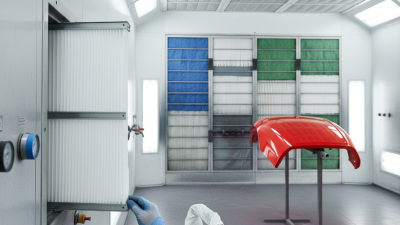
A cleanroom depends on controlled airflow, not spotless-looking equipment. The Laminar Flow Hood Filter sits at the center of that control. Its media, frame, gasket, and installation quality all affect product protection.
William Whyte, a respected cleanroom contamination-control expert, wrote, “A cleanroom is a room in which the concentration of airborne particles is controlled.” That principle remains practical today. A filter may capture particles efficiently, yet still perform poorly with leakage, excessive pressure drop, or uneven airflow. Small gaps matter.
This guide examines seven Laminar Flow Hood Filter options for cleanroom applications. It considers HEPA and ULPA performance, particle-retention ratings, pressure drop, airflow stability, scan-test documentation, and replacement requirements. These details influence both contamination control and operating costs. A filter that appears affordable may demand more fan energy or earlier replacement.
Real-world conditions can be less tidy. Operators open the hood repeatedly. Seals age. Dust accumulates around the frame. Even a strong filter cannot correct careless installation. That point deserves more attention.
The selections are intended to support informed comparison, not replace site qualification. Cleanroom class, hood design, process sensitivity, and manufacturer validation should guide the final decision. Independent testing remains valuable. Sometimes, the “best” filter is simply the one that fits correctly, passes integrity testing, and maintains stable airflow over time. Mistakes still happen. Careful verification reduces their impact.
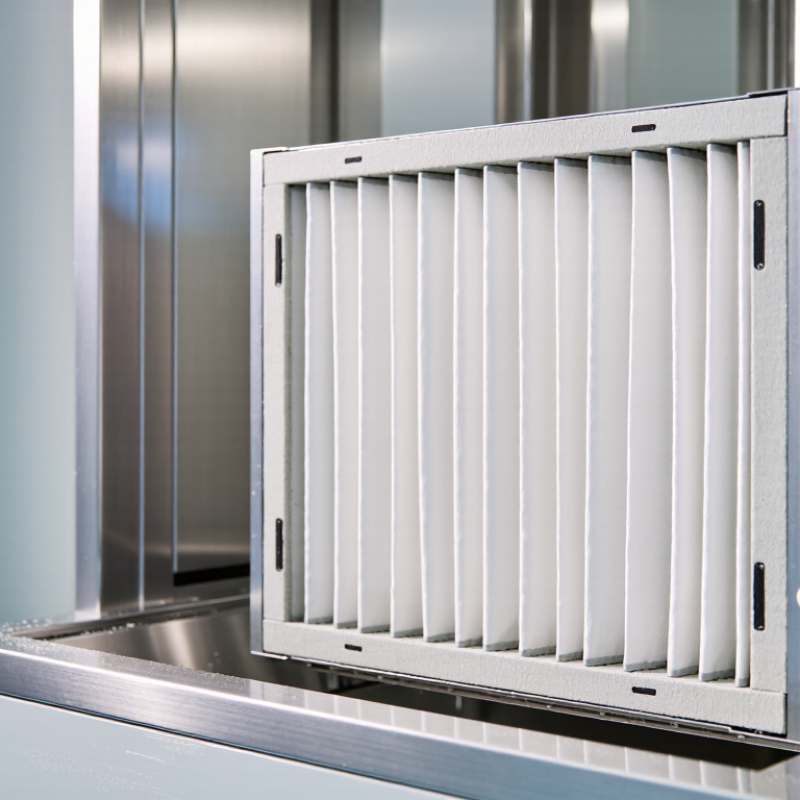
Laminar flow hood filters protect cleanroom work by removing airborne particles before air reaches the critical zone. Most systems use high-efficiency particulate air filters. The U.S. Department of Energy states that HEPA filters capture at least 99.97% of particles measuring 0.3 micrometers. This particle size is widely treated as the most penetrating test point. Smaller particles are not automatically harder to capture.
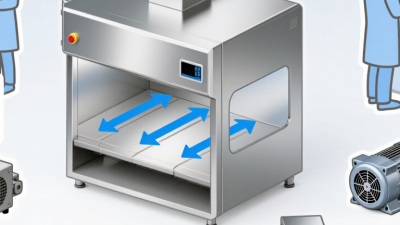
A properly loaded filter creates a steady, one-way airflow across the work surface. That airflow pushes particles away from exposed materials, containers, and instruments. ISO 14644-1 classifies cleanroom air by airborne particle concentration, not by filter efficiency alone. This distinction matters. A strong filter cannot correct poor sealing, turbulent movement, or careless handling. In practice, I have seen clean areas lose control after a filter change because the gasket was uneven. The filter was acceptable. The installation was not.
Tips: Check the hood’s airflow velocity, pressure drop, and filter seal during scheduled inspections. Record readings instead of trusting a green indicator. IEST-RP-CC001 recommends performance testing for HEPA filters, including leak testing after installation. Replace filters when testing, pressure loss, or visible damage indicates a problem. Do not choose only by initial efficiency. Energy use, service life, housing depth, and validated compatibility also affect performance. A rushed replacement can introduce more risk than an older, properly tested filter. That deserves reflection.
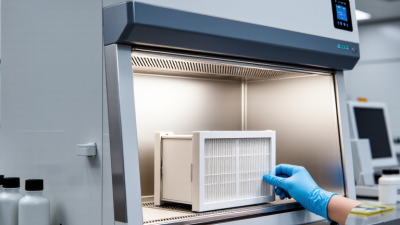
Laminar flow hoods commonly use prefilters, HEPA filters, ULPA filters, carbon filters, and chemical filtration modules. Each handles a different contamination risk. Prefilters capture larger dust before it reaches the final filter. This can extend service life, although poor maintenance may increase pressure drop. HEPA filters remove at least 99.97% of particles at 0.3 micrometers, according to widely used IEST performance criteria. ULPA filters can reach 99.999% efficiency at smaller particle sizes, depending on the test method and construction. Higher efficiency is not automatically better. Airflow resistance still matters.
Carbon filters target odors and selected vapors, not bacteria or dust. Chemical filters use treated media for specific gases, but their capacity depends on concentration, humidity, and contact time.
Some hoods also include secondary filters for extra protection during sensitive operations. ISO 14644-1:2015 classifies cleanroom air by airborne particle concentration, but it does not replace hood-specific filter testing. A practical evaluation should include airflow uniformity, filter leakage testing, and pressure readings.
Operators should inspect seals and watch for uneven airflow near the work surface. Small gaps can defeat an excellent filter. That detail is easy to overlook.
Filter selection should follow the contaminant profile, required cleanliness level, available fan pressure, and documented replacement criteria. Experts sometimes overfocus on efficiency figures; real performance can be less perfect.
Seven leading laminar flow hood filter options deserve comparison by efficiency, pressure drop, sealing, and service life. Standard HEPA filters rated H13 provide at least 99.95% efficiency at the most penetrating particle size under EN 1822. H14 raises that figure to 99.995%. U15, U16, and U17 ULPA grades reach 99.9995%, 99.99995%, and 99.999995%, respectively. These figures sound impressive, but higher capture can increase energy demand.
The seven practical options include H13 HEPA, H14 HEPA, U15 ULPA, U16 ULPA, U17 ULPA, mini-pleat designs, and gel-seal configurations.
The U15 option suits demanding pharmaceutical areas, while H14 often balances protection and airflow better.
Mini-pleat filters can reduce resistance through greater media area. Gel seals may limit bypass leakage when installed correctly. The U.S. Department of Energy reports that airflow resistance affects fan energy use, yet real performance depends heavily on installation quality. A perfect filter can fail in a poorly sealed housing.
Tips:
Check the tested MPPS efficiency, initial pressure drop, gasket condition, and scan-test records. Replace filters according to measured loading, not a convenient calendar date. Keep a manometer beside the hood. Read it before each shift. I still find pressure-drop limits are treated too casually. That is a costly weakness. Validation should include particle counts, airflow uniformity, and smoke visualization under actual operating conditions.
Filter selection should begin with the process, not the product catalogue. ISO 14644-1:2015 classifies cleanrooms by airborne particle concentration, including particles at 0.1, 0.2, 0.3, 0.5, and 5 micrometres. Match the hood’s required class to the smallest critical particle size. A general HEPA filter is commonly rated at 99.97% efficiency for 0.3-micrometre particles, according to U.S. Department of Energy guidance. ULPA media can provide higher rated efficiency, but pressure drop and energy demand usually increase.
Check the airflow pattern carefully. Unidirectional airflow must protect the work zone from turbulence, operator movement, and filter leakage. ISO 14644-3 provides methods for testing velocity, recovery, and filter integrity. Do not rely only on the display reading. A calibrated anemometer, smoke study, and particle count reveal problems that numbers can hide. Small gaps matter.
I would not automatically choose the highest-rated filter. That shortcut sounds safe, yet it may reduce airflow below the process requirement. Review the cleanroom’s target class, hood dimensions, fan capacity, heat load, and replacement access. IEST-RP-CC001 also supports evaluating HEPA and ULPA filters through efficiency, construction, and testing criteria. Consider washable prefilters where permitted, but confirm they cannot shed fibres. The perfect filter on paper can perform poorly after installation. That is the uncomfortable part.
Filter installation determines whether a laminar flow hood performs as designed. Use the filter class specified by the cleanroom risk assessment, not a convenient substitute. HEPA filters are commonly rated to capture 99.97% of particles at 0.3 micrometers, the most penetrating particle size, according to U.S. Department of Energy guidance. Install the gasket evenly, protect the media from impact, and verify airflow direction. A damaged corner can create a hidden bypass path.
After installation, perform a filter leak test and measure face velocity across several points. IEST-RP-CC034 recommends aerosol challenge testing for installed HEPA and ULPA filters. ISO 14644-1:2015 requires particle classification by measured airborne concentrations, but it does not set one universal replacement interval. That matters. Replace filters based on pressure drop, airflow stability, test results, and contamination history. Record readings before and after each service visit. A clean-looking filter may still fail.
Tips: Keep the work zone clear during testing. Never touch exposed media with tools. Clean the housing before fitting a new gasket. Review trends monthly, not only after an alarm. In practice, pressure-drop records often reveal gradual loading earlier than visual checks. Still, monitoring can be imperfect when sensors drift or operators skip entries. Recheck questionable data, document the reason, and involve a qualified certification technician before releasing the hood for critical work.
Minimum integral particle-removal efficiency at the most penetrating particle size (MPPS), based on EN 1822 filter classifications.