China Top HEPA Filter Manufacturers for Global Buyers
China has become a significant sourcing destination for global buyers seeking reliable air filtration equipment. Its manufacturers produce Hepa Filter products for hospitals, laboratories, pharmaceutical facilities, electronics plants, and commercial buildings. However, supplier selection requires more than comparing prices or catalog photographs.
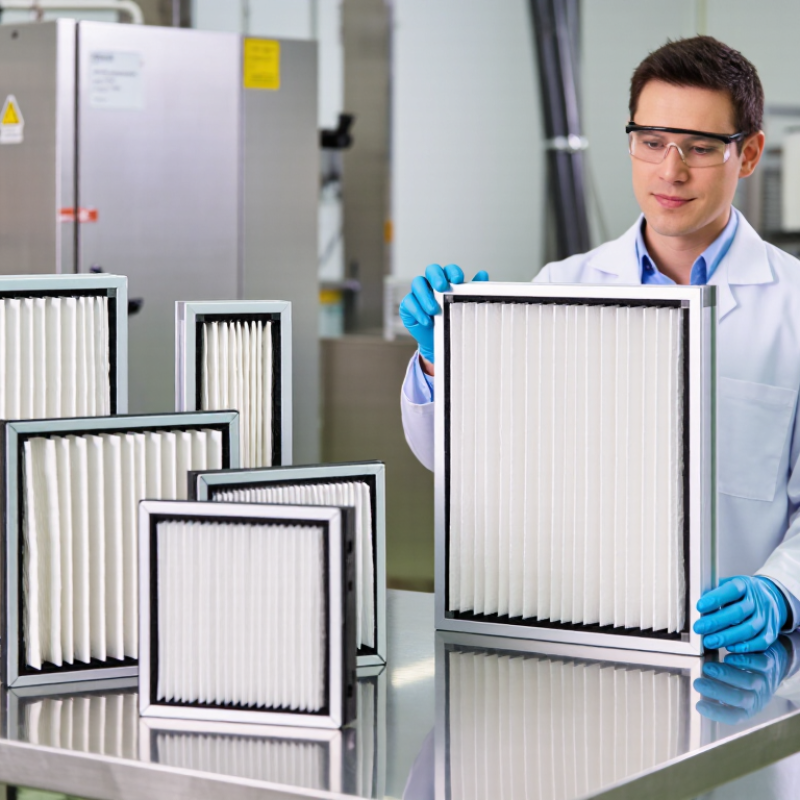
A capable manufacturer should explain filtration efficiency, airflow resistance, media construction, frame materials, and sealing methods. Buyers should request current test reports, quality certificates, factory photographs, and sample units before approving large orders. Practical inspection matters. A filter may look precise, yet perform poorly when its gasket compresses unevenly or its pleats are damaged during transport. Manufacturing experience becomes visible in these small details.
This guide examines leading Chinese manufacturers and the factors that distinguish dependable suppliers. It considers production capacity, quality-control procedures, customization services, export experience, and after-sales communication. Recognized standards can support evaluation, but certificates alone are not enough. Their scope and validity deserve careful review.
Real projects are rarely perfect.
Specifications may change. Lead times may shift. A promising supplier may also have limited experience with a buyer’s regional requirements. For that reason, this overview encourages evidence-based comparisons, technical discussions, and staged purchasing decisions. It is designed for distributors, engineering firms, facility managers, and procurement teams that need clear information before forming international partnerships. Each manufacturer should be assessed against the application, operating environment, maintenance plan, and documented performance of its Hepa Filter solutions.
HEPA Filter Industry Overview and Its Role in Air Purification
China Top HEPA Filter Manufacturers for Global Buyers
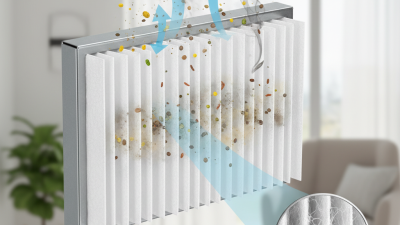
The HEPA filter industry supports cleaner air in hospitals, laboratories, factories, offices, and homes. These filters capture very small airborne particles through dense fiber layers. They rely on interception, diffusion, and inertial impaction, not simple sieving. A well-made HEPA filter can reduce dust, pollen, smoke particles, and many aerosol contaminants.
For global buyers, manufacturer selection involves more than comparing prices. Reliable producers should provide tested efficiency data, pressure-drop readings, material details, and traceable quality records. Common evaluation frameworks include EN 1822 and ISO 29463. Buyers should also inspect gasket quality, frame strength, separator design, and leak-testing procedures. Small gaps can reduce real-world performance.
Airflow matters as much as filtration efficiency. A filter that is too restrictive may increase energy use and shorten equipment life. Practical testing should include the intended fan speed, room size, humidity, and replacement schedule. I have found that catalog figures can look impressive, yet installation conditions may change results. No filter works perfectly when it is damaged, poorly sealed, or overdue for replacement. This is where careful communication with an experienced manufacturer becomes essential.
Leading China HEPA Filter Manufacturers and Their Product Capabilities
China’s HEPA filter manufacturers now serve hospitals, laboratories, electronics plants, and cleanroom projects worldwide. MarketsandMarkets estimated the global HEPA filters market at about USD 3.5 billion in 2023. It also projects growth to roughly USD 5.1 billion by 2028. This demand is pushing factories to expand production and testing capabilities.
Leading suppliers commonly produce mini-pleat, deep-pleat, V-bank, box, and gel-seal filters. Some also build fan filter units and custom housings. Strong manufacturers use glass-fiber media, automated pleating, controlled adhesive application, and laser or aerosol leak scanning. Buyers should check testing against EN 1822 or ISO 29463. A rated efficiency of 99.97% at 0.3 microns is widely recognized, but performance depends on airflow, pressure drop, and installation. Catalog figures alone are not enough. I would not trust them blindly.
Tips:
Request the latest efficiency, resistance, and leak-test reports. Confirm the test aerosol, airflow volume, and sample size. Ask for batch traceability and production photographs. A lower quotation may reflect thinner frames, weaker seals, or limited inspection. That difference becomes visible when filters load quickly. Some specifications remain unclear. Clarify them before payment. Also compare replacement dimensions, gasket materials, fire ratings, and delivery capacity. The best supplier is not always the cheapest; it is the one that can repeat stable performance across large orders.
Key HEPA Filter Standards, Certifications, and Quality Indicators
For global buyers, HEPA performance begins with the test method, not a marketing label. The U.S. EPA states that true HEPA filters capture at least 99.97% of particles measuring 0.3 micrometers. This size is difficult to capture. It is not the smallest particle. Under EN 1822, H13 filters achieve at least 99.95% efficiency at the most penetrating particle size, while H14 reaches 99.995%. Buyers should confirm whether results are rated locally or individually.
Standards matter. ISO 29463 aligns international HEPA and ULPA classification with MPPS testing. EN 1822 also requires efficiency and leak evaluation for high-efficiency filters. Ask for the complete test report, laboratory accreditation, airflow rate, pressure drop, and filter grade. A certificate alone is not proof. The frame gasket, sealant, pleat spacing, and separator quality can determine real-world performance.
Look for factory-level indicators. These include 100% leak scanning, batch traceability, calibrated instruments, and documented media integrity checks. EPA guidance also links cleaner performance with CADR and room size, not efficiency alone. Higher filtration can increase resistance. That may reduce airflow and raise energy use. This trade-off is often overlooked. A practical specification should state final pressure drop, operating airflow, service life, and replacement conditions. Some procurement documents remain too vague, and that weakness deserves review before shipment.
How Global Buyers Should Evaluate Chinese HEPA Filter Suppliers
Global buyers should evaluate Chinese HEPA filter suppliers through evidence, not catalog claims.
In factory audits, I have found that small details reveal process control. Ask for current test reports, filter class, rated airflow, pressure drop, and scan-test results.
Confirm whether testing follows EN 1822 or ISO 29463. Standards are not interchangeable in every project. Request the original laboratory scope and report number.
A certificate without traceable data is weak evidence.
Inspect samples before approving a large order.
Check frame joints, gasket compression, media pleats, labels, and protective packaging. Measure dimensions and airflow independently when possible. Compare pressure drop at the stated face velocity.
A low-cost filter may perform poorly when test conditions change.
Ask how rejected units are isolated and recorded. Lot numbers, inspection photos, and calibration records support reliable traceability.
Speak with the technical team, not only sales staff.
Supplier evaluation should also cover production capacity, lead times, export documents, and after-sales response.
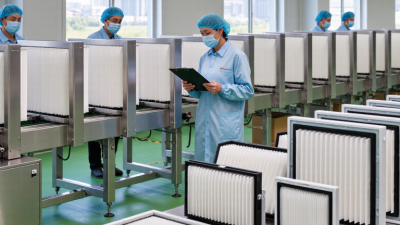
Visit the plant or use an independent auditor. Verify raw-material sources and batch consistency. Do not rely on one successful sample. Repeat testing across several lots.
No checklist is perfect.
I once treated clean packaging as a quality signal, then learned it proved little about leakage control. Build acceptance criteria into the purchase contract, including sampling levels and remedies.
A dependable supplier welcomes measurable scrutiny, even when questions expose weaknesses.
International Purchasing, Customization, Logistics, and After-Sales Support
China Top HEPA Filter Manufacturers for Global Buyers
International Purchasing, Customization, Logistics, and After-Sales Support
Global demand is expanding as indoor air quality receives closer attention. Grand View Research estimates the HEPA filter market reached about US$3.1 billion in 2023. It projects approximately US$5.1 billion by 2030. The U.S. EPA technical guidance notes that true HEPA filtration can remove 99.97% of particles at 0.3 microns. Buyers should verify test conditions, not trust marketing claims alone.
International purchasing requires more than comparing unit prices. Experienced manufacturers can provide ISO 29463 or EN 1822 test documentation, airflow data, pressure-drop curves, and material traceability. Customization may include dimensions, gasket materials, separators, frame depth, and packaging. Small details matter. A slightly incorrect frame size can delay installation and increase labor costs. Communication remains a practical concern, especially when drawings, tolerances, and inspection standards cross languages.
Reliable logistics planning includes moisture-resistant cartons, pallet measurements, export documents, and shipment tracking. Buyers should confirm whether filters need shock indicators or special storage instructions. After-sales support should cover installation guidance, replacement schedules, failure analysis, and response times. A recurring weakness is vague warranty language. That gap is real. Factory audits, sample testing, and third-party inspection can reduce uncertainty, although they cannot remove every risk.♀♀♀♀♀♀