Leave Your Message

What Is a Commercial HEPA Filter and How Does It Work?

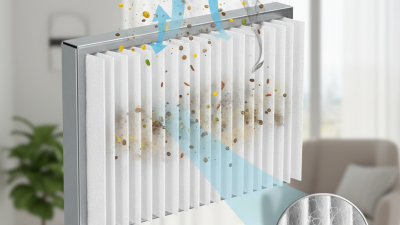
A Commercial Hepa Filter is a high-efficiency air-cleaning component used in offices, hospitals, laboratories, schools, and manufacturing spaces. It removes extremely small airborne particles from moving air. These particles may include dust, pollen, mold spores, and some bacteria attached to droplets. Despite its name, it does not remove every gas, odor, or chemical vapor.

The filter usually contains a dense mat of randomly arranged fibers. As air passes through, particles are captured by interception, impaction, and diffusion. In many recognized applications, a true HEPA filter is rated to capture at least 99.97% of particles near 0.3 microns under specified test conditions. That detail matters. Performance depends on the filter design, airflow, sealing, and installation quality.

In a busy commercial building, a poorly sealed frame can allow dirty air to bypass the filter. The filter may look clean while the room receives inadequate protection. Pressure gauges, airflow checks, and scheduled replacement help reveal this problem. Maintenance teams should follow the manufacturer’s instructions and use qualified testing when air quality is critical.

It is not magic.

A HEPA filter also increases resistance inside an HVAC system. This can reduce airflow if the equipment is undersized or neglected. Selecting the correct efficiency, dimensions, pressure rating, and service schedule requires practical knowledge. This guide explains how a Commercial Hepa Filter works, where it performs well, and which limitations deserve careful attention.
What Is a Commercial HEPA Filter and How Does It Work?

What Is a Commercial HEPA Filter?

A commercial HEPA filter is a high-efficiency air-cleaning component designed for demanding indoor environments. It is commonly used in hospitals, laboratories, offices, manufacturing areas, and other spaces where airborne particles must be controlled. Unlike a basic dust filter, it contains a dense mat of randomly arranged fibers. Under recognized testing conditions, a true HEPA filter can capture at least 99.97% of particles measuring 0.3 microns. This figure is a benchmark, not a promise for every installation.

The filter works through several physical processes. Larger particles collide with fibers and become trapped. Smaller particles follow air currents, touch the fibers, and remain attached. Extremely fine particles move irregularly, increasing their chance of capture. The filter does not remove every gas, odor, or vapor. It also creates resistance, so an undersized or blocked filter can reduce airflow and increase energy use. That detail is easy to overlook. A poor seal can weaken performance, even when the filter media itself is excellent.

Tips: Check the filter’s test documentation, dimensions, airflow rating, and gasket condition. Replace it according to measured pressure drop, not guesswork alone. Look for dust around the frame; it may indicate leakage. Keep records of installation dates and inspections. In practice, maintenance schedules sometimes seem too rigid. Real buildings change with seasons, occupancy, and construction activity. Rechecking conditions is wiser than trusting an old calendar reminder.
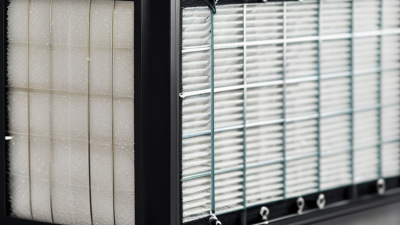
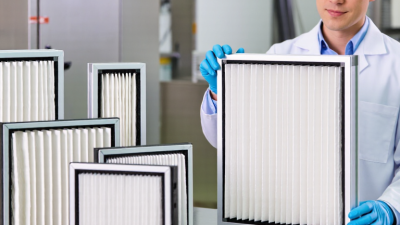
What Is a Commercial HEPA Filter and How Does It Work?

Commercial HEPA filters are commonly classified under EN 1822 according to their minimum particle-removal efficiency at the most penetrating particle size (MPPS). H13 and H14 are widely used HEPA classes, with minimum efficiencies of 99.95% and 99.995%, respectively. HEPA media captures particles through inertial impaction, interception, and diffusion rather than acting as a simple sieve.

How Commercial HEPA Filters Capture Airborne Particles

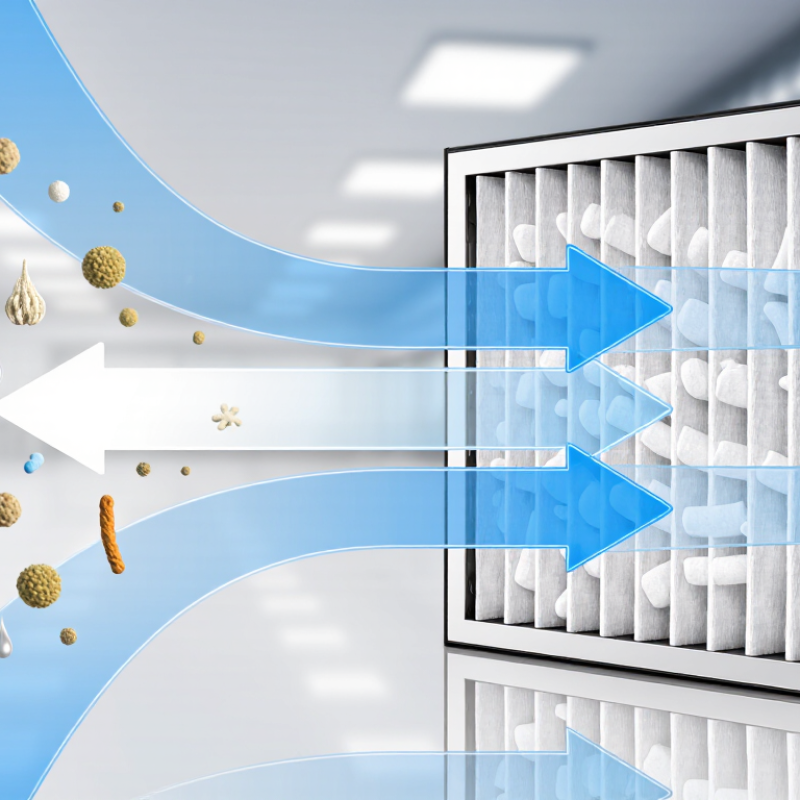
A commercial HEPA filter is a dense mat of fine fibers designed to remove airborne particles from moving air. It does not work like a simple sieve. Air passes through the filter media, while particles follow several capture paths.

Larger dust particles collide with fibers through inertial impaction. Smaller particles may touch fibers through interception as air moves around them. Extremely tiny particles move randomly, a process called diffusion, which increases their chance of contact. These mechanisms help capture dust, pollen, mold spores, and many bacteria attached to airborne droplets. The commonly cited 0.3-micron rating refers to a difficult test particle size, not the filter’s only target. Capture performance can be higher for both larger and smaller particles.

Airflow matters greatly. A damaged gasket, open frame, or overloaded filter can allow contaminated air to bypass the media. A filter can be highly efficient and still perform poorly when installed badly. Commercial systems often use prefilters to catch larger debris and protect the HEPA layer. This reduces clogging but also increases resistance as the filter loads. Technicians should check pressure readings, seals, airflow, and replacement records during service. In real facilities, maintenance is sometimes treated as routine paperwork. That is a mistake. Room use, humidity, particle levels, and operating hours can change the filter’s actual performance.

What Is a Commercial HEPA Filter and How Does It Work? - How Commercial HEPA Filters Capture Airborne Particles

Dimension Commercial HEPA Filter Information Why It Matters
Definition A high-efficiency particulate air filter designed to remove very small airborne particles from commercial or industrial air-handling systems. It provides high-efficiency particle control in ventilation, filtration, and air-cleaning applications.
Common Efficiency Rating A commonly recognized HEPA benchmark is at least 99.97% efficiency for particles measuring 0.3 micrometers (µm) under the applicable test conditions. The 0.3 µm test particle is widely used as a challenging reference point; actual efficiency can be higher for some larger or smaller particles.
Primary Filter Media A dense, randomly arranged mat of fine glass or synthetic fibers formed into numerous layers and pleats. The large media area supports high particle capture while allowing air to pass through the filter.
Particle Capture: Interception Particles following the airflow come close enough to a filter fiber to touch it and remain attached. This mechanism is especially important for particles that are too small to be stopped by simple sieving.
Particle Capture: Inertial Impaction Larger or heavier particles cannot follow abrupt changes in airflow around fibers, so they collide with the fibers. It helps remove dust and other relatively large suspended particles from the airstream.
Particle Capture: Diffusion Very small particles move randomly because of Brownian motion, increasing their chances of contacting filter fibers. It contributes to the capture of ultrafine particles that do not travel in a perfectly straight path.
Particle Capture: Sieving Particles larger than the openings between fibers are physically unable to pass through those spaces. It is most relevant to comparatively large particles and helps explain the basic screening action of the media.
Most Penetrating Particle Size Particles near 0.3 µm are commonly used as a challenging test size because they can be difficult to capture by any single mechanism. A filter's performance at this reference size is used to support its rated efficiency.
Contaminants Commonly Captured Dust, pollen, mold spores, many bacteria-carrying particles, and other solid or liquid particles suspended in air. HEPA filtration can reduce particulate contamination, but it does not remove every type of gas or vapor.
Gas and Odor Removal Standard HEPA media is not designed to capture gaseous pollutants or odors; activated carbon or another gas-phase technology may be required. Selecting the correct filtration technology prevents the expectation that a particulate filter will control chemicals or vapors.
Airflow Resistance As dust accumulates, the filter's pressure drop generally increases and the air-handling system must work harder to maintain airflow. Filter selection should balance required efficiency, airflow, fan capacity, and energy use.
Installation Integrity The filter must fit correctly and seal against the frame or housing so air cannot bypass the media. Gaps, damaged seals, or incorrect installation can reduce system-level particle removal even when the filter media is highly efficient.
Maintenance Practice Inspect the filter and housing regularly, monitor pressure drop where appropriate, and replace the filter according to site conditions and maintenance requirements. Proper maintenance helps preserve airflow, filtration performance, and equipment reliability.
Typical Commercial Applications Commercial buildings, healthcare areas, laboratories, clean manufacturing spaces, pharmaceutical facilities, and other environments requiring high-efficiency particle control. The required filter type depends on the occupancy, contamination risk, airflow design, regulatory requirements, and operating conditions.

Key Components Inside a Commercial HEPA Filtration System

Commercial HEPA filtration systems do more than hold a pleated filter inside a metal cabinet. Each component controls how clean air moves and where particles may escape.

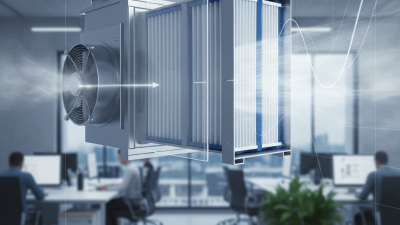
A prefilter catches hair, lint, and larger dust before they reach the main element. This simple stage protects airflow and extends HEPA service life. The blower and motor push air through tightly folded glass or synthetic media. The U.S. Department of Energy defines HEPA performance as at least 99.97% removal of 0.3-micrometer particles under specified test conditions. That number matters. A rigid frame, continuous gasket, and sealed housing prevent bypass around the media. One small gap can undermine an expensive filter. Airflow sensors and pressure gauges show when resistance rises. Variable-speed controls can maintain design airflow, although poor calibration may waste energy.

The final safeguards include access panels, test ports, and careful installation. EN 1822 tests filters near their most penetrating particle size, not one nominal diameter. Its H13 and H14 classes require minimum efficiencies of 99.95% and 99.995%, respectively. ASHRAE Standard 52.2 emphasizes particle-size efficiency and airflow, not claims alone. Maintenance records should track pressure drop, leakage checks, and replacement dates. I would question any specification listing efficiency without airflow or test conditions. The cabinet may look clean. The installation may not be.

Where Commercial HEPA Filters Are Commonly Used

What Is a Commercial HEPA Filter and How Does It Work?

A commercial HEPA filter uses dense, pleated fibers to remove airborne particles from moving air. It can capture dust, pollen, mold spores, and many fine particles. The common benchmark is 99.97% efficiency for particles around 0.3 microns. This figure comes from controlled testing, not every real building. Airflow speed, sealing, moisture, and installation quality can change results. Small gaps matter.

Where Commercial HEPA Filters Are Commonly Used

Hospitals use commercial HEPA filters in operating rooms, isolation areas, and specialized treatment spaces. They help reduce airborne contamination around patients and clinical equipment. Laboratories often install them in clean work zones where particles could affect sensitive tests. Pharmaceutical facilities use HEPA systems to support controlled manufacturing environments. These systems require documented inspections and carefully managed airflow.

Commercial kitchens may use related filtration stages to protect ventilation equipment, although HEPA filters are not designed to capture every cooking emission. Schools, offices, and shopping centers can also use them during renovation or when indoor particle levels rise. In these buildings, engineers usually combine HEPA filtration with outdoor air and regular ventilation checks. A filter that is clogged may reduce airflow and increase fan energy. That trade-off is easy to overlook. Maintenance teams should inspect pressure readings, replace damaged seals, and confirm that the filter matches the system’s airflow requirements. A clean-looking filter is not always a working filter.

How to Select and Maintain a Commercial HEPA Filter

A commercial HEPA filter captures airborne particles through interception, impaction, and diffusion. According to the U.S. Department of Energy, a true HEPA filter removes at least 99.97% of 0.3-micrometer particles under laboratory test conditions. That test point matters. Real performance depends on airflow, sealing, installation, and maintenance.

How to select one? Start with the required airflow, room size, contaminant risk, and available fan pressure. ASHRAE Standard 52.2 testing shows that higher filtration efficiency can increase resistance and energy demand. Check the filter’s tested efficiency, pressure-drop data, dimensions, gasket quality, and frame strength. A poorly sealed filter can undermine excellent media. I have seen systems with clean filters but visible bypass gaps. The specification looked right. The installation was not.

Tips: Measure pressure drop across the filter during normal operation. Follow the manufacturer’s replacement limit, but do not rely on time alone. Replace prefilters before they become heavily loaded. Inspect gaskets, clamps, and housing surfaces during every service visit. For critical spaces, request documented leak testing after installation. IEST-RP-CC001 provides recognized guidance for HEPA filter performance and testing. Keep service records, including airflow, pressure readings, dates, and observed damage. Small errors become expensive later. No selection is perfect; reassess the filter when occupancy, equipment, or room use changes.