Leave Your Message

China Top Spray Booth Floor Filter Manufacturers?

Choosing among China’s top Spray Booth Floor Filter manufacturers requires more than comparing prices. The right filter must capture overspray while allowing steady airflow through the booth floor. That balance affects finish quality, filter life, and maintenance routines.

A useful buyer’s rule is simple: “Check airflow performance and dust-holding capacity together, not separately.” — [Insert a verified industry expert’s name and approved quotation.] A named quotation should be confirmed with its source before publication; inventing an attribution would weaken trust. In practice, ask manufacturers for technical data, consistent test conditions, and clear guidance on filter replacement.

Details matter. A filter that looks uniform on a sample sheet may behave differently when fitted across a full floor. Check its dimensions, fiber structure, pressure-drop data, and compatibility with your booth’s airflow design. Ask how the supplier controls batch consistency. Request a sample, then inspect its fit and handling.

This guide explores China-based manufacturers through practical criteria, including product specifications, production capability, customization, and export support. Not every supplier publishes the same level of evidence. That makes careful comparison essential. Use the shortlist as a starting point, and verify claims directly before choosing a supplier.
China Top Spray Booth Floor Filter Manufacturers?

Spray Booth Floor Filters: Purpose and Operating Principles

Spray Booth Floor Filters: Purpose and Operating Principles

In a downdraft spray booth, floor filters sit beneath the grated work area. They capture paint droplets and dry overspray carried downward by the airflow. This helps reduce residue in exhaust ducts and fans. Air moves downward. These filters do not remove solvent vapors, which require separate ventilation or vapor-control measures.

As air passes through the filter media, droplets collide with fibers or become trapped within layered passages. Over time, paint builds up and restricts airflow. A rising pressure drop can indicate loading, though readings should be checked against the booth and filter specifications. The filter’s purpose is particle capture, not to correct poor spray technique or uneven booth airflow. Real conditions vary.

Tips: Check the pressure gauge and inspect the filter during routine booth checks. Replace it according to the specified limit, not just its appearance. A surface can look clean while the inner layers are loaded. Conversely, replacing filters too early wastes usable media.
Spray Booth Floor Filters: Purpose and Operating Principles

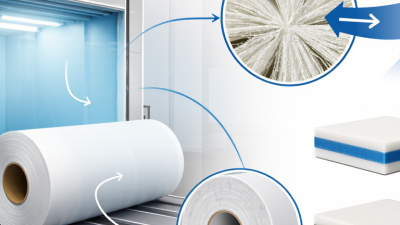
Floor filters capture paint overspray as booth air passes through porous media. This chart illustrates the idealized Darcy-law relationship between airflow velocity and pressure drop for the same clean filter: at constant media properties, pressure drop rises in proportion to velocity. Actual filters may behave differently as they load with paint or operate outside this idealized model.

Common Filter Materials and Floor Filter Designs

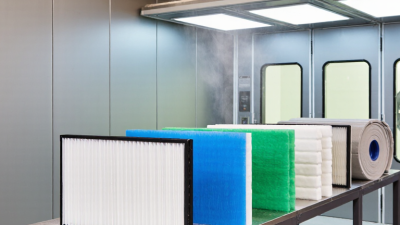
Spray booth floor filters commonly use fiberglass, polyester, or blended synthetic media. Fiberglass layers capture overspray as air passes through, while polyester options can offer a more consistent structure and handling. Actual performance depends on thickness, fiber arrangement, airflow, and paint loading, not material name alone. Details matter.

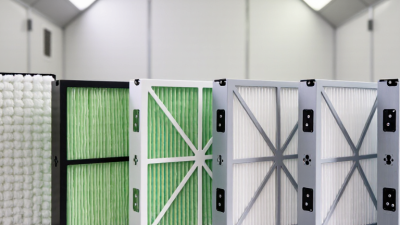
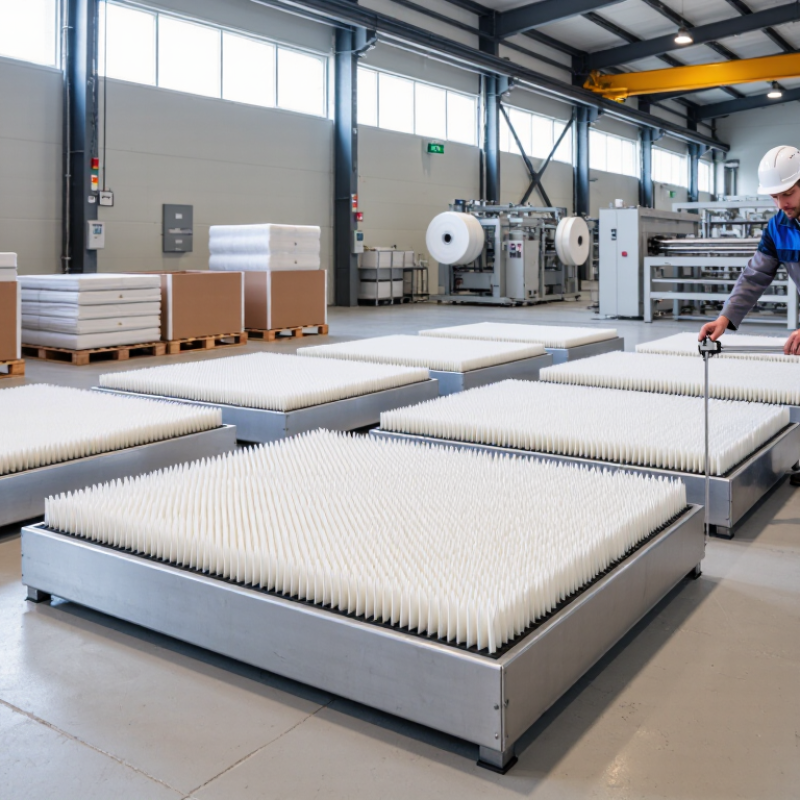
Floor filter designs include roll media cut to fit a booth, precut pads, and layered configurations. Rolls suit long floor trenches and reduce some edge gaps, but careful cutting is needed. Pads are easier to replace; however, poorly matched sizes can shift under airflow. Some designs use graduated layers to collect larger droplets near the surface and finer particles deeper inside.

Fit matters as much as fiber choice. A filter that bows or leaves open seams may allow air to bypass the media. Check the floor grid, filter depth, and recommended airflow before selecting a replacement. During service, inspect for uneven paint buildup and monitor pressure changes if the booth has a gauge. It is easy to focus on material alone; that can be a mistake. Real booth conditions may differ from a tidy specification sheet.

China’s Spray Booth Floor Filter Manufacturing Landscape

China’s spray booth floor filter manufacturing landscape includes specialist filter makers, nonwoven material converters, and suppliers producing complete floor-filter assemblies. Many factories offer fiberglass media, polyester blends, or layered materials designed to capture paint overspray while maintaining airflow. Product quality depends on more than the media itself. Fiber consistency, thickness, edge sealing, and fit beneath the booth grating all matter.

Details matter. Buyers should compare stated airflow resistance, dust-holding capacity, and filtration performance under similar test conditions. Ask for sample rolls or cut sheets, then check whether the material sheds fibers or compresses during handling. A filter that looks dense may restrict airflow sooner than expected. That trade-off is easy to overlook.

Manufacturing capabilities and inspection routines can vary between suppliers, even when product descriptions sound similar. Request dimensional tolerances, batch records, and clear packaging specifications, especially for long-distance shipments. Some listings leave performance terms vague; that deserves a closer question, not an assumption. Floor layout, paint load, and replacement frequency also affect which filter construction is suitable. A careful comparison starts with the booth’s actual operating conditions.

How to Evaluate Chinese Floor Filter Manufacturers

When evaluating Chinese spray booth floor filter manufacturers, start with your booth’s actual operating conditions. Record filter dimensions, airflow, paint load, and replacement schedule. Ask for capture efficiency and pressure-drop data at a clearly stated airflow. Compare figures measured under the same test conditions. “High efficiency” alone is too vague. Details matter.

Check how the factory controls fiber composition, thickness, density, and batch consistency. Request samples from regular production, then inspect cut edges, loose fibers, and fit. If possible, measure pressure drop before and after dust loading. Ask how often production batches are tested and whether lots can be traced. A video tour is useful, but it does not replace test records or physical samples.

Review communication as carefully as product data. Can the supplier confirm dimensions, explain material options, and flag mismatches before production? Get lead time, minimum order quantity, packaging details, and replacement recommendations in writing. I would avoid judging a supplier by a polished catalog alone; I have to admit that price is still tempting. Compare operating life and change frequency, not just the quoted cost per filter.

Applications, Installation, and Filter Replacement Considerations

China Top Spray Booth Floor Filter Manufacturers?
Applications, Installation, and Filter Replacement Considerations

Floor filters collect paint overspray as air moves through a downdraft spray booth. They are commonly used in automotive refinishing, furniture finishing, and industrial coating areas. The right filter depends on airflow, floor-grid dimensions, coating type, and expected overspray load. A mismatch can restrict airflow or allow paint residue to pass through. Small details matter.

Before installation, check the airflow direction marked on the filter and align it with the booth’s design. Lay each panel flat on a clean, stable support grid, with edges meeting closely. Gaps can let unfiltered air bypass the media. Avoid compressing the filter to force a fit; it may deform and perform unevenly. Verify that the panels remain secure during operation.

Replace filters when airflow drops, pressure readings reach the booth’s service limit, or visible loading becomes heavy. A fixed calendar can help with planning, but it should not replace inspection. Coating volume and work schedules vary. Record installation dates and pressure readings to spot changes over time. Handle used filters carefully, following the site’s waste procedures. A little uncertainty remains: visual checks alone cannot show the full condition of the media.