Why Choose a Commercial HEPA Filter for Your Business?
Indoor air quality directly affects comfort, productivity, and workplace confidence. The U.S. Environmental Protection Agency reports that indoor pollutant levels can be two to five times higher than outdoor levels. In some buildings, concentrations may be even greater. Dust, fine particles, and airborne biological contaminants can accumulate around desks, reception areas, and production zones. A Commercial Hepa Filter can help capture particles as small as 0.3 microns with high efficiency when correctly designed and maintained.
The details matter. The U.S. Department of Energy describes HEPA filtration as capable of removing at least 99.97% of particles measuring 0.3 microns under laboratory conditions. That figure supports careful purchasing, but it is not a promise for every installed system. Real performance depends on airflow, filter sealing, fan capacity, and replacement schedules. ASHRAE guidance also recommends using the highest compatible filtration level without reducing essential ventilation. Bigger is not always better.
Maintenance remains the overlooked part. A loaded filter can restrict airflow and increase energy demand. Staff may notice a louder fan, rising room temperatures, or visible dust near vents. These clues deserve attention. I would not present HEPA filtration as a complete indoor-air strategy. Ventilation, source control, humidity management, and professional testing still matter. The U.S. EPA and ASHRAE both emphasize a layered approach. For business owners, the strongest decision combines verified specifications, documented maintenance, and advice from qualified HVAC professionals. The investment becomes more defensible when performance is measured, not merely advertised.
A commercial HEPA filter is a high-efficiency air-cleaning component designed for demanding indoor environments. HEPA means High-Efficiency Particulate Air. Under standard test conditions, a true HEPA filter can capture at least 99.97% of particles measuring 0.3 microns. This includes many dust particles, pollen fragments, mold spores, and some airborne particles carried in droplets. The 0.3-micron size is difficult to capture, so it serves as a useful performance reference.
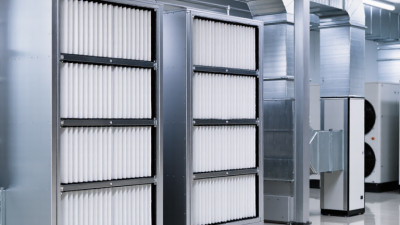
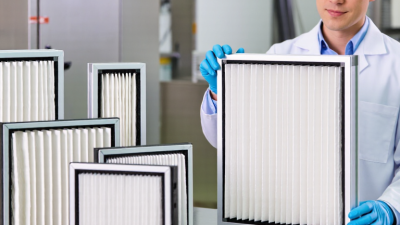
Commercial units usually contain tightly pleated filter media inside a rigid frame. A powerful fan pushes air through the folds, while gaskets help prevent air from bypassing the filter. They are built for offices, clinics, laboratories, schools, and production areas where airflow may continue for long hours. A prefilter often catches larger debris first. That simple step can extend HEPA filter life and reduce pressure on the fan.
HEPA does not remove every indoor pollutant. It cannot reliably capture gases, chemical vapors, or odors without additional treatment. That distinction matters. The word “HEPA” can sound like a complete solution, but that assumption is incomplete. Correct sizing depends on room volume, airflow rate, occupancy, and fan capacity. I would also check the seal, maintenance access, and replacement schedule before choosing a system. A filter that performs well in a test room may disappoint when installed poorly. Small leaks matter. Personally, I would rather see measured airflow and documented testing than rely on impressive wording.
Why Choose a Commercial HEPA Filter for Your Business?
Commercial HEPA filters capture airborne contaminants through dense layers of fine fibers. Air passes through the filter, while particles collide with fibers and become trapped. Certified HEPA filters typically remove at least 99.97% of particles measuring 0.3 microns under test conditions. This includes many dust particles, pollen fragments, mold spores, and some airborne microorganisms attached to larger particles. The smallest particles are not always the easiest to capture, despite common assumptions. Diffusion and interception help trap them as air moves through the filter.
In a busy workplace, cleaner air can support more consistent indoor conditions. Offices, clinics, laboratories, and production areas may face different contamination risks. A properly selected commercial unit should match room size, airflow demand, and operating hours. Filter loading matters too. As dust builds up, airflow can weaken and energy use may increase. HEPA filtration does not remove every gas, odor, or vapor. That limitation deserves attention. I have seen systems perform poorly when maintenance schedules looked correct on paper but were ignored in practice.
Tips: Check the filter’s efficiency rating and airflow requirements before installation. Inspect seals around the filter, because bypassed air defeats careful filtration. Replace loaded filters according to measured pressure or professional guidance. Record inspection dates and unusual odors. Small records can reveal larger problems. Pair HEPA filtration with ventilation and source control when appropriate. No filter can repair every indoor-air mistake.
How commercial HEPA filters capture airborne contaminants at their most penetrating particle size.
Commercial HEPA filters are tested at particle sizes where penetration is typically highest. U.S. HEPA performance is commonly stated as at least 99.97% efficiency at 0.3 micrometers, while EN 1822 H13 and H14 filters are rated at 99.95% and 99.995% efficiency respectively at their most penetrating particle size. Test methods and rating conditions vary by standard.
Why Choose a Commercial HEPA Filter for Your Business?
Key Business Benefits of Using Commercial HEPA Filtration
Commercial HEPA filtration can support cleaner air in offices, clinics, workshops, and customer-facing spaces. Properly tested HEPA filters can capture at least 99.97% of particles around 0.3 microns. This includes many fine dust particles, pollen, and airborne contaminants. Cleaner air may reduce visible dust on desks, shelves, and equipment. It can also create a more comfortable environment for employees and visitors. That matters.
Businesses may benefit from fewer cleaning interruptions and better protection for sensitive equipment. In a workshop, effective filtration can help limit fine particles near workstations. In an office, it may reduce the dusty smell that collects around carpet and ventilation grilles. Facility managers can also use filter records, airflow readings, and replacement dates to support maintenance decisions. These details build confidence during inspections and internal reviews.
However, HEPA performance depends on the whole system, not the filter alone. Poor sealing, clogged media, or weak airflow can reduce real-world results. A practical assessment should check room size, air-change needs, pressure drop, and noise levels. Maintenance costs are easy to underestimate. A cheaper unit may demand frequent replacement or consume more energy. The right choice should follow measured conditions and professional guidance, not marketing claims. A filter is not magic. It needs regular attention, and some buildings may require adjustments after installation.
| Business Consideration | Commercial HEPA Filtration Information | Business Benefit | Implementation Notes |
|---|---|---|---|
| Particle-removal performance | True HEPA filters are generally rated to remove at least 99.97% of particles measuring 0.3 micrometres (µm), the commonly cited most-penetrating particle size for many HEPA filter tests. | Helps reduce airborne dust, fine particulate matter, pollen, mould spores and many other particles in occupied areas. | Confirm the filter’s test standard, efficiency rating and rated airflow before purchase. |
| Indoor air quality | Mechanical HEPA filtration captures particles from recirculated air but does not remove carbon dioxide or most gaseous pollutants. | Supports a cleaner indoor environment and can complement ventilation and source-control measures. | Use with adequate outdoor-air ventilation; add activated carbon only when gas or odour control is required. |
| Employee and visitor comfort | Lower airborne particle concentrations may help reduce visible dust and improve perceived air cleanliness, although results depend on room size, airflow and occupancy. | Can contribute to a more comfortable workplace, retail area, classroom, clinic or hospitality setting. | Position portable units so clean air is distributed across the occupied zone without creating drafts. |
| Infection-control support | HEPA filtration can remove airborne particles that may carry biological material, but it is not a standalone guarantee against infection transmission. | Adds an engineering control to a broader risk-reduction strategy. | Combine filtration with ventilation, occupancy management, cleaning procedures and applicable public-health guidance. |
| Air-cleaning capacity | Performance is influenced by clean air delivery rate (CADR), airflow, filter efficiency and room volume. Effective air changes per hour can be estimated from CADR and room volume. | Makes it possible to size equipment according to the actual space rather than relying on filter efficiency alone. | Use the manufacturer’s rated CADR or airflow and calculate the required capacity for each room. |
| Compatibility with HVAC systems | High-efficiency filters create greater airflow resistance than lower-efficiency filters, especially as the filter loads with particles. | Allows businesses to improve filtration while maintaining system reliability when the equipment is correctly specified. | Check fan capacity, available pressure, filter dimensions, seals and the HVAC manufacturer’s approved specifications. |
| Operational cost | Total cost includes purchase, energy use, replacement filters, labour and inspection. Energy consumption may increase if system pressure drop rises. | Supports more accurate budgeting and lifecycle-cost planning. | Compare total cost of ownership, not only the initial filter price. |
| Maintenance requirements | Filters require inspection and replacement when loaded, damaged or beyond the site’s approved service interval. | A documented maintenance programme helps preserve airflow, filtration performance and equipment efficiency. | Monitor pressure drop where possible and follow the manufacturer’s replacement instructions; do not wash disposable HEPA media. |
| Verification and compliance | Commercial filters may be classified and tested under recognised standards such as EN 1822 or ISO 29463, depending on the product and market. | Provides clearer performance documentation for procurement, facility management and regulated applications. | Request current test documentation, installation records and leak-test requirements where applicable. |
| Best-fit applications | Common commercial uses include healthcare areas, laboratories, cleanrooms, offices, schools, hospitality venues, retail spaces and production environments where fine-particle control is important. | Offers a scalable filtration option for different risk profiles and occupancy patterns. | Select the filter type, airflow rate and installation method based on the room’s purpose and required level of control. |
Note: Actual results vary according to room size, airflow, occupancy, installation quality, filter loading and maintenance practices. HEPA filtration should be used as part of a complete indoor-air-quality strategy.
Choosing a commercial HEPA filter starts with the room, not the product label. The U.S. EPA reports that true HEPA filters capture at least 99.97% of particles at 0.3 microns. However, performance depends on airflow, sealing, and maintenance. A filter that fits poorly can leak around its frame. That matters in clinics, laboratories, workshops, and crowded offices.
Check the required clean-air delivery rate, pressure drop, and replacement schedule. ASHRAE Standard 52.2 measures filter efficiency through MERV ratings, but a higher rating may increase fan energy use. Review your air-handling unit’s capacity before upgrading. Measure the filter rack carefully. A few millimeters can create bypass leakage. Also ask whether your facility needs particle control, odor removal, or both. HEPA media does not remove every gas or vapor. That distinction is easy to overlook.
Tips: Map airflow with a simple smoke pencil or airflow hood. Compare the room’s target air changes with actual fan output. Inspect gaskets during every service visit. Keep written pressure readings. If pressure rises quickly, investigate dust sources before changing filters blindly. A clean filter is not always a sufficient control. In my experience, the best specification can fail in a dusty loading area. That is an uncomfortable limitation, but it should shape the final decision. EPA guidance and ASHRAE recommendations should support, not replace, a site-specific assessment.
A commercial HEPA filter can improve indoor air quality by capturing very small airborne particles. In busy offices, clinics, workshops, and retail spaces, cleaner air supports comfort and reduces dust-related complaints. However, performance depends on correct installation, not just the filter’s efficiency rating. Select a filter that matches the air-handling unit, airflow volume, and available pressure capacity. An oversized or poorly sealed filter can cause bypass leakage. That defeats the purpose.
Installation should include a frame inspection, gasket check, and airflow measurement. Experienced technicians should verify that the filter sits evenly and that access panels close tightly. A useful commissioning record includes the filter size, installation date, pressure reading, and test results. Small details matter. I have seen clean filters perform poorly because air escaped around damaged seals. That mistake is easy to miss.
Tips: Replace filters according to pressure readings and site conditions, rather than relying only on a calendar. Check them more often during renovation, heavy traffic, or seasonal pollution. Keep spare filters sealed and stored in a dry area. During maintenance, protect nearby equipment from released dust and document every change. A rising pressure drop can signal loading, but it may also indicate an airflow problem upstream. Do not replace a filter automatically. Investigate the system. Performance testing should be repeated after servicing, although many facilities overlook this step.