Leave Your Message

What Are the Top 10 Spray Booth Inlet Filters?

Spray Booth Inlet Filters protect the finish before paint reaches the part. They capture airborne dust and fibers entering through the booth’s makeup-air system. When the filter is poorly matched or unevenly loaded, clean air can become a source of defects. A fine strand near a panel edge may be small, but it can mean sanding, rework, and lost production time.

This guide compares ten common Spray Booth Inlet Filters by media type, efficiency, airflow, fit, and practical upkeep. It considers fiberglass pads, synthetic media, and layered options, while noting that results depend on booth design and operating conditions. A filter that performs well in one shop may restrict airflow in another. Check dimensions, pressure drop, replacement guidance, and the manufacturer’s technical data before choosing. Watch the filter face, too: dusty corners or uneven discoloration can reveal bypass or poor loading.

A verified quotation from a named spray-booth filtration expert was not provided, so this introduction does not invent one. The principle is still worth keeping in view: a filter must capture contaminants without disrupting the booth’s designed airflow. Not glamorous. But important. The rankings that follow offer a practical starting point, not a substitute for testing filters in the actual booth.
What Are the Top 10 Spray Booth Inlet Filters?

What Spray Booth Inlet Filters Are and How They Work

What Are the Top 10 Spray Booth Inlet Filters?

What Spray Booth Inlet Filters Are and How They Work

Spray booth inlet filters clean incoming air before it enters the work area. They sit in a ceiling grid, wall plenum, or supply-air intake. Their job is to catch dust, lint, and other airborne particles that could settle on a wet finish. A visible fiber on a freshly coated panel can mean rework. Inlet filters are different from exhaust filters, which capture overspray leaving the booth.

That distinction matters.

Air moves through the filter media as fans draw it into the booth. Particles are trapped on fibers, while clean air spreads across the work zone. As dust builds up, airflow resistance rises; a pressure gauge can help operators spot this change.

ASHRAE Standard 52.2 rates general air filters by particle-size efficiency. Its published MERV 13 criteria require at least 50% efficiency for 0.3–1 micrometer particles, 85% for 1–3 micrometers, and 90% for 3–10 micrometers. These figures offer a useful comparison, not a guarantee of spray-booth performance. Booth design, filter fit, and airflow also matter.

A filter that looks clean may still be poorly seated. I would verify fit and pressure readings rather than judge by appearance alone.
Key Features Used to Compare Inlet Filter Types

Comparing the top 10 spray booth inlet filter types starts with filtration efficiency, but that number alone can mislead. A fine, dense media may capture small particles while restricting airflow. Check the stated pressure drop and compare it with the booth’s operating requirements. Low resistance matters. So does consistent air delivery across the work area.

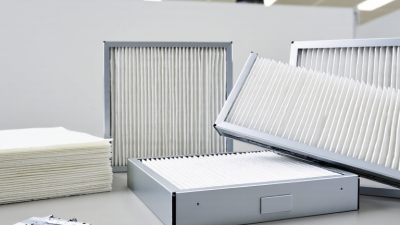
Dust-holding capacity affects how often filters need attention. A layered synthetic pad, for example, may retain particles through its depth, while a basic fiberglass panel can load unevenly. Look at media thickness, construction, moisture tolerance, and how securely the filter fits its frame. Gaps around the edges can let unfiltered air pass. Not ideal. Installation and replacement time also affect practical costs, especially in booths with large ceiling areas. Compare test conditions, not just headline efficiency figures, and confirm the data applies to the filter’s intended use. Real booth conditions vary. A filter that performs well on paper may need closer monitoring when dust levels, airflow, or maintenance routines differ. No single type wins everywhere. The choice deserves review after installation.

Ten Common Spray Booth Inlet Filters and Their Characteristics

What Are the Top 10 Spray Booth Inlet Filters?

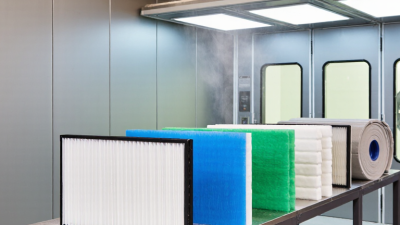
Spray booth inlet filters vary in structure, dust-holding capacity, and airflow resistance. Fiberglass roll media is inexpensive and easy to cut, but may load unevenly. Polyester pad filters are sturdier and often capture more airborne dust. Tackified media uses a sticky surface to hold particles. Progressive-density media has looser fibers upstream and finer fibers deeper inside, helping use more of its depth. Standard nonwoven synthetic media is lightweight and commonly used for general intake filtration.

Pleated panel filters offer more surface area than flat pads of similar size. Rigid-cell panel filters keep their shape under stronger airflow. Pocket filters use extended fabric bags to increase dust capacity, though they need enough room in the filter frame. Ceiling diffusion filters are designed for overhead supply systems, where even airflow across the booth matters. Reusable mesh filters can catch larger debris, but usually need a suitable finer stage behind them. Not perfect.

In practice, the right choice depends on booth design, incoming air quality, and the coating process. A filter’s efficiency rating alone can be misleading; airflow resistance and fit matter too. Gaps around a frame let unfiltered air bypass the media. Check the pressure gauge and inspect the filter face regularly. Replacement timing can vary, even in booths with similar workloads.

Top 10 Spray Booth Inlet Filters: A Practical Comparison

Compare common filter constructions by their typical particle capture, airflow, dust-holding capacity, and reusability.

How to read this chart: Scores are qualitative comparisons, not standardized test results. Actual performance depends on filter design, airflow, face velocity, and loading. HEPA filters are specialty options and may require system changes because of their higher resistance; washable mesh is mainly for coarse debris, not fine-particle capture.

Typical Uses of Different Inlet Filter Types

Fiberglass pads and coarse synthetic rolls suit booths drawing relatively clean outdoor air. Their open fibers catch larger dust while keeping resistance modest. They are practical for basic intake protection, but need frequent inspection in dusty locations. A gray surface is a warning, not a measurement. Replace media based on pressure drop and finish quality, rather than appearance alone.

Pleated panels and bag filters work better where incoming air carries more fine dust or filters must last longer. ASHRAE Standard 52.2 rates filters by particle size: MERV 8 media captures at least 70% of particles from 3 to 10 micrometers. MERV 13 captures at least 50% from 0.3 to 1 micrometer. These HVAC test figures are useful references, not guarantees of spray-booth performance. Finer media can raise resistance, so check fan capacity and airflow before upgrading.

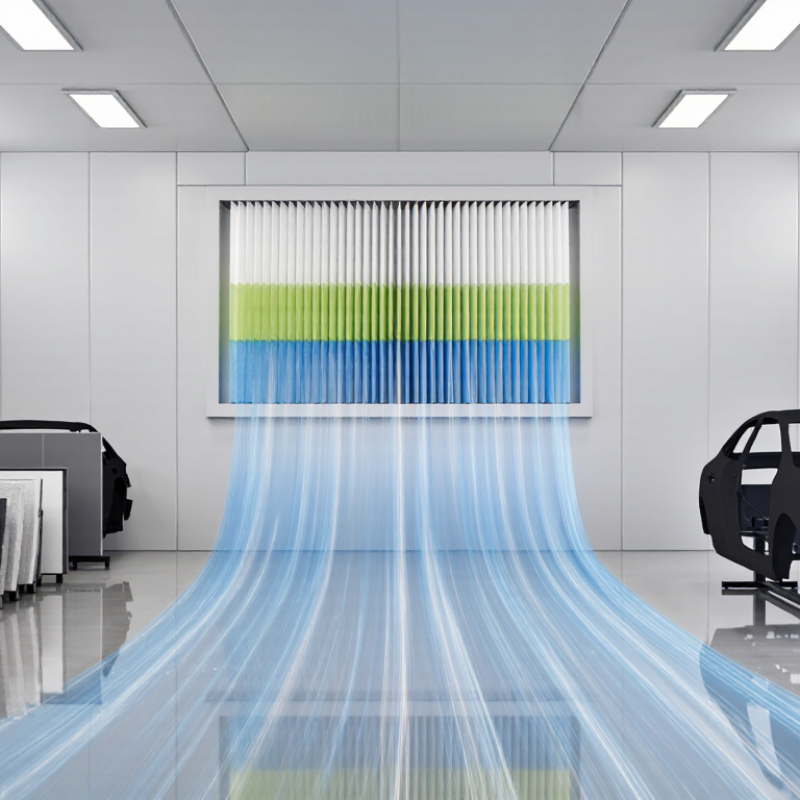
High-efficiency ceiling diffusion media is common in downdraft booths, where clean air must spread evenly over the work area. It helps limit visible dust settling on wet coatings. Pocket filters can suit larger systems with heavier dust loads, though their frames need proper sealing. Air bypass is easy to overlook. The right choice depends on booth design, local dust, and acceptable pressure drop; a filter that looks efficient on paper may still disturb airflow in practice.

How to Select and Maintain a Spray Booth Inlet Filter

Selecting a spray booth inlet filter starts with the booth, not a ranking. Fiberglass, polyester, synthetic, multi-layer, and pocket-style media suit different airflow needs. Check the required particle efficiency, filter dimensions, airflow rating, and pressure-drop limit in the booth documentation. A filter that traps more dust can still cause trouble if it restricts airflow.

Fit matters. Hold the filter against the frame and look for gaps, crushed edges, or loose corners. Even a small bypass can let dust settle on fresh coatings. In practice, operators often compare several media types, including progressive-density and tackified filters. The best choice depends on incoming air quality and the finish being applied. There is no universal winner.

Maintenance should follow pressure readings and visual checks, not a fixed calendar alone. Record the pressure drop after installing a clean filter, then inspect it as dust builds. Replace it when readings reach the equipment maker’s limit, or when the media is damaged or unevenly loaded. Keep replacement filters sealed and dry. Check the frame, too. I would not rely on color alone; some filters look usable while airflow is already restricted. Regular notes make patterns easier to spot, though busy shifts can make record-keeping imperfect.

What Are the Top 10 Spray Booth Inlet Filters? – How to Select and Maintain a Spray Booth Inlet Filter

These are common filter types and configurations, not a universal performance ranking. The correct choice depends on the booth design, airflow, required cleanliness, and filter-frame dimensions.

Filter Type Typical Construction Best-Suited Use Selection Considerations Maintenance Guidance
Flat synthetic panel filter Nonwoven synthetic fibers held in a cardboard or metal frame. General-purpose prefiltration in intake systems with a compatible panel-filter rack. Check the specified airflow capacity, dimensions, and initial pressure drop. A panel filter may provide less dust-holding capacity than a deeper filter. Inspect regularly for uneven loading, damage, or bypass around the frame. Replace when the booth or filter-system pressure limit is reached.
Pleated synthetic panel filter Folded synthetic media supported by a frame and separators. Applications needing more media area and dust-holding capacity than a flat panel can offer. Confirm pleat spacing and frame strength suit the airflow. Do not assume two filters with the same nominal size have the same resistance or capacity. Check that pleats have not collapsed or become damaged. Replace according to the pressure-drop limit or the booth manufacturer’s schedule.
Progressive-density polyester filter Layered polyester media with fibers arranged to capture particles through the depth of the material. Intake prefiltration where a depth-loading medium is specified. Verify the airflow direction and installation orientation if the media is designed for a particular direction. Confirm compatibility with the filter housing. Inspect for dust buildup, tears, and poor sealing. Replace rather than clean unless the product is specifically designed to be washable.
Fiberglass panel or roll media Coarse glass-fiber media supplied in a frame or cut-to-size roll. Coarse prefiltration in systems designed for fiberglass intake media. Use only where the booth design permits this media. Ensure the material is securely supported and cannot shed fibers into the airflow. Check for media displacement, tears, and loading. Follow safe handling instructions when removing used fiberglass media.
Ceiling diffusion filter Large-area synthetic or blended media installed in a booth ceiling or supply-air plenum. Downdraft or other booth designs that use ceiling media to filter and distribute incoming air. Use the grade and installation method specified for the booth. Correct fit is important to help prevent unfiltered air from bypassing the media. Inspect across the full ceiling area for discoloration, damage, or uneven loading. Replace the set as specified to maintain even airflow.
Pocket (bag) filter Multiple flexible filter pockets attached to a rigid header frame. Intake systems designed for deeper filters and greater dust-holding capacity than flat panels. Check pocket depth, header dimensions, airflow direction, and available housing space. Pockets need room to expand without obstruction. Inspect for torn seams, collapsed pockets, and bypass at the header. Replace when the specified final pressure drop is reached.
Rigid compact or mini-pleat filter Closely pleated media held in a rigid frame, often used where higher filtration performance is required. Systems requiring finer particulate filtration downstream of a suitable prefilter. Confirm that the fan can handle the filter’s resistance and that the filter rating matches the booth’s design requirements. Monitor pressure drop and inspect the frame seal. Replace the filter when its rated service limit is reached; do not wash disposable media.
High-efficiency particulate filter (HEPA) High-efficiency pleated media in a sealed, rigid housing or frame. Specialized applications that specifically require high-efficiency particulate filtration and are designed for it. HEPA filters are not a default choice for every spray booth. Verify the required test standard, housing integrity, airflow, and fan capacity. Use the specified integrity-testing and replacement procedures. A damaged seal or frame can compromise system performance.
Washable metal mesh prefilter Layers of expanded or woven metal mesh in a reusable frame. Coarse prefiltration or protection of downstream components where the system is designed for a reusable mesh filter. Mesh filters generally do not replace finer particulate filters. Confirm that cleaning and reuse are permitted in the application. Clean using the method specified by the manufacturer, allow the filter to dry fully, and inspect for corrosion or deformation before reinstalling.
Electrostatic synthetic filter media Synthetic fibers that use electrostatic charge to improve particle capture. Intake filtration where the filter is approved for the airflow and operating conditions. Performance depends on the specific product and test method. Check suitability for humidity, dust loading, and the booth’s operating environment. Replace when loaded or damaged. Avoid washing unless the filter is explicitly labeled washable, since cleaning can affect its filtration properties.

Selection and maintenance: Match the filter dimensions, airflow rating, filtration requirement, and allowable pressure drop to the booth documentation. Check the filter pressure drop with a suitable gauge where available, inspect seals for bypass, and keep a replacement log. Do not use an exhaust overspray-arrestor filter as an inlet filter unless the booth manufacturer explicitly specifies it.